Sundials to Swiss Movements: The History of Timekeeping
From Shadow to Second Hand: What Sundials Taught Us About Timekeeping
Before the mechanical watch existed, before the wristwatch became a symbol of status and craftsmanship, there was a stick in the ground casting a shadow across marked stone. That is the sundial, and it is arguably the most important timekeeping instrument in human history. The story that connects the ancient sundial to the modern luxury watch is not just fascinating, it is essential context for understanding why precision timepieces carry the cultural weight they do today. If you wear a fine watch on your wrist, you are carrying thousands of years of human ingenuity with you wherever you go.
The Ancient Origins of the Sundial
Sundials are among the oldest scientific instruments known to civilization. The earliest recorded examples date back to ancient Egypt and Babylon, roughly 1500 BCE, though some historians place primitive shadow-casting devices even earlier than that. The basic principle is straightforward: a vertical object, called a gnomon, casts a shadow that moves predictably as the sun travels across the sky. Early societies divided daylight into segments based on where that shadow fell, giving rise to the very concept of structured time. The Egyptians used obelisks as massive public sundials. The Greeks refined the design significantly, and by the time of ancient Rome, sundials were commonplace in public squares and private estates. The Romans were so attached to the sundial that they reportedly carried portable versions, small ivory or bronze instruments that functioned as the pocket watches of antiquity. The precision obsession that defines luxury watchmaking today? It started right there.
Medieval Refinements and the Push Toward Mechanical Timekeeping
During the medieval period in Europe and across the Islamic Golden Age, sundial design became increasingly sophisticated. Islamic scholars made substantial contributions to dialing theory, creating sundials that could account for latitude and seasonal variation in the sun's arc. These were not crude instruments. They were carefully engineered tools requiring deep knowledge of mathematics and astronomy. By the 13th and 14th centuries in Europe, the mechanical clock began to emerge, driven largely by the need to measure time independent of sunlight. Monasteries needed to track prayer times throughout the night. Merchants needed consistent standards for commercial exchange. The mechanical clock, with its escapement mechanism and gear trains, borrowed conceptually from everything the sundial had established: divisions of the day, standardized units of time, and the cultural expectation that time should be measurable and shared. The sundial did not disappear. It remained in use well into the 18th century as a calibration tool for mechanical clocks, which speaks to how foundational it remained even as technology advanced around it.
How Sundial Principles Shaped Watch Design
The visual language of the watch dial itself is a direct descendant of the sundial. The circular face, the radiating hour markers, the central point from which measurement originates, all of these design choices trace their lineage to the physical layout of a sundial. Early clockmakers adopted the circular dial format not arbitrarily but because it was already culturally understood. People knew how to read time from a round face with a central indicator. The transition from shadow to hand was intuitive precisely because the sundial had spent centuries training human perception. Even the twelve-hour format, which we still use on analog watches today, is partly a product of how ancient cultures divided daylight into segments. Watchmakers who specialize in complications, particularly those involving astronomical displays, sun and moon phases, or equation of time functions, are explicitly referencing this deep historical lineage every time they design a movement.
The Birth of the Portable Timepiece
The miniaturization of timekeeping technology from the massive public sundial to the portable watch is one of the great engineering narratives of Western history. By the 15th and 16th centuries, European craftsmen, particularly in Germany and Switzerland, were producing spring-driven portable clocks small enough to be worn or carried. These early portable timepieces were wildly inaccurate by modern standards, but they represented something revolutionary: personal, private access to time measurement. The wristwatch, which became standard during World War One when soldiers needed hands-free timekeeping in the field, was the final evolution of that miniaturization impulse. What began as a shadow on marked stone became a precision instrument strapped to the human wrist. That is a remarkable arc, and it happened over roughly three millennia.
Rolex and the Precision Legacy
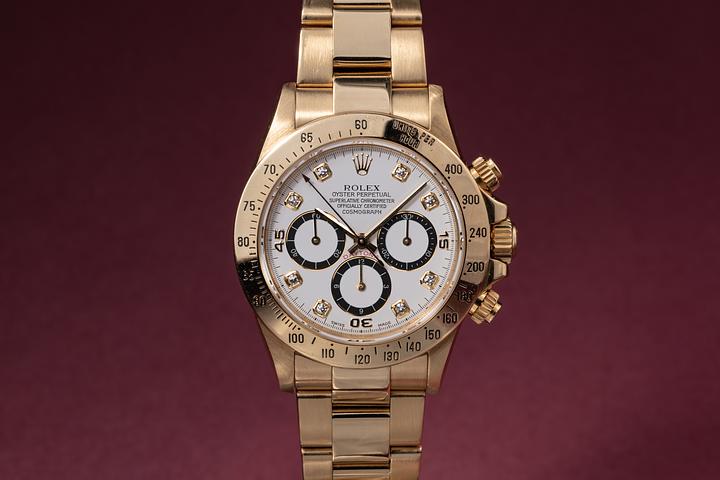
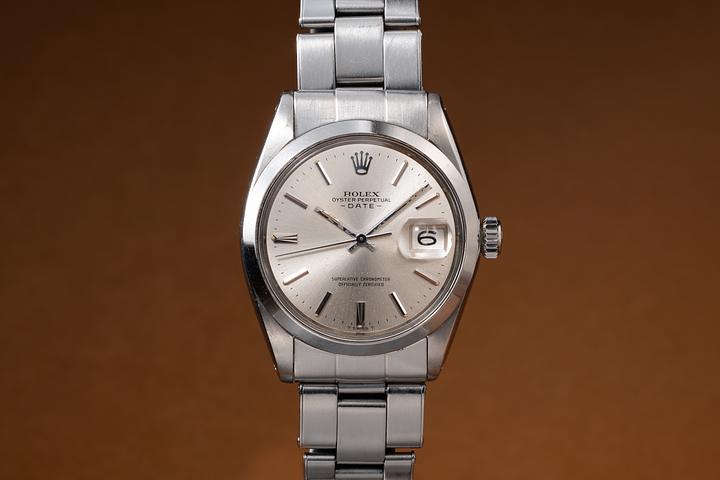
Few brands embody the precision obsession that sundials first inspired quite like Rolex. Founded in 1905 by Hans Wilsdorf, Rolex was built on a simple but ambitious premise: the wristwatch should be as accurate and reliable as any instrument a professional could depend on. Wilsdorf pursued chronometric certification from the Kew Observatory in England, a standard that the company achieved in 1914. That pursuit of verified, measurable accuracy is philosophically continuous with the ancient engineer who carved calibration lines into stone with the specific goal of reading the sun's position to the nearest hour. Vintage Rolex models from the mid-twentieth century represent this philosophy at a particular cultural peak, when handcraftsmanship and mechanical precision intersected before quartz technology disrupted the industry in the 1970s. Those watches are now among the most sought-after objects in the collectibles market.
What Collectors Should Understand About Horological History
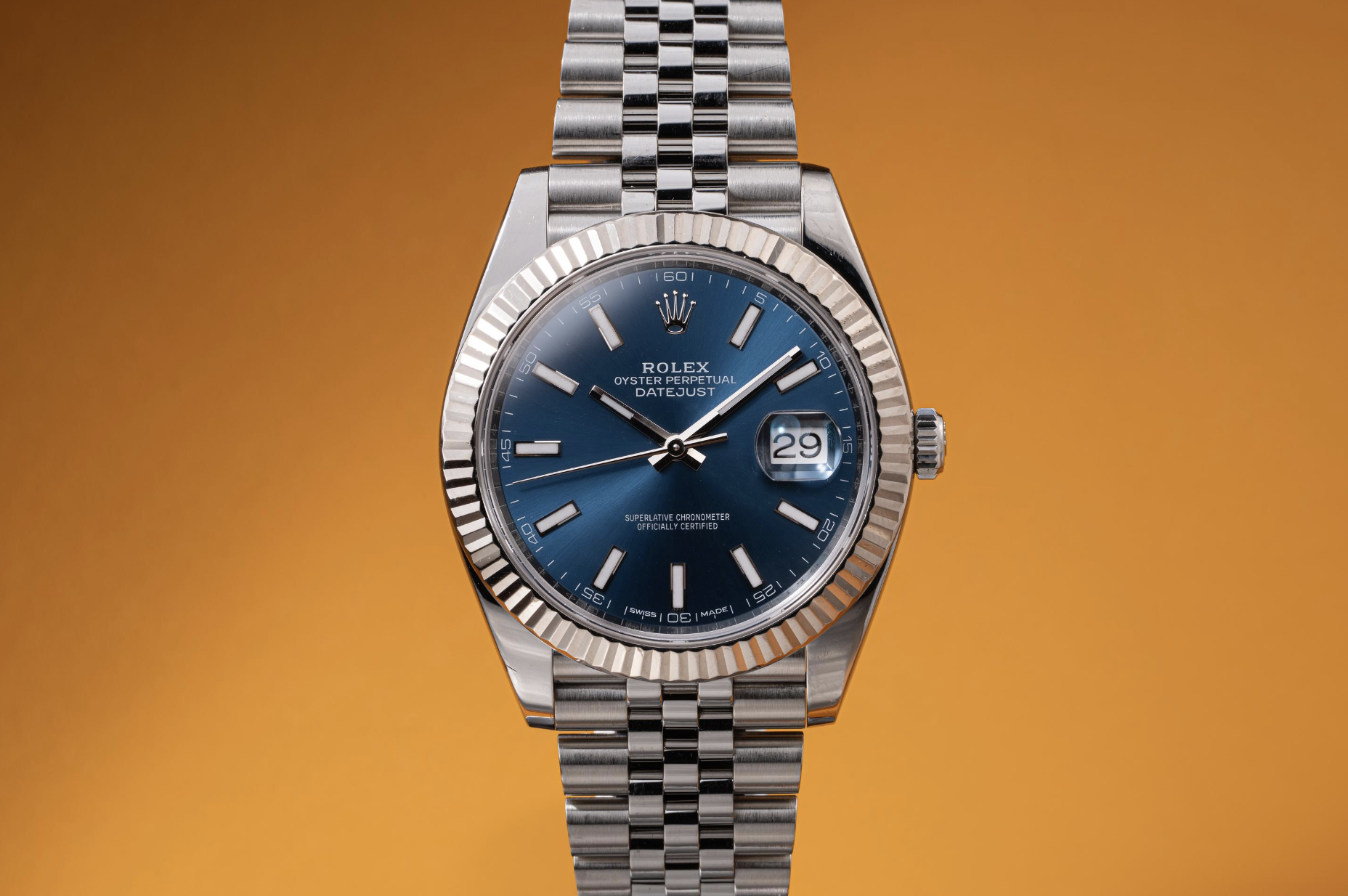
Knowing the history behind timekeeping gives collectors a meaningful framework for evaluating what they are purchasing. A vintage watch is not simply a used object. It is an artifact within a continuous tradition of human ingenuity that stretches back to the first sundial. When you examine the dial of a mid-century Rolex Submariner or a Datejust from the 1960s, you are looking at a design language that carries centuries of accumulated knowledge. Several things are worth understanding when entering the vintage watch space:
- Provenance matters significantly and documents elevate value considerably
- Original dials in aged condition command premiums over refinished examples
- Case integrity, including original finishing and unpolished surfaces, is a primary value indicator
- Movement condition and service history are critical for long-term ownership
- Reference numbers and production dates determine historical context and rarity
Understanding these factors requires more than casual interest. Serious collectors invest time in learning horological history because that knowledge directly informs purchasing decisions and protects against common acquisition mistakes.
The Equation of Time: Where Sundials and Watchmaking Intersect
There is one watch complication that makes the connection between sundials and mechanical horology impossible to ignore, and that is the equation of time. The equation of time is the difference between apparent solar time, what a sundial reads, and mean solar time, the standardized time used in daily life. Because the Earth's orbit is elliptical rather than perfectly circular, a sundial does not always agree with a clock. This discrepancy, which can amount to as much as sixteen minutes at certain points in the year, was something ancient timekeepers observed and documented. Modern haute horlogerie brands produce extraordinarily complex movements that display this variance. These complications exist specifically because some watchmakers feel compelled to honor the full history of their craft, not just the mechanical portion but the solar observational tradition that preceded it. When a watch shows you the equation of time, it is essentially paying tribute to every sundial that ever stood in a public square.
Why Tropical Watch Is the Right Partner for Your Vintage Rolex Journey
Collecting vintage Rolex watches is not a casual pursuit. It requires access to trusted expertise, authenticated inventory, and the kind of market insight that only comes from years of genuine engagement with horological history. That is precisely what makes Tropical Watch the destination of choice for serious collectors. Whether you are beginning your collection or refining an existing one, the team at Tropical Watch brings deep knowledge of provenance, reference identification, and market valuation to every transaction. For collectors who appreciate the full arc from ancient sundial to precision Swiss movement, finding a specialist who shares that level of reverence for the craft is essential. You can explore their curated inventory and connect with their expertise through Tropical Watch, a trusted source for authenticated vintage Rolex timepieces, where the history of horology is taken as seriously as the watches themselves. This is not a marketplace that treats vintage watches as commodities. It treats them as what they are: objects that carry history forward.
Frequently Asked Questions
How did the sundial influence the design of modern watch dials?
The circular face, centrally mounted indicator, and radiating hour markers found on modern watch dials were directly inherited from sundial design. The sundial established a visual grammar for reading time that clockmakers adopted when mechanical timekeeping emerged, and that format has remained essentially unchanged for centuries.
When did humans transition from sundials to mechanical clocks?
The earliest mechanical clocks began appearing in Europe during the 13th and 14th centuries, driven by the need to track time independent of sunlight. However, sundials continued to be used as calibration tools for mechanical clocks well into the 18th century, meaning the two technologies coexisted for several hundred years.
What is the equation of time and why does it appear in luxury watches?
The equation of time is the measurable difference between solar time, as read by a sundial, and standardized mean solar time used in daily life. Some high-end watchmakers include this as a complication to honor the astronomical foundations of horology and to display the variance that results from Earth's elliptical orbit around the sun.
Why are vintage Rolex watches considered historically significant?
Vintage Rolex watches represent a specific era when Swiss mechanical watchmaking was at its cultural and technical peak, before quartz technology disrupted the industry. They are artifacts within a continuous tradition of precision timekeeping that traces directly back to the earliest efforts to measure time accurately.
What should a first-time vintage Rolex buyer know before purchasing?
First-time buyers should prioritize authentication, original dial condition, case integrity, and documented service history. Reference numbers are essential for establishing rarity and historical context. Working with a reputable specialist dealer significantly reduces the risk of purchasing an altered or misrepresented example.
How did portable sundials influence the development of the wristwatch?
Romans and later Renaissance-era Europeans carried portable sundials as personal timekeeping instruments, establishing the cultural expectation that time measurement could and should be accessible to individuals rather than only visible in public spaces. That expectation drove the centuries-long miniaturization process that ultimately produced the wristwatch.