Royal Oak vs Patek Nautilus: The Ultimate Watch Comparison

Audemars Piguet Royal Oak vs Patek Philippe Nautilus: The Ultimate Comparison
Few debates in horology carry as much weight as the one between the Audemars Piguet Royal Oak and the Patek Philippe Nautilus. These two watches defined what luxury sports watches could be, and both continue to shape the market decades after their introduction. Whether you are a collector building a serious portfolio or someone stepping into high-end timepieces for the first time, understanding what separates these two icons is genuinely useful. This is not just a style conversation. It is a discussion about philosophy, history, investment value, and identity. Let us get into it properly.
A Tale of Two Designers: Where It All Began
Both watches trace their origins to the same designer, which is one of the more fascinating details in watch history. Gerald Genta, a Swiss designer working at an almost impossible pace during the 1970s, sketched both references in that same decade. The Royal Oak debuted in 1972, and the Nautilus followed in 1976. Genta reportedly designed the Royal Oak concept overnight before presenting it to Audemars Piguet. The Nautilus came just a few years later, this time for Patek Philippe, and carried a similar spirit but a distinctly different character. Both were revolutionary because they were stainless steel sports watches priced at levels that confused and challenged the entire market. At a time when dress watches in precious metal dominated fine watchmaking, these pieces challenged every assumption about what luxury could look like.
Design Language: Octagonal vs Porthole
The visual identities of these two watches are immediately recognizable but approach elegance from different angles. The Royal Oak features an octagonal bezel with exposed hexagonal screws, a tapestry-style "Grande Tapisserie" dial pattern, and integrated bracelet links that create a seamless flow from case to wrist. It is architectural and assertive. The Nautilus, by contrast, draws its shape from a nautical porthole, with rounded horizontal lines, a distinctive ear-shaped case profile, and a horizontally embossed dial. The Nautilus feels more fluid and organic compared to the harder geometry of the Royal Oak. Neither is a subtle watch, but the Royal Oak tends to read as more geometric and industrial-chic, while the Nautilus leans into a softer, almost yacht-inspired aesthetic. Both are unmistakable at any distance.
The Reference Breakdown: Key Models Worth Knowing
Both collections span a wide range of references, complications, and materials. Knowing the key references helps you navigate the market more confidently.
For the Royal Oak, the most referenced models include:
- The 15202 "Jumbo" or "Extra-Thin" in 39mm, considered the purest expression of Genta's original design
- The 15400 and its successor the 15500 in 41mm, offering a slightly more modern scale
- The Royal Oak Chronograph references, including the 26240, with in-house movements
- Royal Oak Offshore, a larger and more aggressive spin-off that appeals to a different buyer
For the Nautilus, the key references include:
- The 5711, the most iconic modern Nautilus, discontinued in 2021 and now a grail-level collector piece
- The 5726A, featuring an annual calendar complication
- The 5712, which includes a power reserve and small seconds
- The 5980, a chronograph version that remains highly desirable
Movement and Finishing: The Inside Story
Both houses manufacture their own movements in-house, and both bring exceptional finishing to the table. The Royal Oak across many references uses the caliber 5122 or the more recent 7121 in the Jumbo configuration, featuring a micro-rotor and a signature finishing standard that includes beveling, perlage, and Geneva stripes applied by hand. Audemars Piguet is a manufacture in the truest sense, producing everything from the mainspring to the dial under one roof in Le Brassus. Patek Philippe holds the prestigious Geneva Seal and the Patek Philippe Seal, both indicators of extreme finishing standards. The caliber 324 S C found in the 5711 runs at 4Hz, offers 45 hours of power reserve, and is finished to a standard that few other manufacturers match. Patek is particularly known for its movement anglage, the hand-chamfering of internal movement components that most buyers will never see. Both brands are deeply committed to craft, but Patek has a stronger reputation for traditional haute horlogerie finishing.
Pricing and Market Value: What You Should Expect to Pay
Retail pricing on both references, when available, tends to be well below actual market value. The 5711 Nautilus in steel retailed around $34,000 before discontinuation, yet secondary market prices for clean examples regularly exceed $100,000 and can climb considerably higher for rare configurations. The Royal Oak Jumbo 15202 retailed in similar ranges and also commands significant premiums on the secondary market. In terms of appreciation, both watches have demonstrated exceptional resilience. The Nautilus 5711 in particular saw a dramatic surge following Patek Philippe's announcement that it would be discontinued, creating one of the most talked-about moments in recent collector history. The Royal Oak remains more accessible across a broader spectrum of references, which appeals to buyers who want entry points at different price levels. That said, any stainless steel Royal Oak or Nautilus in excellent condition holds value extremely well.
Wearability and Lifestyle Fit: Which Watch Suits You
Beyond the numbers and history, the most personal question is which watch actually works for your life. The Royal Oak, particularly the 41mm references, sits confidently on medium to larger wrists. Its angles and integrated bracelet give it a strong presence that suits both formal occasions and weekend wear. The Nautilus, especially the 5711 at 40mm, tends to feel slightly slimmer on the wrist due to its horizontal case design, making it a touch more versatile for those who shift between business and casual settings frequently. Neither watch is delicate. Both are rated for water resistance appropriate for everyday use, and both use solid bracelets with reliable clasp mechanisms. The choice often comes down to one straightforward question: do you prefer a watch that leads with geometry or one that leads with flow?
Collectibility and Investment Potential
If you are buying with one eye on value retention, both watches have earned their reputations as serious collector assets. Patek Philippe as a brand has historically performed well at auction across all categories, and the Nautilus specifically has become a benchmark for steel sports watch values. The Royal Oak, particularly vintage references from the 1970s and early 1980s, has seen remarkable appreciation among serious collectors who recognize the historical significance of those early pieces. Condition, originality of dial and bracelet, and service history all play significant roles in determining value on the secondary market. Limited editions and special dials, such as the Tiffany blue dial 5711 or Royal Oak "Salmon" dial variants, have shattered expectations at auction. If collectibility is a primary concern, provenance and originality should be non-negotiable priorities.
Royal Oak vs Nautilus: A Side-by-Side Summary
Summarizing these two watches without oversimplifying them is a challenge, but it is worth drawing the clearest lines possible. The Royal Oak is the more recognizable design in terms of immediate visual impact, carries an industrial-chic identity, and offers a broader range of references at different price points. The Nautilus is rarer by comparison, carries Patek Philippe's unmatched reputation for finishing and horological prestige, and its flagship references have become among the most sought-after watches in the world. Both are extraordinary achievements in design and manufacturing. Choosing between them is not a matter of which is better but which resonates more with who you are and how you wear a watch.
Why Tropical Watch Should Be Your First Call
If any part of this conversation has sparked serious interest in either of these references, or in vintage sports watches more broadly, Tropical Watch is a resource worth knowing. Specializing in rare, authenticated timepieces with a particular depth of inventory in vintage and modern collectibles, Tropical Watch brings a level of expertise to the market that is genuinely hard to find. For collectors seeking the best in luxury vintage and modern sport watches including the Royal Oak and Patek Nautilus, Tropical Watch offers authenticated inventory, transparent pricing, and the kind of knowledgeable guidance that makes a significant purchase feel like a confident one rather than a gamble. Whether you are entering the collector world for the first time or adding a grail piece to an established collection, the right partner matters considerably.
Frequently Asked Questions
Which is more expensive, the Audemars Piguet Royal Oak or the Patek Philippe Nautilus?
On the secondary market, the Patek Philippe Nautilus 5711 typically commands higher prices than most Royal Oak references, often exceeding $100,000 for clean examples. However, rare Royal Oak references and limited editions can match or surpass Nautilus pricing depending on configuration and condition.
Why was the Patek Philippe Nautilus 5711 discontinued?
Patek Philippe announced the discontinuation of the 5711 in 2021, citing the need to evolve the collection. The final reference was produced with a Tiffany blue dial, which sold at auction for over $6 million. The decision significantly elevated demand and secondary market values for existing examples.
Is the Royal Oak or Nautilus better for everyday wear?
Both watches are well-suited for daily wear, with solid construction and reliable water resistance. The Nautilus tends to feel slightly slimmer on the wrist and transitions smoothly between formal and casual settings. The Royal Oak makes a stronger visual statement and suits those who prefer a more architectural aesthetic in daily rotation.
Who designed both the Royal Oak and the Nautilus?
Both watches were designed by Gerald Genta, a prolific Swiss watch designer. The Royal Oak was created in 1972 for Audemars Piguet, and the Nautilus followed in 1976 for Patek Philippe. Genta is widely regarded as one of the most influential figures in 20th-century watch design.
Do both watches hold their value over time?
Yes, both the Royal Oak and Nautilus have demonstrated strong value retention and appreciation over time. Patek Philippe watches in general, and the Nautilus specifically, have performed exceptionally well at auction. Stainless steel Royal Oak references have also seen meaningful appreciation, particularly vintage pieces in original condition.
Which watch is harder to find at retail?
Both watches have historically been difficult to obtain at authorized dealer retail prices, with waitlists being common. Following its discontinuation, the Nautilus 5711 is no longer available through retail channels at all, making the secondary market the only option. Certain Royal Oak references remain similarly elusive at retail, depending on the market and dealer relationship.













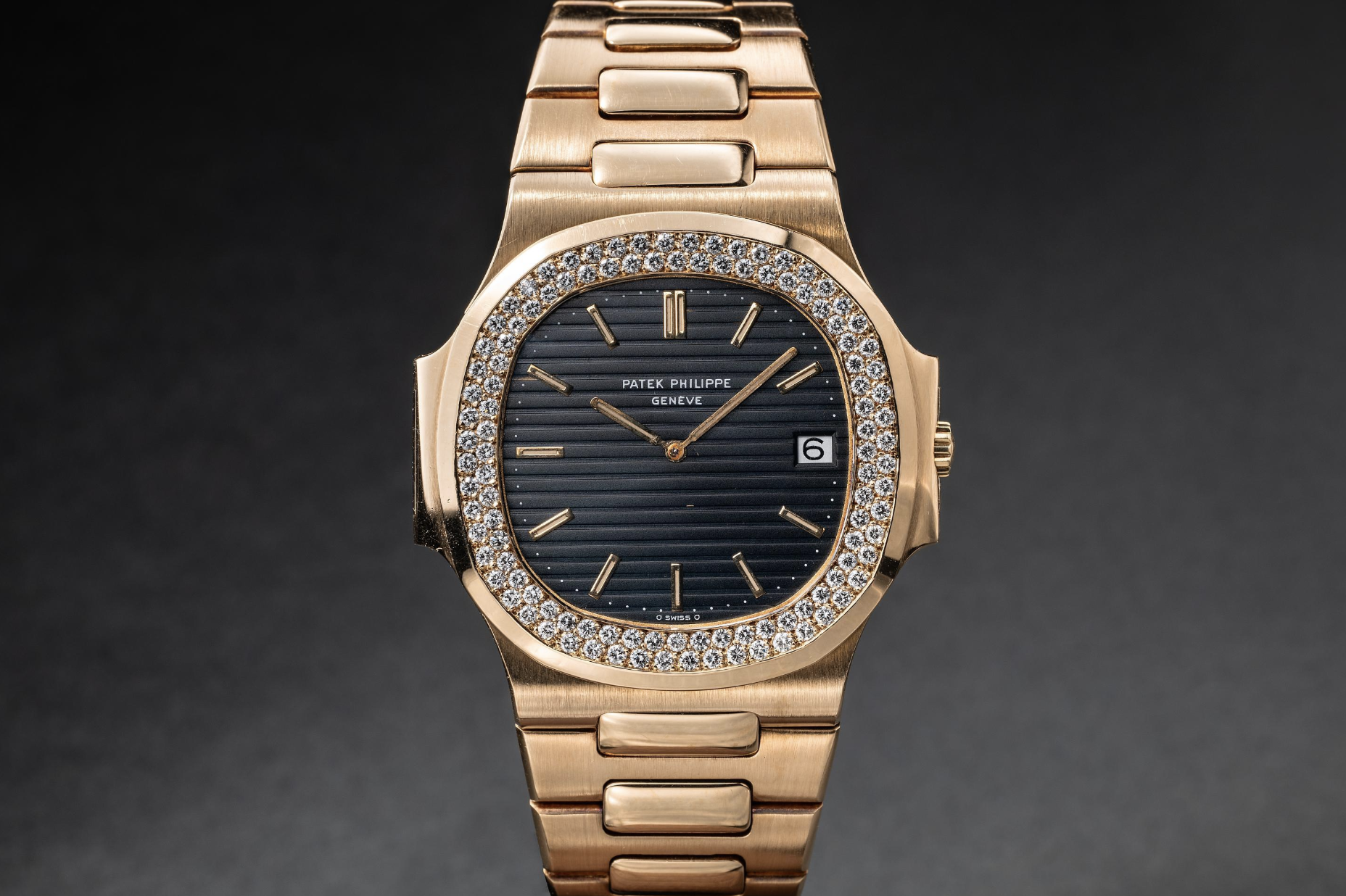



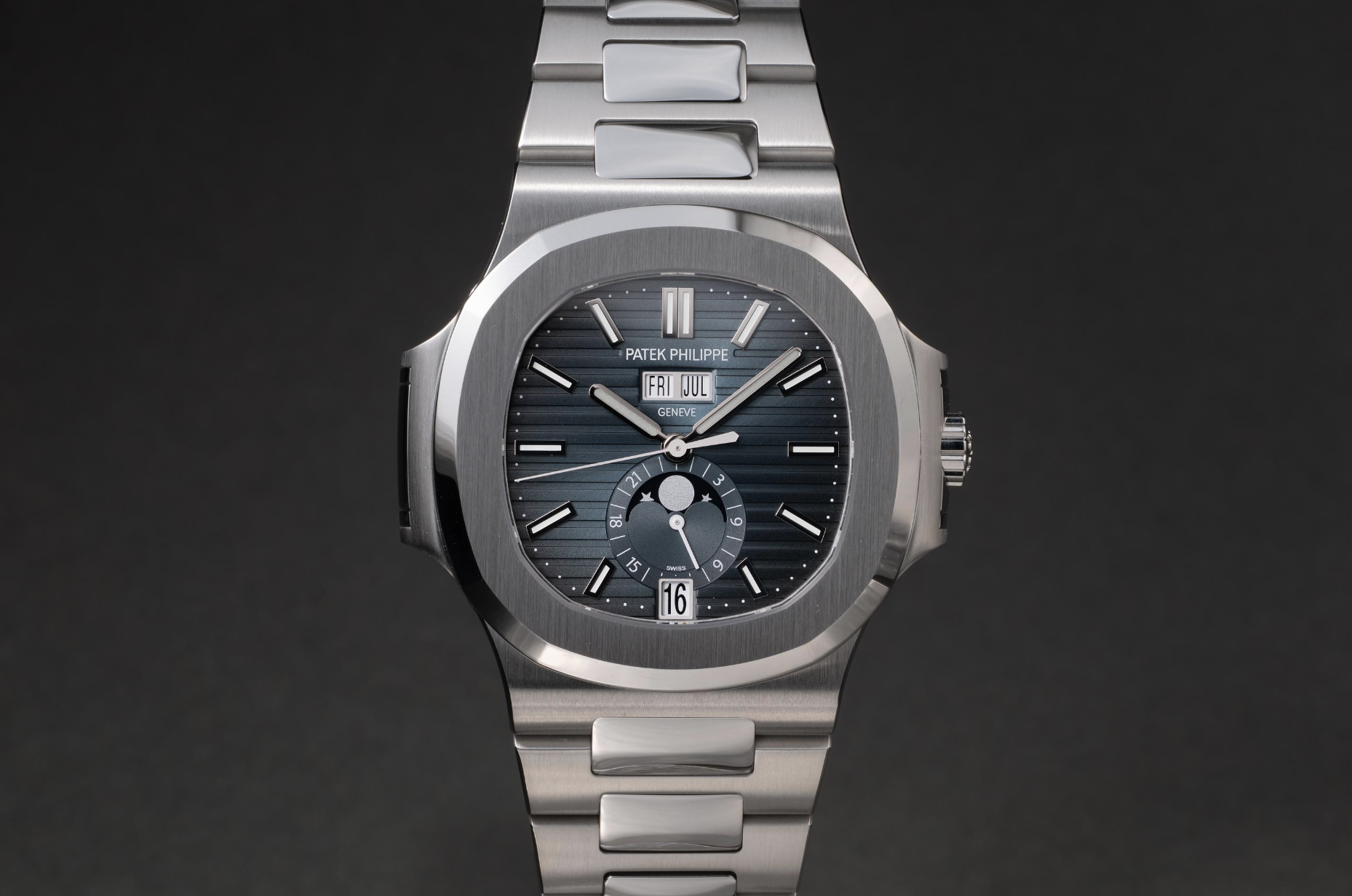




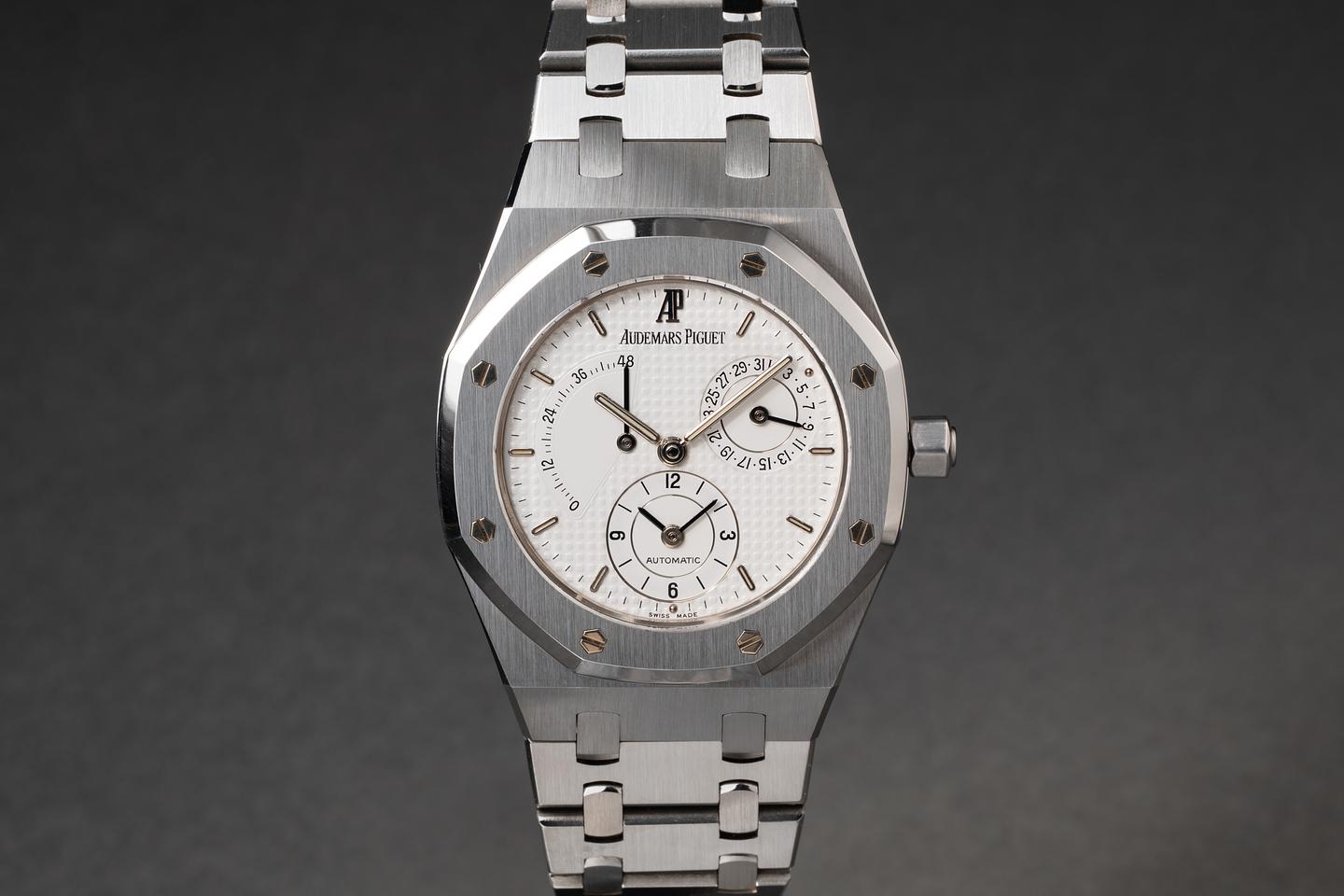








Table of Contents
Get More from the Journal