Cartier Watchmaking Innovations That Shaped Horology

Cartier Watchmaking Innovations: A Legacy Carved in Precision and Vision
When people talk about luxury watchmaking, Cartier almost always enters the conversation quickly, and for good reason. The house has been pushing boundaries since the late 1800s, and the depth of its technical and aesthetic contributions to horology is genuinely remarkable. This is not simply a jewelry brand that decided to make watches. Cartier built the modern wristwatch as we know it, introduced complications the industry had not thought to apply in that form, and developed movements that still influence watchmakers today. If you have ever wondered what makes Cartier so significant in the mechanical watch world, this is a thorough place to start.
The Santos: Where Watchmaking History Actually Begins on the Wrist
Most horological historians point to 1904 as a pivotal year. Louis Cartier designed a wristwatch for his friend Alberto Santos-Dumont, the Brazilian aviation pioneer who needed a reliable timepiece he could read without taking his hands off the controls. Pocket watches were standard at the time, completely impractical in a cockpit. The resulting piece, eventually known as the Santos, introduced a square case with exposed screws on the bezel, which became a signature Cartier design element. What looks purely aesthetic was partly structural. The Santos was not just a fashion statement; it was a functional solution to a real problem. That instinct, to design around human need first, runs through almost every major Cartier innovation that followed.
Cartier and the Mystery Clock: Invisible Movements and Pure Theater
In 1912, Cartier unveiled the Pendule Mystérieuse, more commonly called the Mystery Clock. The hands appeared to float inside a crystal sphere with no visible connection to any mechanism. The effect was deliberately theatrical, almost unsettling if you did not know the secret. The hands were actually mounted in two independent sapphire crystal discs, each linked to a concealed movement in the base by a series of gears running through the frame. Maurice Coüet, a master clockmaker working with Cartier, is credited with developing the mechanism. The mystery clock lineage continued for decades and later inspired the Rotonde de Cartier Mystery Tourbillon, which applies the same principle to a flying tourbillon that appears entirely unsupported inside the case. The technical execution required to achieve that illusion consistently is extraordinary.
The Santos-Dumont and the Wider Case Evolution
Cartier refined case engineering repeatedly throughout the twentieth century. The Tank, introduced in 1917, took architectural inspiration from the Renault tanks Louis Cartier observed during World War I. The parallel lines of the case mimicked the side rails of a tank track, and the case was integrated with the bracelet in a way that was visually unified rather than simply attached. That integration of case and bracelet as a single visual object was not common practice at the time. Decades later, the Santos bracelet with its deployant clasp and the interchangeable strap system became a reference point for how luxury sports watches should function ergonomically. Small detail, but meaningful: Cartier introduced the quick-change strap system on the Santos in 2018, making it one of the most accessible high-end watches to personalize without tools.
Cartier Manufacture Movements and the CPCP Era
For much of the twentieth century, Cartier relied on movement suppliers, which was standard practice across the industry. The shift came with the Collections Privées Cartier Paris, or CPCP, launched in 1998. This was Cartier's deliberate statement that it was entering the serious watchmaking conversation with its own calibers. The collection reissued archival case designs paired with high-end movements, some produced in collaboration with specialist ateliers, others developed internally. It signaled a philosophical shift. The eventual creation of the Cartier manufacture in La Chaux-de-Fonds and the development of fully in-house calibers, including the Calibre 1904-PS MC, demonstrated genuine commitment to vertical integration. That movement family now powers a significant portion of the current collection and has been refined across multiple iterations.
Skeletonized Movements and High Complications at Cartier
Cartier's approach to skeleton movements deserves specific attention because the house developed its own aesthetic vocabulary for openworked dials rather than simply adopting industry conventions. The Calibre de Cartier Skeleton, the Rotonde Skeleton, and the Santos-Dumont Skeleton each reveal the movement in ways that are architecturally deliberate. Bridges are shaped to reinforce the visual identity of the watch rather than simply being functional components made visible. On the complication side, Cartier produces:
- Tourbillon movements, including flying and double-axis variants
- Minute repeaters with cathedral gong systems
- Perpetual calendars with retrograde displays
- Astrotourbillons where the tourbillon orbits the dial in one hour
- Mysterious double tourbillons with the floating disc mechanism
These are not vanity projects. Each of these complications reflects genuine investment in in-house development, and several have won awards from the Fondation de la Haute Horlogerie and the Grand Prix d'Horlogerie de Genève.
Materials Innovation: Cartier Beyond Gold and Steel
Cartier has consistently experimented with case and movement materials in ways that extend beyond the standard platinum and steel spectrum. The use of ADLC (amorphous diamond-like carbon) coating on the Santos de Cartier gave the steel sports watch a matte gray finish that resists scratching while maintaining a refined appearance. More recently, Cartier introduced carbon and titanium references in the Santos collection, reducing weight without sacrificing structural integrity. At the movement level, the brand has used silicon components in escapements, following the broader industry movement toward non-magnetic, lubricant-free regulation. The combination of traditional hand-finishing techniques with these modern material applications is a balance Cartier manages more thoughtfully than many houses its size.
The Cartier Calibre and the Fine Watchmaking Certification
Cartier movements undergo the Poinçon de Genève, also known as the Geneva Seal, on select pieces. This certification requires that movements be assembled and adjusted in the canton of Geneva, and it mandates specific finishing standards for every component, including beveling, polishing of anglage, and stipulated finishes on plates and bridges. Not every Cartier watch carries the seal, but those that do represent the top tier of the manufacture's output. The commitment to achieving and maintaining that certification reflects how seriously the house takes its position within high watchmaking, not just within luxury retail.
Why Tropical Watch Is Your Destination for Serious Luxury Timepieces
Understanding the depth of Cartier's horological contributions changes how you approach a purchase. These are not just beautiful objects; they are the result of over a century of technical problem-solving, design discipline, and manufacturing ambition. If you are ready to explore the broader luxury watch landscape, including vintage and contemporary references from the houses that defined the craft, then working with specialists who share that level of knowledge matters. At Tropical Watch, the focus is on exactly that kind of informed, curated experience. Whether you are drawn to Cartier's architectural elegance or the mechanical legacy of other great manufacturers, the team at Tropical Watch, your trusted source for investment-grade luxury and vintage timepieces, brings the expertise and inventory to help you find a watch that holds meaning beyond its price tag.
Frequently Asked Questions About Cartier Watchmaking Innovations
What was Cartier's most significant contribution to watchmaking history?
Cartier is widely credited with popularizing the wristwatch through the 1904 Santos design, created for aviator Alberto Santos-Dumont. This made wristwatches practical rather than purely decorative and shifted the industry away from pocket watches as the primary portable timepiece.
Does Cartier make its own watch movements?
Yes. Cartier operates a manufacture in La Chaux-de-Fonds, Switzerland, and produces in-house calibers including the Calibre 1904-PS MC and several high-complication movements featuring tourbillons, minute repeaters, and perpetual calendars. The brand also holds the Poinçon de Genève certification on select references.
What is a Cartier Mystery Clock and how does it work?
A Cartier Mystery Clock uses hands mounted in transparent sapphire crystal discs that are invisibly connected to a movement concealed within the clock's frame or base. The hands appear to float with no mechanical connection, though they are driven by a series of gears hidden within the structure.
Are Cartier watches considered serious luxury timepieces or primarily fashion watches?
Cartier occupies both spaces, but the brand's manufacture-level complications, certified movements, and technical innovations place it firmly within serious haute horlogerie. The Santos, Tank, and Rotonde lines include references with significant mechanical depth, not only aesthetic value.
What materials does Cartier use in its watch cases and movements?
Cartier uses gold, platinum, stainless steel, titanium, and ADLC-coated steel across its collections. For movement components, the brand has incorporated silicon escapement parts and uses hand-finishing techniques consistent with Geneva Seal standards on its high-end calibers.
How do Cartier watch innovations compare to other Swiss luxury manufacturers?
Cartier's innovations are distinct in that they blend aesthetic design with mechanical development, most notably through the Mystery Clock and the astrotourbillon. While brands like Patek Philippe or Jaeger-LeCoultre are more exclusively focused on movement complexity, Cartier's contributions span industrial design, materials science, and high complications simultaneously.






























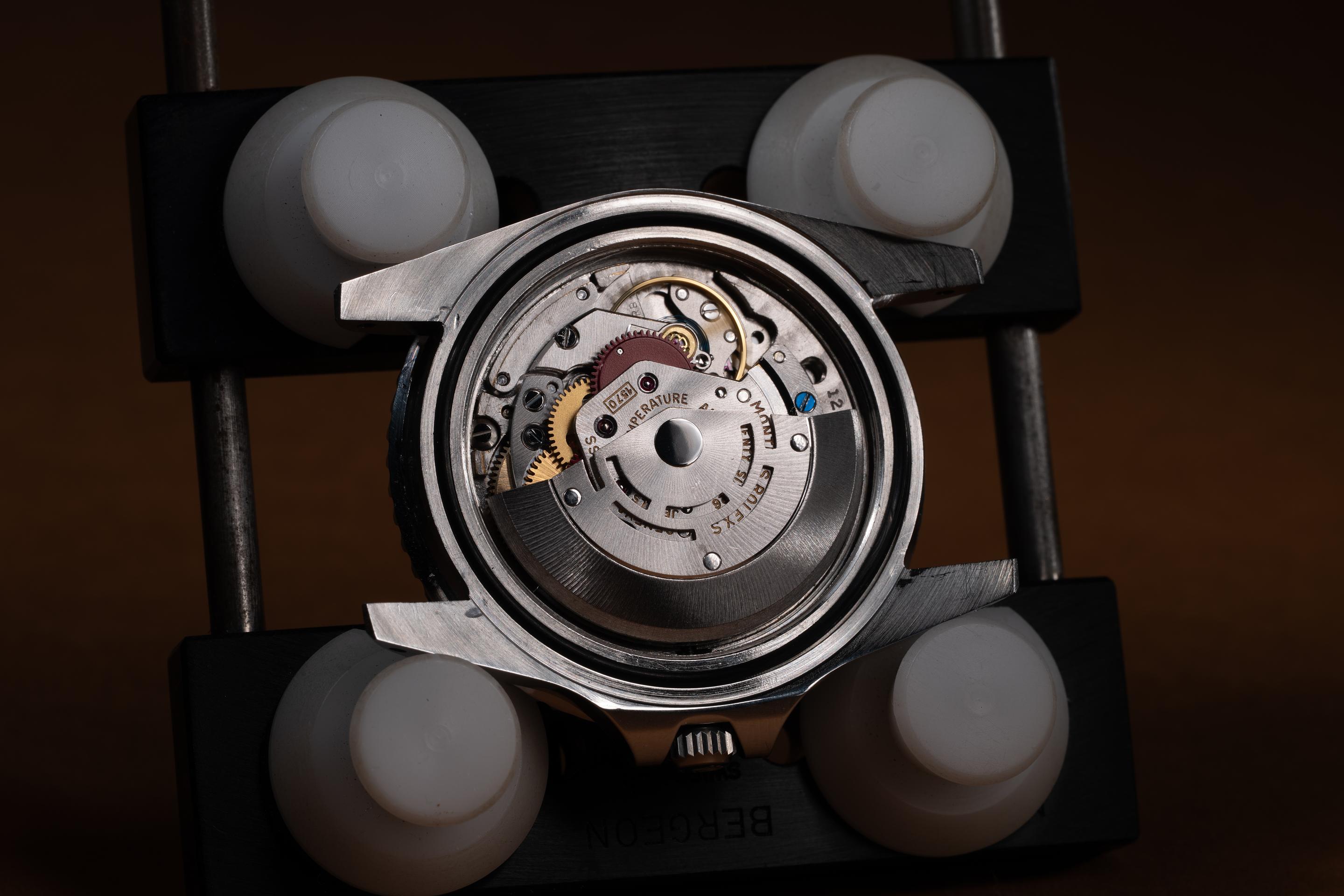

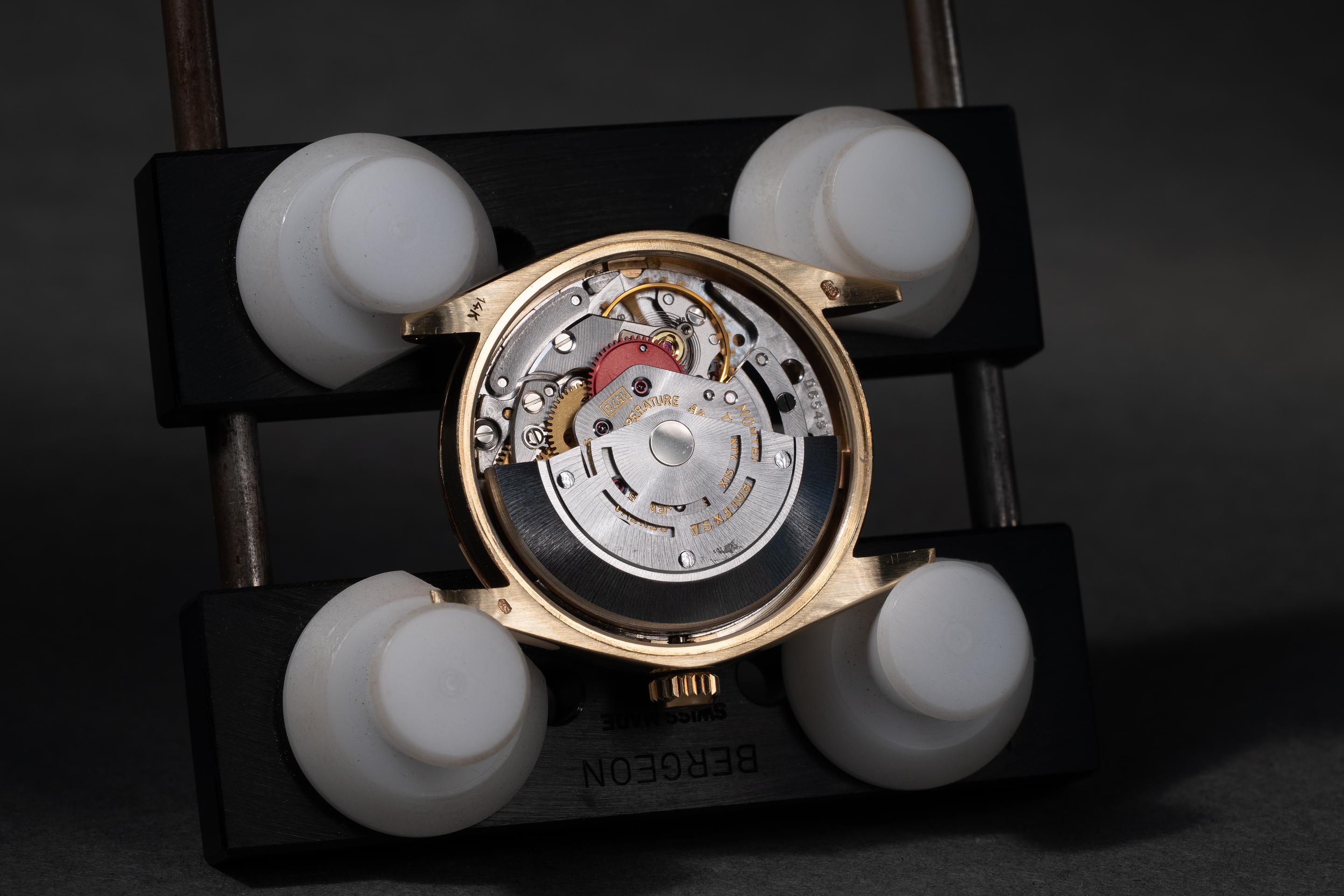





















Table of Contents


Get More from the Journal