Rolex Sea-Dweller Review: Dive Deep into Iconic Precision

The Rolex Sea-Dweller: Built for the Deep, Respected on the Surface
There are dive watches, and then there is the Rolex Sea-Dweller. These are not the same category, even if they share a general purpose. The Sea-Dweller was engineered with a level of technical seriousness that separates it from nearly everything else in the luxury watch market. It was not designed to look like a tool watch. It was designed to actually be one — and it delivers on that promise completely. Whether you are a serious diver, a collector, or simply someone who appreciates precision engineering wrapped in an iconic case, the Sea-Dweller deserves a longer look than it usually gets.
A Brief History: How the Sea-Dweller Came to Exist
The Sea-Dweller did not appear out of nowhere. Its origins trace back to a genuine operational need in the 1960s, when professional saturation divers working for companies like COMEX began logging serious time at extreme depths. Standard dive watches — including early versions of the Rolex Submariner — were not built to handle the pressures of saturation diving, and they were certainly not designed to manage helium gas, which permeates the watch case during extended dives. Rolex worked directly with these professional diving teams, and the result was a watch with a helium escape valve, a deeper water resistance rating, and a reinforced case architecture. The reference 1665, introduced in 1967, was the first Sea-Dweller, and it was water resistant to 610 meters. That is not a marketing number. That was a working spec.
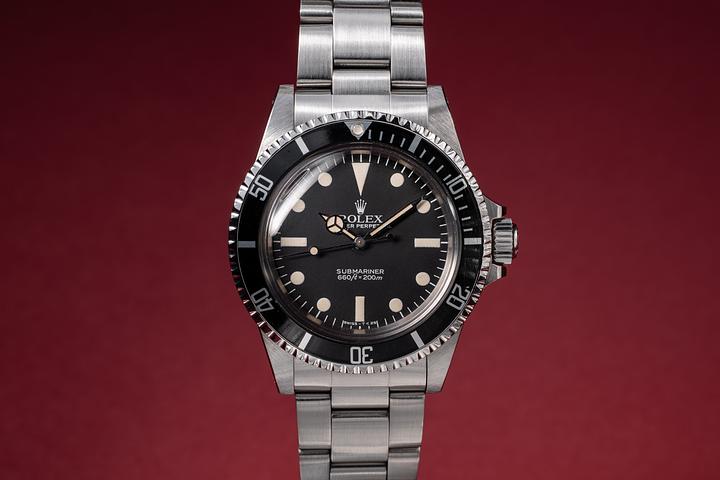
What Makes the Sea-Dweller Technically Different from the Submariner
This question comes up constantly, and it is worth answering clearly. The Sea-Dweller and the Submariner share a family resemblance, but they are not the same watch. The Sea-Dweller carries a significantly higher water resistance rating — current models are rated to 1,220 meters, which is 4,000 feet. The Submariner is rated to 300 meters. The Sea-Dweller also features a unidirectional rotating bezel with a Cerachrom ceramic insert, a larger case diameter of 43mm, and that distinctive helium escape valve positioned on the case side at nine o'clock. One feature the Sea-Dweller notably lacks compared to the Submariner is a cyclops lens over the date — a deliberate design choice that gives it a cleaner, more utilitarian profile. For some collectors, that absence is exactly the point.
Inside the Movement: Caliber 3235
The current Sea-Dweller runs on the Rolex Caliber 3235, which is one of the most refined in-house movements available in any production watch today. It features a bidirectional Perpetual rotor for efficient winding, a Chronergy escapement that improves energy efficiency by roughly 15 percent compared to previous generations, and a power reserve of approximately 70 hours. The movement is also equipped with a Parachrom hairspring, which is manufactured from a paramagnetic alloy and offers exceptional resistance to magnetic fields and temperature variation. These are not small details. They represent a meaningful leap in accuracy and long-term reliability, and they help explain why a Sea-Dweller holds its value the way it does.
Design Language: Understated, Purposeful, and Unmistakably Rolex
There is a reason the Sea-Dweller has looked essentially the same for decades. When a design works this well, refinement is the correct approach. The current model features a 43mm Oyster case crafted in Oystersteel, Rolex's proprietary 904L stainless steel alloy, which offers superior corrosion resistance compared to standard 316L steel used by most competitors. The dial is matte black with applied luminescent hour markers, and the bezel insert displays a 60-minute graduated scale in Cerachrom ceramic — a material that resists scratching and UV fading with impressive durability. The Oyster bracelet with its Glidelock extension system allows for easy adjustments without tools, which is genuinely useful when wearing the watch over a wetsuit. Every element serves a function. Nothing is decorative for its own sake.
Vintage Sea-Dweller References Worth Knowing
For collectors, the vintage Sea-Dweller market is rich and rewarding. A few references stand out as particularly significant:
Reference 1665 (1967–1977) — The original Sea-Dweller, nicknamed the "Great White" for its white text on the dial, later revised to include red text designating the depth rating. Reference 16660 (1978–1988) — The first Sea-Dweller to reach 1,220 meters water resistance and the first to use a sapphire crystal. Reference 16600 (1988–2008) — A long production run that refined the formula; highly collectible and still very wearable today. Reference 116600 (2014–2017) — A short production window makes this one especially interesting to collectors; it introduced the larger 40mm case and ceramic bezel before the jump to 43mm.Each of these references tells part of the story of how Rolex developed and refined this watch over six decades, and each has a dedicated collector base that keeps values moving steadily upward.
Who Should Actually Consider the Sea-Dweller
Practically speaking, very few Sea-Dweller owners will ever dive to 1,220 meters. That is not really the point. What the Sea-Dweller offers is a watch that was overbuilt by design — and that overbuilding translates into a daily wear experience that is genuinely confident and carefree. It handles everything from boardrooms to beaches without compromise. The 43mm case wears large but not overwhelming on most wrists, the bracelet sits well and adjusts easily, and the movement runs with a level of precision that makes most competing watches feel like they are operating in a different category. If you want a Rolex that reads as serious rather than showy, the Sea-Dweller is consistently the right answer.
Sea-Dweller Versus the Deepsea: Understanding the Full Lineup
Rolex also produces the Sea-Dweller Deepsea, which takes the concept significantly further — water resistance to 3,900 meters, a 44mm case, and the Ringlock System that adds a nitrogen-alloyed steel ring, sapphire crystal, and a titanium caseback to handle the extreme pressure differential. The Deepsea is a remarkable piece of engineering, but it is also noticeably larger and heavier on the wrist. For most buyers, the standard Sea-Dweller strikes the better balance between serious capability and everyday wearability. The Deepsea exists for those who want the absolute technical extreme. The Sea-Dweller exists for those who want that same DNA in a more livable package.
Why Tropical Watch Is the Right Source for Your Sea-Dweller Search
Finding a Sea-Dweller — especially a vintage reference — requires more than browsing a marketplace and hoping for the best. Provenance, condition, originality of the dial and hands, and authentication all matter enormously, both for personal satisfaction and for long-term value retention. That is where working with a trusted specialist makes all the difference. At Tropical Watch, the focus is specifically on rare and collectible timepieces, and the inventory reflects a genuine curatorial approach rather than just volume. If you are researching options and looking for a trustworthy place to explore vintage Rolex Sea-Dweller watches and iconic dive watch references, Tropical Watch brings the depth of knowledge and the sourcing standards that serious collectors expect. This is not a generalist platform — it is a destination built for buyers who know what they are looking for and want confidence in every detail of the transaction.
Frequently Asked Questions About the Rolex Sea-Dweller
What is the water resistance rating of the current Rolex Sea-Dweller?
The current Rolex Sea-Dweller, reference 126600, is rated to 1,220 meters, which is equivalent to 4,000 feet of water resistance. This rating is achieved through the Oyster case construction, a screw-down crown, and a reinforced sapphire crystal.
What is the helium escape valve on the Sea-Dweller and why does it matter?
The helium escape valve is a one-way valve built into the case at the nine o'clock position. During saturation diving, helium molecules penetrate the watch case. When the diver decompresses, the valve allows that built-up helium to exit safely without damaging the crystal or seals. It is a functional feature developed through real-world use with professional diving teams.
Does the Rolex Sea-Dweller have a date window?
Yes, the current Sea-Dweller reference 126600 includes a date display at the three o'clock position. Unlike the Submariner, it does not feature a cyclops magnification lens over the date, which gives the dial a flatter and more understated appearance preferred by many collectors.
How does the Sea-Dweller differ from the Rolex Submariner?
The Sea-Dweller has a higher water resistance rating, a larger 43mm case, a helium escape valve, and no cyclops lens over the date. The Submariner is rated to 300 meters and features a 41mm case. Both share similar design language, but the Sea-Dweller is the more technically advanced and purpose-built of the two.
Is the Rolex Sea-Dweller a good investment watch?
Historically, Sea-Dweller references have held their value well, with certain vintage references — particularly the 1665 and 116600 — appreciating significantly over time. As with any luxury watch investment, condition, originality, and provenance are the primary factors that determine long-term value.
What movement does the current Rolex Sea-Dweller use?
The current Sea-Dweller is powered by the Rolex Caliber 3235, an in-house self-winding movement featuring a Chronergy escapement, Parachrom hairspring, and a power reserve of approximately 70 hours. It is COSC-certified and meets Rolex's own Superlative Chronometer standard, which requires accuracy to within plus or minus two seconds per day.