


Rolex Datejust History and Innovation in Swiss Watchmaking
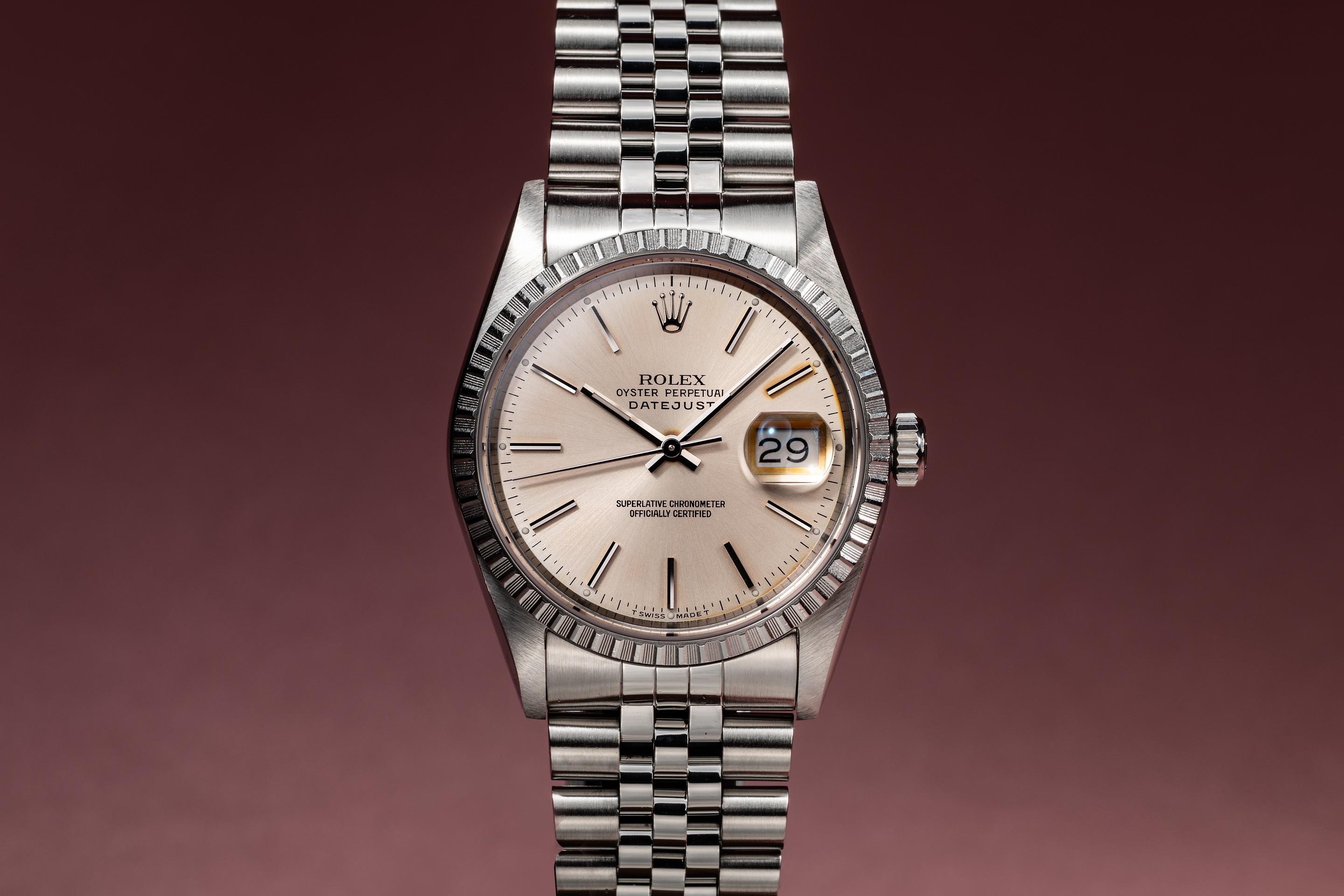
The Rolex Datejust: A Timeless Icon That Defined Modern Watchmaking
There are watches, and then there is the Rolex Datejust. Few timepieces in horological history have managed to hold the same cultural weight, technical precision, and aesthetic relevance across nearly eight decades. The Datejust is not simply a product of its era — it actively shaped the era that followed. Understanding its history means understanding what Swiss watchmaking is truly capable of when craftsmanship and innovation are treated as inseparable values. Whether you are new to the world of luxury watches or a seasoned collector evaluating your next acquisition, the story of the Rolex Datejust is one worth knowing in full.
Where It All Began: The Birth of the Datejust in 1945
The Rolex Datejust made its debut in 1945, introduced to commemorate Rolex's 40th anniversary. That timing alone says something. Rolex did not mark the occasion quietly — they released what would become one of the most significant wristwatches ever produced. The reference 4467 was the first self-winding wristwatch to display the date in a window on the dial. That single feature — the instantaneous date change at midnight — was genuinely new. It sounds almost simple in retrospect, but at the time it was a mechanical achievement that set an entirely new benchmark for what a daily-wear watch could do. The Datejust was also among the earliest watches to feature the now-iconic Jubilee bracelet, developed specifically for that anniversary release and still associated with the model today.
The Cyclops Lens and the Pursuit of Legibility
In 1953, Rolex introduced the Cyclops lens to the Datejust — a magnifying lens positioned directly over the date window, providing 2.5x magnification. It was a practical solution to a practical problem: reading the date at a glance, especially for those with less-than-perfect vision or under less-than-ideal lighting conditions. The Cyclops lens quickly became one of the most recognizable design elements in watchmaking, so synonymous with Rolex that even counterfeiters have struggled to replicate it with accuracy. What makes this detail noteworthy is not just the functionality — it is the fact that Rolex committed to that design choice and never walked it back. Consistency in purposeful design is part of what defines the Datejust's enduring identity.
Swiss Movement Innovation: The Caliber Lineage Behind the Datejust
The mechanical heart of the Datejust has evolved significantly since 1945, and tracing that caliber history reveals a great deal about Rolex's broader engineering philosophy. Early models were powered by the caliber 620, followed over the decades by the caliber 1030, 1570, 3035, and eventually the 3135 — a movement introduced in 1988 and regarded by many watchmakers as one of the most reliable and well-executed automatic movements ever produced. The 3135 featured a Parachrom hairspring, improved shock resistance, and Rolex's patented Quickset date mechanism, which allowed the wearer to adjust the date independently of the time. Current production Datejust models run on the caliber 3235, introduced in 2015, which extended power reserve to approximately 70 hours and incorporated 14 patents. That is not incremental improvement — that is deliberate, generational engineering.
Design Evolution: How the Datejust Changed Without Losing Itself
One of the most compelling aspects of the Datejust is how it has evolved aesthetically while maintaining a coherent visual identity across every generation. The case diameter expanded from the original 36mm to include the 41mm Datejust 41 introduced in 2016. The fluted bezel — originally a functional device to screw the bezel onto the case — became a signature aesthetic element. Dial options have ranged from simple silver and black to sunburst finishes, diamond-set variations, mother-of-pearl, and meteorite. Bracelet options expanded to include the Oyster bracelet alongside the original Jubilee. Each of these changes was additive rather than disruptive, which is a remarkably difficult balance to maintain in a product line spanning nearly 80 years. The Datejust looks like itself in every era, which is not an accident.
Materials and Craftsmanship: What Makes a Datejust a Rolex
Every Rolex Datejust is built using materials that Rolex either develops in-house or specifies to exacting tolerances. Oystersteel, Rolex's proprietary 904L stainless steel alloy, offers superior corrosion resistance compared to the 316L steel used by most other manufacturers. The Oyster case, first introduced in 1926, provides water resistance through a system of hermetically sealed components including a screw-down crown and case back. White gold, yellow gold, Everose gold — Rolex produces these alloys in their own foundry. The sapphire crystal, the ceramic bezels, the lacquered dials — these are not sourced from third-party suppliers in the conventional sense. Rolex controls an unusually high percentage of its supply chain, and the Datejust is a direct expression of that vertical integration. You are not buying a watch that was assembled from parts — you are buying one that was built from scratch with a singular level of intention.
The Datejust as a Cultural Object: Celebrity, Status, and Longevity
The Rolex Datejust has been worn by heads of state, musicians, athletes, architects, and entrepreneurs across generations. It appeared on the wrist of Martin Luther King Jr. It has been associated with figures across industries who share little in common except a preference for something enduring over something fashionable. That cross-cultural reach is meaningful. It suggests that the Datejust occupies a rare position in the luxury market — aspirational without being exclusionary, classic without being conservative. The watch communicates achievement without requiring an explanation. That kind of quiet confidence is genuinely difficult to manufacture through marketing alone. It accumulates over decades of consistent quality and is the reason the Datejust remains one of the best-selling luxury watches in the world.
Vintage Datejust: Why Collectors Keep Coming Back
The vintage Rolex Datejust market is robust, nuanced, and deeply rewarding for collectors who take the time to understand it. References like the 1601, 1603, and 16013 are perennial favorites, appreciated for their graceful proportions, dial variety, and accessible entry points relative to sportier vintage Rolex references. Tropical dials — those that have developed warm brown or chocolate patina through decades of UV and oxidative exposure — command significant premiums and are among the most sought-after variations in the vintage market. Original lacquered dials with intact printing, unpolished cases, and matching bracelet codes are details that serious collectors track carefully. The vintage Datejust rewards patience and knowledge in equal measure. It is the kind of watch where doing the research genuinely pays off.
Why Tropical Watch Should Be Your First Call for a Vintage Rolex Datejust
Finding the right vintage Rolex Datejust requires more than a search engine and good intentions. It requires a trusted source with deep expertise, a verified inventory, and a genuine commitment to authenticity. That is exactly what Tropical Watch delivers. As a destination built specifically around rare and collectible timepieces, Tropical Watch offers collectors access to a curated selection of vintage Rolex watches with the kind of provenance documentation and specialist knowledge that serious buyers expect. Whether you are searching for a specific reference, a particular dial configuration, or simply the most honest guidance available in the vintage market, the team at Tropical Watch brings real expertise to every conversation. If the Datejust's legacy has captured your attention and you are ready to make an informed acquisition, exploring the vintage Rolex Datejust collection at Tropical Watch is the most practical next step you can take toward owning a piece of genuine horological history.
Frequently Asked Questions About the Rolex Datejust
When was the Rolex Datejust first introduced?
The Rolex Datejust was introduced in 1945 to mark Rolex's 40th anniversary. It was the first self-winding wristwatch to feature an automatically changing date display in a window on the dial, making it a genuine milestone in watchmaking history.
What movement does the current Rolex Datejust use?
Current Rolex Datejust models are powered by the caliber 3235, introduced in 2015. This in-house movement offers approximately 70 hours of power reserve, incorporates 14 Rolex patents, and features a Chronergy escapement for improved efficiency and reliability.
What is the difference between the Datejust 36 and the Datejust 41?
The Datejust 36 has a 36mm case diameter and represents the original proportions of the reference introduced in 1945. The Datejust 41 features a larger 41mm case and was introduced in 2016. Both share the same fundamental design language, but the 41 offers a more contemporary wrist presence and slightly updated case architecture.
Why do vintage Rolex Datejust watches command premium prices?
Vintage Datejust watches attract premium valuations based on several factors including dial condition, reference rarity, case preservation, and original component integrity. Tropical dials with natural patina, unpolished cases, and original bracelets are particularly prized by collectors. The combination of historical significance and physical rarity drives strong market demand.
What is a tropical dial on a vintage Rolex Datejust?
A tropical dial refers to a dial that has developed a warm brown or chocolate-toned patina over decades of exposure to ultraviolet light and environmental oxidation. Originally produced in black or other standard colors, these dials transform gradually over time. They are considered highly desirable in the vintage Rolex collector market and typically command significant price premiums.
Is the Rolex Datejust a good investment?
The Rolex Datejust has demonstrated consistent value retention across both new and vintage markets. While no watch purchase should be treated as a guaranteed financial instrument, the Datejust's combination of heritage, brand strength, and collector demand makes it one of the more stable choices in the luxury watch category for those considering long-term value alongside wearability.


