


Rolex GMT-Master II: A Legacy of Precision and Prestige
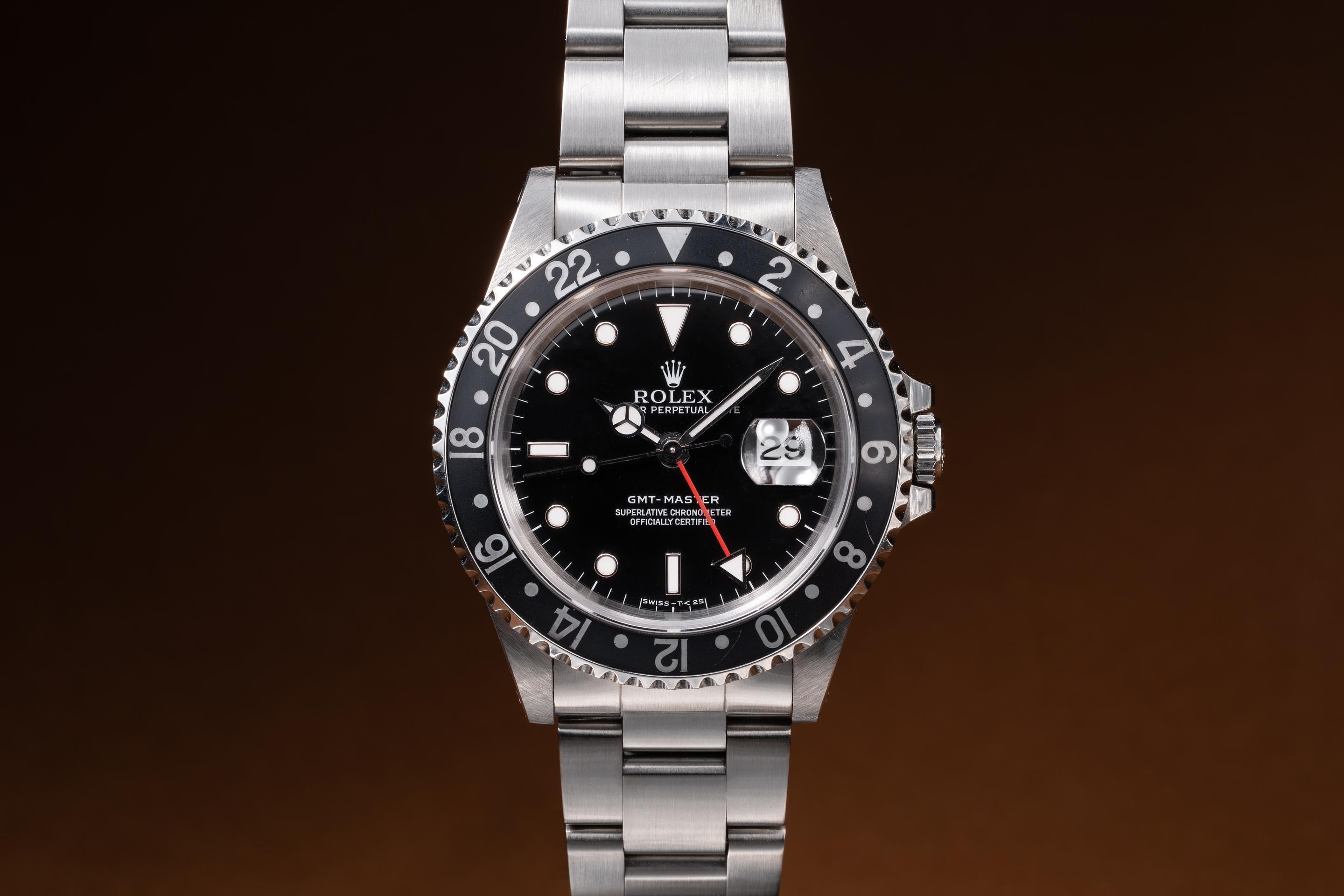
The Rolex GMT-Master II: Everything You Need to Know Before You Buy
There are watches that tell time, and then there are watches that tell a story. The Rolex GMT-Master II sits firmly in the second category. Born from a partnership between Rolex and Pan American World Airways in the 1950s, this watch was originally engineered for professional pilots who needed to track multiple time zones simultaneously during transatlantic flights. Decades later, it has become one of the most recognized, most coveted, and most discussed luxury timepieces in the world. Whether you are a first-time buyer trying to understand what makes this watch worth its price tag, or a seasoned collector considering your next acquisition, this guide breaks down the GMT-Master II in clear, honest terms.
A Brief History of the GMT-Master Line
Rolex introduced the original GMT-Master in 1955, with reference 6542 being among the earliest examples produced for Pan Am pilots. The concept was straightforward but genuinely clever: a fourth hand pointing to a 24-hour graduated bezel allowed wearers to read a second time zone at a glance. By 1959, the reference 1675 had arrived, refining the design with crown guards for added durability. The real evolutionary leap came in 1983 when Rolex unveiled the GMT-Master II, reference 16760, which introduced an independently adjustable local hour hand. This meant travelers could now set the local time without disrupting the GMT reference hand, a functional upgrade that transformed the watch from a professional tool into an everyday companion for global travelers. The line has continued to evolve through references 16710, 116710, and the current 126710, each generation incorporating advances in movement technology, materials, and aesthetics.
How the Dual Time Zone Function Actually Works
This is where a lot of buyers get curious and sometimes confused, so it is worth explaining clearly. The GMT-Master II features three distinct time-reading capabilities on a single dial. The central hour and minute hands display local time. The GMT hand, which completes one full rotation every 24 hours, points to a fixed time zone, typically set to the wearer's home city or UTC. The 24-hour graduated bezel serves as the reference scale for that second time zone. With the GMT-Master II specifically, the local hour hand can be adjusted independently in one-hour increments without stopping the movement. This means if you fly from New York to London, you simply advance the local hour hand by five hours and your watch immediately reflects local time while your GMT hand remains anchored to your home time zone. A third time zone can even be read by rotating the bezel. For frequent travelers, this level of functionality is genuinely useful rather than ornamental.
Understanding the Iconic Bezel Colors and Their Nicknames
Few design elements in watchmaking have generated as much cultural conversation as the GMT-Master II bezel color combinations. Rolex enthusiasts have assigned affectionate nicknames to these variants, and knowing them helps when researching or shopping for the watch.
Pepsi — Blue and red two-tone bezel, one of the most iconic colorways in the entire Rolex catalog Batman — Black and blue bezel, introduced in 2013 on stainless steel models Batgirl — Black and blue bezel on the Jubilee bracelet, introduced in 2019 Root Beer — Brown and gold or brown and black bezel tones, typically found on two-tone or yellow gold models Coke — Black and red bezel, classically associated with vintage referencesThese nicknames are used universally within the collector community and among authorized dealers. Understanding them helps buyers communicate precisely when searching for a specific configuration. Each colorway carries its own market dynamics and historical significance, with the Pepsi variant consistently commanding strong demand across both vintage and contemporary examples.
The Movement Inside the GMT-Master II
Current production GMT-Master II models are powered by the Rolex Calibre 3285, a manufacture movement developed entirely in-house. This movement offers a power reserve of approximately 70 hours, operates at 28,800 vibrations per hour, and incorporates Rolex's patented Chronergy escapement, which improves energy efficiency by approximately 15 percent compared to conventional lever escapements. The movement is also equipped with a paramagnetic blue Parachrom hairspring, which provides significantly greater resistance to magnetic fields and temperature variations than traditional hairsprings. Rolex certifies the movement as a Superlative Chronometer, meaning it has been tested beyond the standards required by COSC certification and achieves accuracy of plus or minus two seconds per day in real-world conditions. This is a movement built for long-term reliability, not just impressive specifications on paper.
Case, Bracelet, and Material Options
The GMT-Master II is offered in several distinct material configurations, each appealing to different tastes and budgets. Stainless steel references on the Oyster or Jubilee bracelet represent the most accessible entry point and also tend to generate the most demand on both primary and secondary markets. Two-tone models combining Oystersteel with 18k yellow gold or Everose gold occupy a middle tier, offering visual warmth without committing fully to precious metal. Full 18k yellow gold, white gold, and Everose gold references represent the top of the range. The case diameter measures 40mm across all current references, a proportionally versatile size that wears well on most wrists. Water resistance is rated to 100 meters, and the Oysterlock clasp includes a Rolex Easylink comfort extension that allows wearers to adjust bracelet length by approximately 5mm without tools.
Buying New Versus Buying Vintage: What You Should Consider
This question comes up constantly among buyers entering the GMT-Master II market for the first time. New examples purchased through authorized Rolex dealers come with the manufacturer's warranty, documented provenance, and the assurance of current-spec components. However, waitlists at authorized dealers can extend for months or even years on popular references, and retail pricing does not always reflect actual market value. Vintage GMT-Master and GMT-Master II references, particularly examples from the 1960s through the 1990s, offer a different kind of appeal entirely. Patinated dials, original tropical color developments, and historical context attached to specific references can make a vintage piece significantly more compelling to the seasoned collector. References like the 1675, 16750, and 16710 represent different chapters in the model's evolution, each with their own collector following. The vintage market does require more due diligence around authentication, service history, and originality of components, which is why sourcing from reputable specialists matters considerably.
How the GMT-Master II Holds Its Value Over Time
Among Rolex sports models, the GMT-Master II has historically demonstrated strong value retention and, in many cases, meaningful appreciation over time. The combination of genuine functional utility, iconic design language, and constrained supply relative to demand creates favorable conditions for long-term value stability. Specific references and colorways have seen significant appreciation in secondary market pricing over the past decade. The stainless steel Pepsi reference 126710BLRO and the Batman reference 116710BLNR are two examples that have consistently traded above retail on secondary platforms. That said, the watch market is not a guaranteed investment vehicle, and buyers should approach any purchase primarily on the merits of the watch itself rather than speculative returns. Condition, originality, and documentation all play meaningful roles in determining resale value for any specific example.
Why Tropical Watch Is the Right Source for Your GMT-Master II
When you are ready to explore the GMT-Master II seriously, the source matters as much as the watch itself. Tropical Watch has built a distinguished reputation within the luxury and vintage Rolex market, offering curated selections of authenticated timepieces backed by genuine expertise. Whether you are searching for a current-production reference or a rare vintage example with an original dial, working with a trusted specialist protects your investment and simplifies what can otherwise be a complicated acquisition process. For collectors and first-time buyers alike, discovering vintage and pre-owned Rolex GMT-Master II watches at Tropical Watch means gaining access to a team that understands provenance, authenticity, and the nuances that separate a good purchase from a great one. The GMT-Master II is not just a watch purchase; it is a long-term relationship with a piece of horological history, and that relationship starts with choosing the right partner.
Frequently Asked Questions About the Rolex GMT-Master II
What is the difference between the GMT-Master and the GMT-Master II?
The original GMT-Master features a GMT hand that moves in conjunction with the main hour hand, meaning adjusting local time also adjusts the GMT reference. The GMT-Master II introduced an independently adjustable local hour hand, allowing travelers to set local time without disturbing the home time zone reference. This makes the GMT-Master II significantly more practical for frequent travelers.
How much does a Rolex GMT-Master II cost?
Retail pricing for current GMT-Master II models in stainless steel begins at approximately $10,000 to $12,000 USD, though actual transaction prices on secondary markets often exceed retail due to demand. Two-tone and precious metal references command higher prices, with full gold configurations reaching $40,000 and above depending on specification.
Is the Rolex GMT-Master II worth buying as an investment?
The GMT-Master II has historically demonstrated strong value retention compared to many other luxury watches, particularly in stainless steel and popular colorways. However, no watch purchase should be treated as a guaranteed financial investment. Buy the watch because it suits your needs and preferences, and consider value retention a favorable secondary characteristic rather than the primary motivation.
What does the GMT hand do on the GMT-Master II?
The GMT hand is a fourth central hand that completes one full rotation every 24 hours rather than 12. It is used in conjunction with the 24-hour graduated bezel to read a second time zone simultaneously. On the GMT-Master II, this hand remains fixed to a reference time zone while the regular hour hand is adjusted independently for local time.
What is a Pepsi Rolex GMT-Master II?
The Pepsi nickname refers to GMT-Master and GMT-Master II models featuring a two-tone blue and red bezel. The colorway has existed since the earliest GMT-Master references in the 1950s and remains one of the most sought-after configurations in the entire Rolex lineup. Current production Pepsi references are available in stainless steel and white gold.
How do I verify the authenticity of a vintage Rolex GMT-Master II?
Authenticating a vintage GMT-Master II involves examining the movement serial number, reference engravings between the lugs, dial printing consistency, case finishing, and the originality of components including the bezel, crown, and bracelet. Working with an established specialist or requesting independent authentication from a qualified watchmaker significantly reduces the risk of acquiring a misrepresented example.


