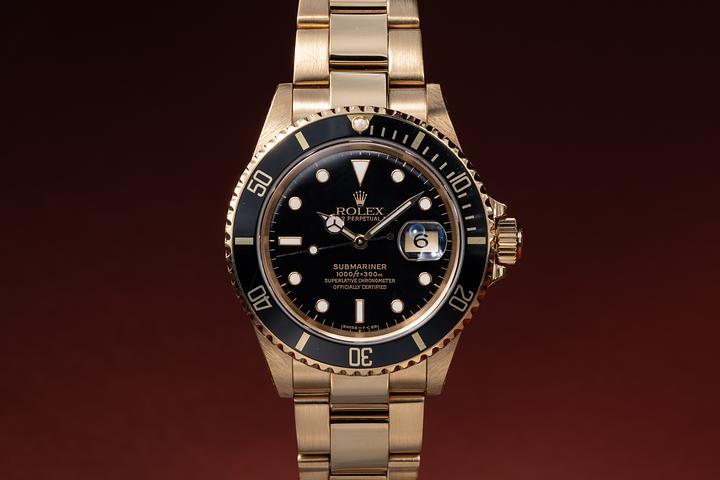
Where Rolex Watches Are Made: Inside the Swiss Craftsmanship

Where Rolex Watches Are Made: Inside the Swiss Craftsmanship Behind Every Crown
If you have ever held a Rolex watch and wondered exactly where it came from — not the store, but the actual origin of its movement, its case, its dial — you are asking exactly the right question. Rolex watches are made in Switzerland, and that single fact carries a considerable amount of weight. Switzerland has been synonymous with fine watchmaking for centuries, and Rolex has not just participated in that tradition — it has helped define it. Understanding where Rolex watches are made gives you a deeper appreciation for what you are wearing and, arguably, a sharper eye when evaluating your next purchase.
The Swiss Origins of Rolex: A Quick History
Rolex was founded in 1905 by Hans Wilsdorf and Alfred Davis, originally registered in London. However, Wilsdorf had his sights set on Switzerland from the beginning. Swiss movements were already regarded as the finest in the world, and Wilsdorf recognized that aligning the Rolex name with Swiss precision was not just good marketing — it was good sense. By 1919, he relocated the company headquarters to Geneva, Switzerland, cementing a relationship between the brand and the country that has only deepened over the following century. The company formally became Montres Rolex S.A., headquartered in Geneva, and it has remained there ever since. That is not a minor detail. Geneva, alongside the Vallée de Joux and the Jura region, represents the heart of Swiss horology — and Rolex chose to be right in the middle of it.
Geneva and Biel: The Two Production Centers That Matter
Rolex operates primarily out of two Swiss locations. The main headquarters and a significant portion of watchmaking operations are based in Geneva, specifically in the Plan-les-Ouates district. This facility handles movement production, assembly, quality control, and research and development. Then there is Biel, a city in the canton of Bern, where Rolex produces its watch cases, bracelets, and dials. Biel has a long-standing reputation as a hub for watch component manufacturing, and Rolex has invested heavily in that location. Together, these two cities represent the full scope of what it means to make a Rolex watch — from the smallest gear in the movement to the polished finish on the case.
What Does "Swiss Made" Actually Mean for Rolex?
The "Swiss Made" designation is a legal standard in Switzerland, not just a marketing phrase. For a watch to carry that label, it must meet specific criteria established by Swiss law. At minimum, the movement must be Swiss, cased in Switzerland, and the final inspection must occur in Switzerland. Rolex not only meets these requirements — it significantly exceeds them. Virtually every component in a Rolex watch is designed, developed, and manufactured in-house, at their own Swiss facilities. That level of vertical integration is genuinely rare, even among prestigious watch brands. Most luxury watchmakers rely on a network of external suppliers for at least some components. Rolex largely does not. They produce their own alloys, their own movements, their own bracelets, and even develop proprietary materials like Oystersteel, Everose gold, and Cerachrom ceramic bezels.
Inside the Movement: What Gets Built in Geneva
The Geneva facility at Plan-les-Ouates is where the mechanical heart of a Rolex watch comes to life. Every caliber — the internal movement that powers the watch — is engineered, assembled, and tested here. Rolex employs thousands of skilled watchmakers and technicians at this facility, many of whom have trained for years in the specific disciplines required to build movements at this level of precision. The calibers used in current Rolex watches are certified as Superlative Chronometers by Rolex itself, a standard that goes beyond the already rigorous COSC chronometer certification. This means each movement is tested for accuracy to within plus or minus two seconds per day after assembly. For context, COSC certification allows for a variation of minus four to plus six seconds per day. Rolex holds its movements to a tighter standard, tested in their own laboratories, on their own finished watches.
Cases, Dials, and Bracelets: The Biel Facility
If the movement is the heart of a Rolex, the case and bracelet are its architecture. The Biel facility is responsible for producing the physical components that give Rolex watches their distinctive appearance and structural integrity. Cases are machined from solid blocks of Oystersteel or precious metals. Bracelets — whether Oyster, Jubilee, or President — are manufactured to tolerances that most industries would consider extraordinary. Dials are produced here as well, with finishing techniques that range from sunray brushing to guilloché patterns to meteorite surfaces. Each of these steps involves specialized machinery and human expertise working in close coordination. What comes out of Biel is not a collection of parts — it is a collection of precision-engineered components ready to be brought together in Geneva.
The Role of In-House Manufacturing in Rolex Quality
One of the defining characteristics of Rolex as a manufacturer is how much of the process they control directly. This matters more than it might seem at first. When a brand manufactures its own components, it controls the quality at every stage. There is no dependency on third-party suppliers, no potential for inconsistency introduced by an outside vendor, and no compromise required when a supplier changes specifications. Rolex develops its own metal alloys, including the proprietary 904L stainless steel they call Oystersteel, which offers superior corrosion resistance compared to the 316L steel used by most other manufacturers. They also operate their own foundry for casting precious metals. This degree of control is a direct reflection of the brand's commitment to consistency — and it is one of the reasons Rolex watches maintain such strong value over time.
Why Swiss Craftsmanship Matters When Buying a Rolex
Understanding where Rolex watches are made is not just trivia — it has practical implications for any buyer, whether you are purchasing new or vintage. Swiss-made movements benefit from a regulatory environment, a skilled labor pool, and a manufacturing tradition that simply does not exist at the same level anywhere else in the world. When you purchase a Rolex, you are purchasing the output of an ecosystem that has been refining its craft for generations. That heritage is part of what makes Rolex watches durable, accurate, and enduringly desirable. For vintage collectors especially, knowing the production history — where a specific caliber was made, which facility produced the case, how components evolved over decades — adds meaningful context to every acquisition.
Tropical Watch: Your Source for Expertly Curated Vintage Rolex Watches
If this deep dive into Rolex's Swiss origins has sharpened your interest in owning one — particularly a vintage example — then where you buy matters just as much as what you buy. Tropical Watch is a trusted destination for collectors and first-time buyers alike who want to acquire authenticated vintage Swiss-made Rolex watches with documented provenance. The team at Tropical Watch understands the nuances of Rolex production history, from early Geneva-era calibers to mid-century Biel-manufactured components, and that expertise translates directly into the quality of inventory they curate and the guidance they offer buyers. Whether you are drawn to a patinated dial from the 1960s or a specific reference with historical significance, Tropical Watch brings the kind of knowledge to the table that makes the difference between a good purchase and an exceptional one.
Frequently Asked Questions About Where Rolex Watches Are Made
Are all Rolex watches made in Switzerland?
Yes, all Rolex watches are manufactured entirely in Switzerland. The company operates production facilities in Geneva and Biel, where movements, cases, dials, and bracelets are all produced in-house under Swiss manufacturing standards.
What city is the Rolex headquarters located in?
Rolex is headquartered in Geneva, Switzerland. The primary watchmaking and movement assembly operations are based in the Plan-les-Ouates district of Geneva, while case and bracelet production takes place in Biel.
Does Rolex manufacture its own movements?
Yes. Rolex designs and manufactures its own mechanical movements entirely in-house at its Geneva facility. These calibers are held to a Superlative Chronometer standard, which exceeds the requirements of standard COSC chronometer certification.
What does Swiss Made mean on a Rolex watch?
Swiss Made is a legally protected designation in Switzerland requiring that the movement be Swiss, the watch be cased in Switzerland, and the final inspection occur in Switzerland. Rolex exceeds these requirements by producing nearly all components domestically and in-house.
Is Swiss-made Rolex quality different from other luxury watch brands?
Rolex's level of vertical integration sets it apart from many other luxury watchmakers. By controlling the production of its own alloys, movements, cases, and bracelets, Rolex maintains a consistency of quality that brands relying on external suppliers cannot always guarantee.
Why do vintage Rolex watches hold their value so well?
Vintage Rolex watches retain value due to a combination of Swiss manufacturing quality, historical significance, limited supply, and sustained global demand. The durability of Swiss-made movements means many vintage examples remain functional and accurate decades after production.