Rolex Datejust: A Timeless Icon of Swiss Watchmaking Excellence
The Rolex Datejust: An Introduction to an Icon
There are watches, and then there is the Rolex Datejust. Introduced in 1945 to commemorate Rolex's 40th anniversary, the Datejust became the first wristwatch in the world to display the date automatically through a magnified aperture on the dial. That single innovation changed the course of watchmaking history. Decades later, it remains one of the most recognized, respected, and sought-after luxury timepieces ever produced. Whether you are stepping into the world of fine watches for the first time or you have been collecting for years, the Datejust deserves serious consideration and genuine understanding. This piece covers everything you need to know — its history, its mechanics, its variants, and why it continues to hold such cultural and financial relevance in the modern market.
A Brief History of the Rolex Datejust
The Datejust debuted on April 15, 1945, and made its formal public appearance on the wrist of a Swiss tennis champion at Wimbledon in 1946. From that moment, the watch was associated with achievement, precision, and a certain understated authority. The original reference 4467 featured a 36mm Oyster case — the same waterproof case architecture Rolex had developed in 1926 — paired with an in-house automatic movement and that groundbreaking date display. Over the following decades, Rolex refined and evolved the Datejust through numerous references, introducing the cyclops lens over the date window in 1953, the jubilee bracelet, and later, expanded case sizes. By the time the modern era arrived, the Datejust had become a genuine cultural artifact — worn by presidents, artists, executives, and everyday people who simply appreciated quality.
What Makes the Datejust Technically Exceptional
The Datejust is not just elegant — it is engineered to exceptional standards. Rolex manufactures the majority of its components in-house, including the movements that power the Datejust. The current generation runs on the Calibre 3235, a self-winding movement certified as a Superlative Chronometer by Rolex itself, meaning it meets accuracy standards of plus or minus two seconds per day — well beyond the requirements set by the Swiss Official Chronometer Testing Institute. The movement also features Rolex's patented Chronergy escapement, which offers improved energy efficiency and reliability. The case, crafted in Oystersteel, yellow gold, white gold, Everose gold, or two-tone combinations known as Rolesor, is designed to resist corrosion and withstand daily wear. The Triplock winding crown and Oysterlock clasp further reinforce the watch's durability. These are not marketing claims — they are measurable engineering achievements built into every piece that leaves the Geneva facility.
Datejust Sizes, Dials, and Customization Options
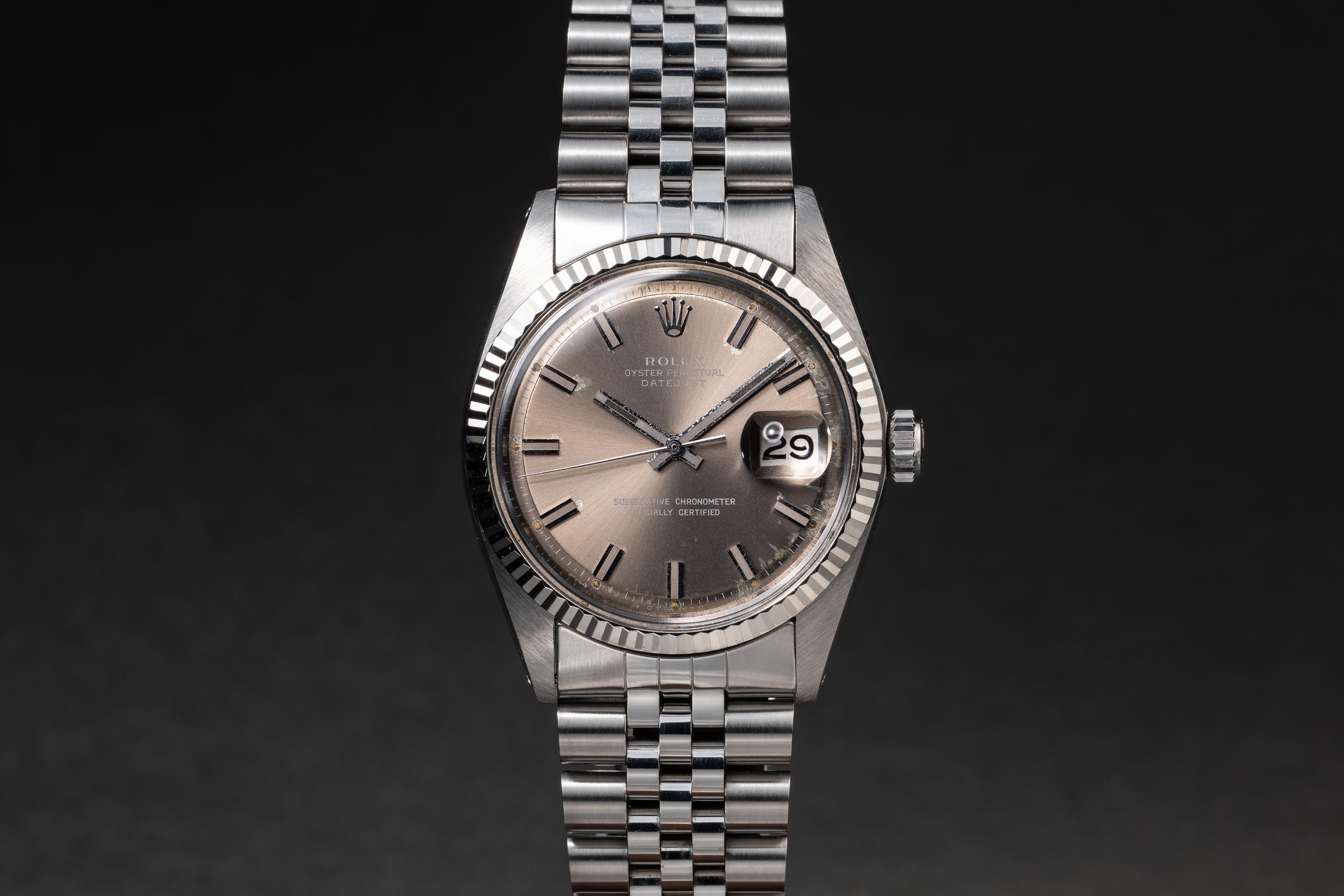
One of the defining characteristics of the Datejust is the sheer breadth of its configuration options. Rolex currently offers the Datejust in 36mm and 41mm case sizes, with the 36mm historically considered the classic choice and the 41mm appealing to those who prefer a larger presence on the wrist. Dial options are extensive — including sunray finishes, gem-set variations, lacquered surfaces, and meteorite dials for those who want something genuinely rare. Bezel styles range from the smooth polished bezel to the fluted bezel, which holds particular historical significance, and the diamond-set bezel for formal occasions. Bracelet choices include the iconic jubilee, the sportier oyster, and the elegant president bracelet on select models. The result is a watch that can be configured for a boardroom, a black-tie event, or a weekend outing — often the same watch, depending on how you read it.
Vintage Rolex Datejust: Why Collectors Pay Attention
The vintage Datejust market is one of the most active segments in pre-owned luxury watchmaking. Collectors pursue specific references for their historical significance, rarity, and the patina that only decades of wear can produce. Early references such as the 6305, 6604, and 1601 are particularly prized, as are models featuring exotic dial variations — including the tropical dials that developed distinctive brown or chocolate hues through oxidation over time. These dials were not intentional design choices by Rolex; they are the result of chemical changes in early lacquer formulations exposed to heat, humidity, and light over decades. The irony is that what was once considered a defect is now among the most desirable features a vintage Rolex can possess, commanding significant premiums at auction. For collectors, the Datejust represents an accessible entry point into vintage Rolex collecting — one that does not require the budget of a vintage Daytona but still delivers genuine historical depth.
How to Authenticate and Evaluate a Rolex Datejust
Purchasing a Rolex Datejust — especially in the pre-owned or vintage market — requires due diligence. Authentication is essential. Key areas to examine include the following:
Case and bracelet serial and reference numbers engraved between the lugs The cyclops lens magnification, which should read 2.5x and align perfectly over the date Movement finishing, which should display consistent and precise Rolex standards The crown and its engravings, particularly the Rolex crown logo at the tip Original documentation, service history, and box papers where available Dial printing consistency, including font, spacing, and the applied indices
Working with a reputable dealer or specialist who can provide documented provenance is the most reliable approach. Counterfeit Datejust watches are common, and while some are easy to spot, others require professional examination. Never rush a purchase, and always request supporting documentation before committing.
The Rolex Datejust as a Long-Term Investment
It would be intellectually dishonest to discuss the Datejust without addressing its financial dimension. Rolex watches, broadly speaking, have demonstrated resilience in value retention compared to most consumer goods. The Datejust, as the entry point to the Rolex lineup in many configurations, holds value reliably — and certain references, particularly vintage models with desirable dials or original condition, have appreciated significantly over time. That said, the Datejust is not a speculative instrument. It is a watch first, and its investment characteristics are secondary to its function as an heirloom-quality timepiece. The more relevant framing is this: when you purchase a well-maintained or well-sourced Datejust, you are unlikely to lose value significantly over time, and you may find yourself holding something worth considerably more than you paid — especially in the vintage market. That is a combination few luxury purchases can offer.
Caring for Your Rolex Datejust
Ownership of a Rolex Datejust carries responsibility. Proper care extends the life of the watch and preserves its value. Rolex recommends servicing the watch approximately every ten years under normal use, though watches worn daily or exposed to demanding conditions may benefit from earlier attention. Between services, regular cleaning with a soft cloth and lukewarm water — keeping the crown tightly screwed down — helps maintain the case and bracelet. Avoid exposing the watch to strong magnetic fields, as these can affect movement accuracy. Store the watch in a watch box or roll when not being worn, and keep it away from direct prolonged sunlight if it features a colored lacquer dial. Vintage examples with original dials should be handled with particular care, as originality is a primary factor in their valuation.
Why Tropical Watch Is the Right Source for Your Datejust
Finding the right Rolex Datejust — particularly a vintage reference in genuine condition — depends entirely on who you trust to source it. Tropical Watch is a specialized dealer with deep expertise in vintage and pre-owned Rolex timepieces, offering collectors and first-time buyers access to authenticated, carefully curated examples that are difficult to find through general retail channels. The team at Tropical Watch understands the nuances of dial originality, movement integrity, and reference rarity in ways that generic resellers simply do not. If you are searching for an authentic vintage Rolex Datejust with verified provenance, Tropical Watch provides the transparency, expertise, and inventory to match serious buyers with exceptional pieces. For anyone navigating the vintage Rolex market, this is the kind of partnership that makes all the difference between a confident purchase and a costly mistake.
Frequently Asked Questions About the Rolex Datejust
What year was the Rolex Datejust first introduced?
The Rolex Datejust was first introduced in 1945, created to commemorate the brand's 40th anniversary. It was the first wristwatch in history to feature an automatically changing date display on the dial.
What is the difference between a Rolex Datejust 36 and Datejust 41?
The primary difference is case size. The Datejust 36 measures 36mm in diameter and is considered the classic, heritage-appropriate size. The Datejust 41 measures 41mm and offers a more contemporary, larger presence on the wrist. Both share the same core design language and movement standards.
How much does a Rolex Datejust cost?
New Rolex Datejust models typically range from approximately $7,000 to well over $30,000 depending on material, dial configuration, and bezel choice. Vintage references vary widely based on condition, rarity, and provenance, with some exceptional examples selling at auction for multiples of their original retail price.
What is a tropical dial on a vintage Rolex Datejust?
A tropical dial refers to a vintage Rolex dial that has developed a distinctive brown or chocolate coloration over decades due to oxidation of the original lacquer. These dials were not intentionally designed this way, but they are now among the most sought-after variations in vintage Rolex collecting and command significant premiums.
How often should a Rolex Datejust be serviced?
Rolex recommends servicing the Datejust approximately every ten years under normal conditions. More frequent use or exposure to demanding environments may warrant earlier service intervals. A complete service typically includes movement cleaning, lubrication, case and bracelet refinishing, and seal replacement.
Is the Rolex Datejust a good investment?
The Datejust is primarily an exceptional timepiece, but it has demonstrated strong value retention over time. Certain vintage references have appreciated considerably, particularly those with original dials, unpolished cases, and documented provenance. It is not a speculative asset, but it is among the most financially stable luxury watches available.