


Rolex GMT-Master II Review: Dual-Time Precision Refined
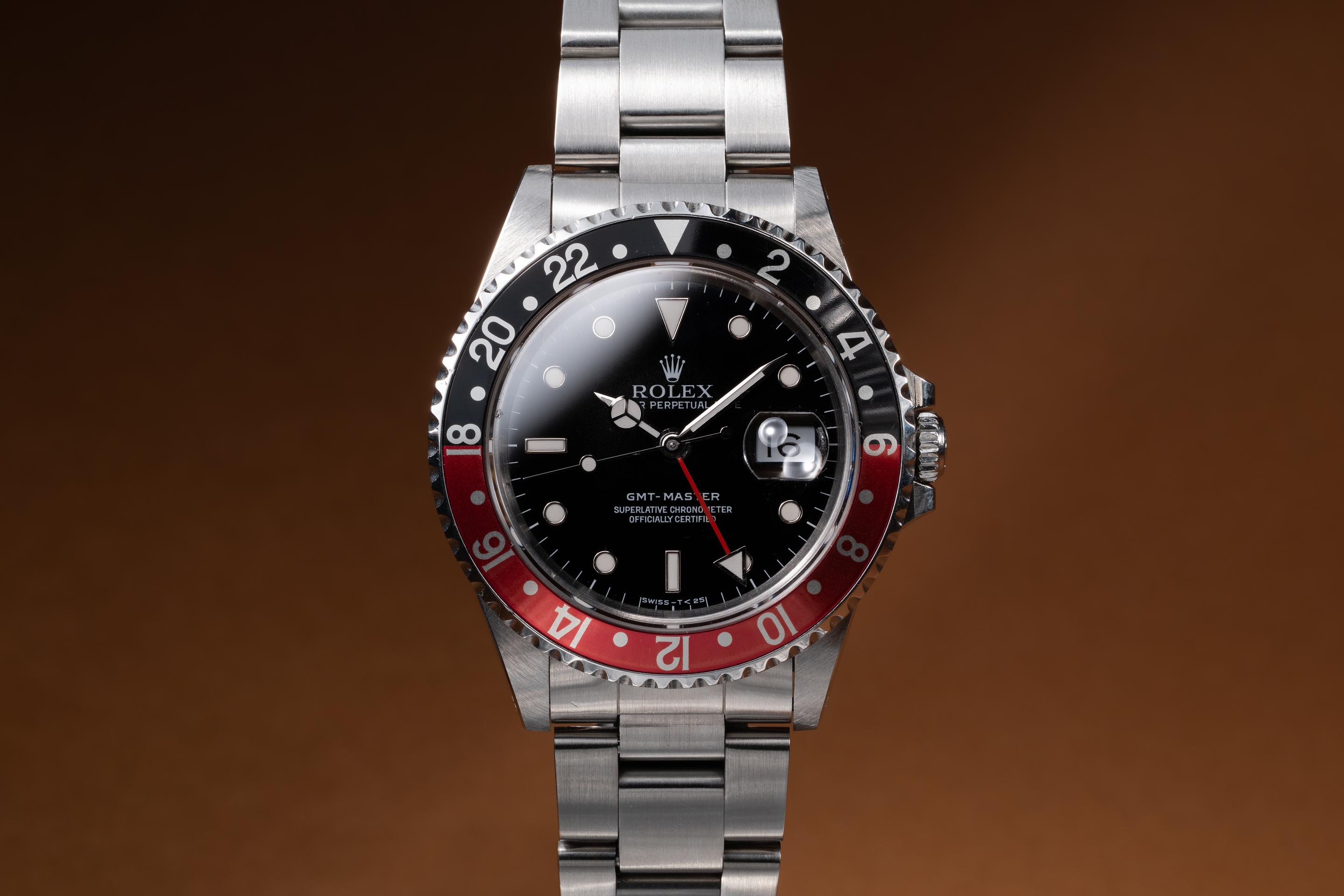
What Makes the Rolex GMT-Master II One of the Most Coveted Watches in the World
There are tool watches, and then there is the Rolex GMT-Master II. Since its introduction in 1983, this watch has done something few timepieces manage to pull off: it became genuinely indispensable. Not in a marketing-speak kind of way, but in the literal, practical sense that professionals who needed to track multiple time zones around the globe reached for this watch and trusted it. Decades later, collectors, travelers, and enthusiasts still do. The GMT-Master II is precision engineering wrapped in one of the most recognizable designs in horological history. If you are exploring what this watch is, what it does, and whether it belongs on your wrist or in your collection, this guide covers everything worth knowing.
A Brief History of the GMT-Master Line
The GMT-Master story begins in the 1950s, when Pan American World Airways partnered with Rolex to develop a watch capable of displaying two time zones simultaneously. Pilots and navigators needed a reliable instrument for crossing time zones on long-haul international routes, and the original GMT-Master, released in 1955, answered that call directly. It featured a 24-hour rotating bezel and an additional GMT hand, allowing the wearer to track a second time zone at a glance. The GMT-Master II arrived in 1983 with a critical improvement: the ability to set the local hour hand independently of the minute hand and the GMT hand. That distinction, though it sounds technical, completely changed how the watch could be used. You no longer had to reset the entire movement to adjust for a new time zone. The hour hand moved on its own. That upgrade cemented the GMT-Master II as the definitive dual-time watch for serious travelers.
Understanding the Dual-Time Complication
The complication at the heart of the GMT-Master II is elegant in its logic. The watch displays three time zones simultaneously when used to its full capability. The standard hour and minute hands show local time. A dedicated red-tipped GMT hand completes one full rotation every 24 hours and can be read against the 24-hour graduated bezel to track a second time zone. And if you need a third reference, a fixed 24-hour scale on the inner flange of the dial provides an additional anchor. The independently adjustable hour hand is the defining feature here. When you land in a new city, you simply advance or pull back the local hour hand in one-hour increments without disturbing the minutes or the GMT hand. Your home time stays intact. Your new local time adjusts cleanly. For anyone who regularly operates across time zones, this is not a novelty feature. It is genuinely useful.
The Iconic Bezel: Colors, Materials, and Meaning
Ask anyone to describe the GMT-Master II and they will probably mention the bezel first. That two-tone rotatable bezel is one of the most visually distinctive elements in watchmaking. The classic colorways have names that carry real weight among collectors and enthusiasts.
Pepsi: Blue and red, referencing the classic Pan Am and aviation heritage Sprite: Green and black, introduced in the Oystersteel and yellow gold reference Batman: Black and blue, introduced in 2013 and discontinued in Oystersteel form Batgirl: Black and blue in Jubilee bracelet configuration, a subtle but meaningful variant Root Beer: Brown and gold tones, available in yellow or Everose gold casesThe bezel materials have evolved considerably over time. Early models used aluminum inserts that were prone to fading and scratching over decades of wear. Rolex later transitioned to sapphire crystal bezels, which are far more scratch-resistant and color-stable. The Cerachrom ceramic bezel, introduced in more recent references, represents the current standard. Ceramic holds color with exceptional consistency and resists virtually all corrosion and UV fading. The color combinations are not random. The 24-hour bezel uses two colors to distinguish day from night: typically the lighter color represents daylight hours and the darker color represents nighttime hours, which helps the wearer instantly identify whether the GMT hand is showing a daytime or nighttime hour in the reference time zone.
Movement and Caliber: The Engineering Inside
The current production GMT-Master II runs on the Rolex Caliber 3285, which replaced the long-serving Caliber 3186. The 3285 represents a meaningful step forward in performance, efficiency, and convenience. It incorporates Rolex's proprietary Chronergy escapement, which improves energy efficiency by approximately 15 percent compared to traditional lever escapements. The movement achieves a power reserve of approximately 70 hours, up from the 48 hours offered by its predecessor. The paramagnetic blue Parachrom hairspring offers high resistance to magnetic fields and performs reliably across temperature variations. The movement is COSC-certified as a chronometer, then further regulated in-house by Rolex to their own Superlative Chronometer standard, meaning it performs to plus or minus two seconds per day in real-world conditions. That is tighter than the standard COSC certification requires, and it matters if you are actually relying on the watch to keep accurate dual-time references.
Case, Bracelet, and Build Quality
The GMT-Master II is housed in a 40mm Oyster case crafted from Oystersteel, Rolex's proprietary 904L stainless steel alloy, or in precious metal configurations including yellow gold, white gold, and Everose gold. The 904L alloy offers superior corrosion resistance and takes a higher polish than the 316L steel used by most watchmakers. The Oyster case is water resistant to 100 meters and features a Twinlock winding crown with a double sealing system. Bracelet options include the Oyster bracelet, with its classic three-link structure and Oysterclasp, and the Jubilee bracelet, a five-link design that sits closer to the wrist with a more refined feel. Both are finished to a high standard, with alternating brushed and polished surfaces. The clasp on current references includes the Easylink comfort extension system, which allows for a quick 5mm adjustment without tools, useful when temperature or activity levels cause the wrist to expand or contract during wear.
Who Wears the GMT-Master II and Why It Endures
The GMT-Master II has always attracted a specific kind of wearer: someone who values function as much as form. Pilots, surgeons, executives with global responsibilities, frequent travelers, and watch collectors who respect genuine tool watch heritage all gravitate toward it. What has sustained its appeal across generations is the fact that the watch earns its place. It does something specific, it does it exceptionally well, and it looks good doing it. The design language has remained consistent enough to feel iconic, while the technical execution has improved steadily over each reference generation. It is also, frankly, one of the most recognizable watches in the world, which carries its own distinct value for those who care about such things.
Vintage vs. Modern: Knowing the Difference
The GMT-Master II has a rich reference history that collectors study closely. Key references include the 16760, the first GMT-Master II with its slightly larger fat case, the 16710 which became the standard production workhorse for nearly two decades, and more recent references like the 116710LN, 116710BLNR, and the current 126710BLRO. Vintage examples from the 1980s and 1990s carry appeal for collectors drawn to patinated dials, aged lume, original aluminum bezels, and the tactile character of older movements. These watches require more attention to service history and authenticity verification. Modern references offer technological refinement and manufacturer warranty coverage. Neither is categorically superior. The right choice depends on whether you prioritize the living history of a worn tool watch or the performance assurance of current production.
Why Tropical Watch Is the Right Place to Find Your Rolex GMT-Master II
For collectors and buyers who understand what they are looking for, sourcing from the right dealer is just as important as knowing the right reference. Tropical Watch has built its reputation on exactly the kind of expertise, inventory curation, and authenticity verification that the vintage and pre-owned luxury watch market demands. Whether you are searching for a specific dial configuration, a particular reference generation, or a watch with documented provenance, their team operates with a depth of knowledge that is genuinely difficult to find elsewhere. If you are serious about acquiring a vintage or pre-owned Rolex GMT-Master II from a trusted luxury watch dealer, Tropical Watch offers the combination of market expertise, authenticated inventory, and collector-focused service that makes the acquisition process worth the investment of your attention. This is a marketplace for people who take their watches seriously, which is exactly the environment a purchase of this significance deserves.
Frequently Asked Questions About the Rolex GMT-Master II
What is the difference between the GMT-Master and the GMT-Master II?
The original GMT-Master, introduced in 1955, featured a GMT hand and a rotating bezel but did not allow the local hour hand to be set independently. The GMT-Master II, introduced in 1983, resolved this limitation by decoupling the local hour hand from the minute hand, allowing travelers to adjust for new time zones without resetting the entire movement.
How many time zones can the GMT-Master II display at once?
The GMT-Master II can display up to three time zones simultaneously. The standard hour and minute hands show local time, the 24-hour GMT hand tracks a second reference time zone against the rotating bezel, and the fixed 24-hour scale on the inner dial ring provides a third reference point.
What does the two-color bezel on the GMT-Master II actually mean?
The two-color design on the 24-hour bezel is functional, not purely decorative. The lighter color typically represents daytime hours and the darker color represents nighttime hours. This allows the wearer to read at a glance whether the GMT hand is pointing to a day or night hour in the reference time zone being tracked.
Is the Rolex GMT-Master II a good investment watch?
The GMT-Master II has historically held and often appreciated in value, particularly in vintage and discontinued references. Factors such as dial condition, bracelet originality, reference rarity, and provenance all influence value. However, no watch purchase should be made based solely on investment potential. Condition, authenticity, and sourcing from reputable dealers matter greatly.
What is Rolex Oystersteel and how does it differ from standard stainless steel?
Rolex Oystersteel is a proprietary 904L stainless steel alloy that offers higher corrosion resistance and accepts a finer polish than the 316L stainless steel used by most watch manufacturers. The result is a case and bracelet that maintain their finish quality with greater longevity under regular wear conditions.
How often does a Rolex GMT-Master II need servicing?
Rolex recommends servicing their watches approximately every ten years under normal use conditions, though this can vary depending on wearing frequency, activity levels, and individual movement wear. A qualified watchmaker should inspect the watch if you notice any change in accuracy, water resistance, or crown feel before that interval is reached.


