


Rolex Daytona vs Omega Speedmaster: Which Wins?
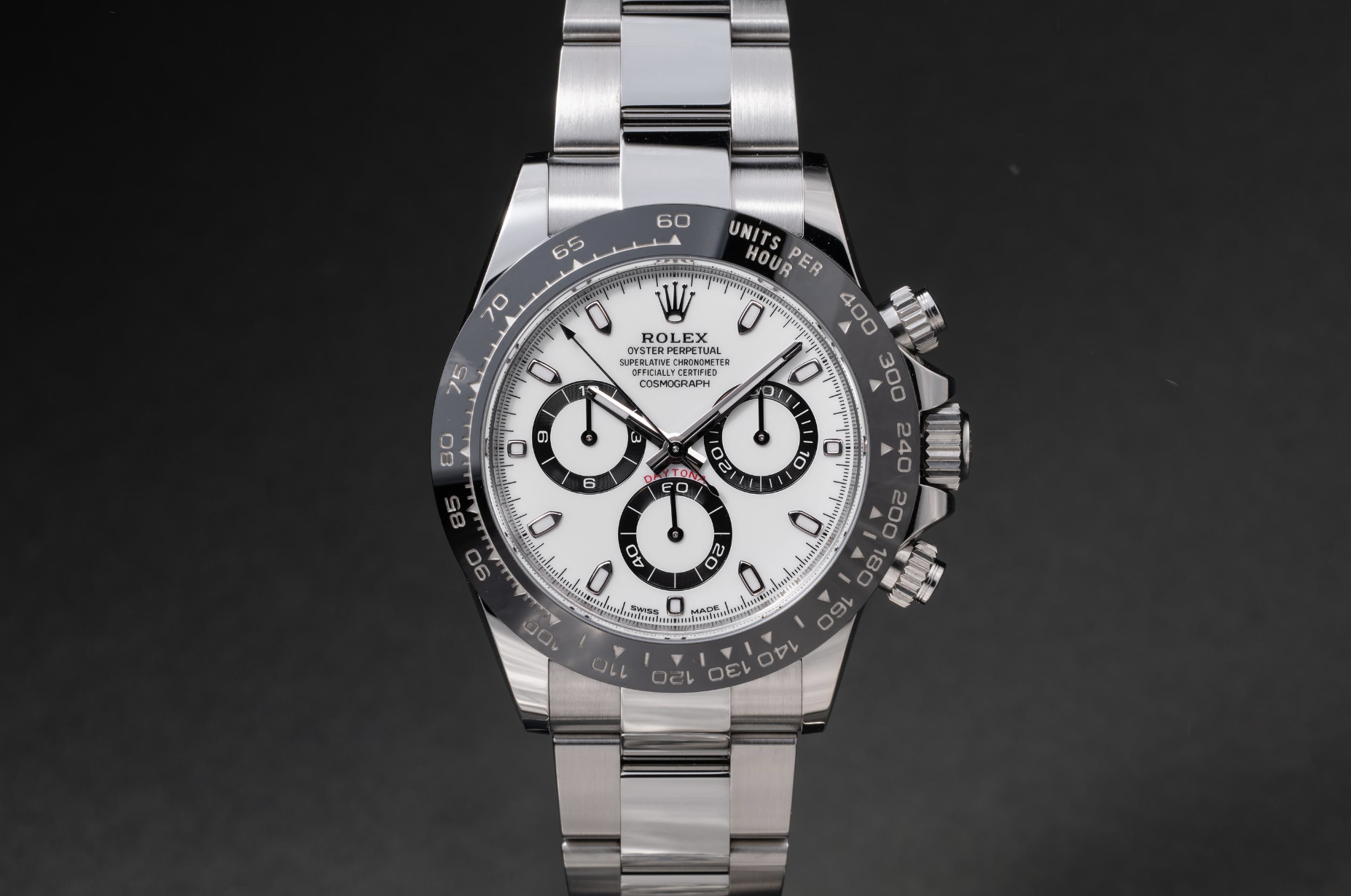
Rolex Daytona vs Omega Speedmaster: Two Icons, One Difficult Decision
If you have ever found yourself staring at both the Rolex Daytona and the Omega Speedmaster side by side, wondering which one deserves a place on your wrist, you are not alone. This is one of the most debated comparisons in the entire luxury watch world, and for good reason. Both watches carry extraordinary legacies, both perform at the highest level, and both have earned their place in horological history. The real question is not which one is better in some objective sense. The question is which one is right for you, your lifestyle, and what you value in a timepiece. This guide breaks it all down clearly so you can walk away with a well-informed perspective.
A Brief History of the Rolex Daytona
The Rolex Cosmograph Daytona was introduced in 1963, originally designed as a tool watch for professional racing drivers. Its name is a direct nod to the famous Daytona International Speedway in Florida, where Rolex held a long and prominent sponsorship relationship. Early references like the 6239 and 6241 were manual-wind chronographs powered by Valjoux movements. The watch gained cultural momentum gradually over the decades, but it was the so-called Paul Newman Daytona, a nickname given to exotic-dial variants after the actor and racing enthusiast Paul Newman, that truly cemented its collector status. By the late 1980s and through the 1990s, Rolex transitioned to the in-house caliber 4030 and eventually the legendary caliber 4130, which remains the movement powering modern Daytonas today. What started as a racing instrument became one of the most coveted and difficult-to-acquire watches on the planet.
A Brief History of the Omega Speedmaster
The Omega Speedmaster has a different but equally compelling story. Introduced in 1957 as a general-purpose sports and racing chronograph, the Speedmaster found its most defining moment not on a racetrack but on the Moon. After rigorous testing by NASA, the Speedmaster Professional was selected in 1965 as the official watch for all manned space missions. It was worn during the Apollo 11 Moon landing in 1969, earning it the enduring nickname the Moonwatch. That historical chapter is not marketing. It is documented aerospace history. The caliber 321 powered early models and is considered one of the most storied movements in watchmaking. Omega has since produced countless Speedmaster variants, but the original Moonwatch configuration, with its black dial and hesalite crystal, remains the most iconic reference in the lineup.
Movement and Technical Specifications Compared
When comparing movements, these two watches take noticeably different philosophical approaches. The Rolex Daytona currently runs on the in-house caliber 4130, a column-wheel chronograph movement with a vertical clutch, offering a power reserve of approximately 72 hours and COSC-certified chronometer accuracy. It is a technically refined, highly reliable movement built entirely by Rolex. The Omega Speedmaster Professional, the classic Moonwatch variant, is powered by the caliber 3861, a modern iteration of the original column-wheel, lever-set movement with a co-axial escapement and Master Chronometer certification from METAS, which is among the most rigorous watch movement certifications available. Both movements represent the top tier of chronograph engineering, though they arrive there through different engineering philosophies. Rolex prioritizes robustness and consistency. Omega combines traditional craftsmanship with modern precision standards.
Design Language and Aesthetic Differences
Both watches wear well on a variety of wrist sizes, though they have distinct visual identities. The Rolex Daytona measures 40mm in diameter and features a tachymeter bezel integrated directly into its Oyster case, giving it a sport-luxe aesthetic that reads as simultaneously refined and purposeful. The dial is typically clean and structured with three subsidiary registers and high-contrast color combinations. The Speedmaster Professional is also 42mm in diameter, with an external tachymeter bezel on the ring surrounding the watch, a slightly more utilitarian layout, and that signature black dial with applied indices. The Daytona leans toward sophistication. The Speedmaster carries a more functional, almost austere quality that appeals to those who value heritage over flash. Neither is wrong. They just speak different visual languages.
Pricing, Market Value, and Availability
This is where the conversation becomes very practical. The Rolex Daytona is famously difficult to purchase at retail. Authorized dealer wait lists can stretch for years, and even then, there is no guarantee. As a result, the secondary market price for a new Daytona in stainless steel routinely exceeds retail by a significant margin, often trading at two to three times the official price depending on reference and condition. The Omega Speedmaster Professional, while certainly a respected and collectible watch, is generally more accessible both at retail and on the secondary market. You can often find one at or near retail from authorized dealers without an extended wait. For collectors interested in the vintage market, both watches offer tremendous depth, with early Daytonas and early Speedmaster references commanding serious premiums based on dial condition, provenance, and rarity.
Collectibility and Long-Term Value
The vintage market tells a nuanced story about both references. Vintage Rolex Daytona references, particularly those with exotic tropical dials or original Paul Newman configurations, have set auction records repeatedly over the past decade. A Paul Newman Daytona sold at Phillips in 2017 for over 17 million dollars, making it the most expensive wristwatch ever sold at auction at that time. Vintage Speedmasters, especially early pre-Moon mission references with the original caliber 321, are also highly sought after, though at generally lower price points. If long-term value retention is a priority in your decision, the Daytona has historically demonstrated a stronger upward trajectory in the collector market. That said, the Speedmaster is no slouch, and its NASA legacy provides a floor of cultural significance that keeps demand consistently healthy.
Which Watch Suits Which Buyer
Choosing between these two watches really comes down to what you want a watch to represent on your wrist. Consider these distinctions when making your decision:
- The Rolex Daytona is likely the better fit if you prioritize investment value and resale potential, if you want a watch with crossover luxury appeal that works in both casual and formal settings, and if in-house movements and Rolex prestige carry significant weight for you.
- The Omega Speedmaster Professional is likely the better fit if space exploration history and NASA heritage genuinely excite you, if you want a more accessible entry point into serious chronograph collecting, and if you appreciate a watch that is proudly utilitarian and historically documented.
Wearing Both Watches in Real Life
On the wrist, the two watches feel different in ways that matter. The Daytona, particularly on an Oyster bracelet, feels substantial and polished. It transitions from a casual weekend setting to a business dinner without any awkwardness. The Speedmaster, especially on its classic steel bracelet or a NATO strap, leans more toward adventure and purpose. It pairs naturally with field jackets and denim but can absolutely hold its own in a professional setting. Both are 40mm range watches that wear comfortably for most wrist sizes. If you ever have the opportunity to try both on before deciding, that tactile experience will tell you more than any comparison article can.
Why Tropical Watch Is the Right Place to Start Your Search
For anyone seriously exploring the collector market for either of these iconic chronographs, working with a trusted specialist makes all the difference. Tropical Watch has built a reputation as one of the most respected sources for authenticated, curated vintage and pre-owned luxury watches, with a particular depth of expertise in vintage Rolex. Whether you are chasing a grail Daytona reference or want guidance navigating the nuances of dial condition and provenance, the team at Tropical Watch brings the kind of hands-on knowledge that simply cannot be replicated by a general marketplace. If you are ready to explore some of the finest examples in the collector market, browsing the current inventory of vintage Rolex Daytona and Omega chronograph watches is an excellent place to begin. The selection is thoughtfully curated, the authentication process is rigorous, and the experience of working with genuine specialists speaks for itself.
Frequently Asked Questions
Is the Rolex Daytona worth the premium over the Omega Speedmaster?
It depends on your priorities. The Daytona commands a higher market price and has demonstrated stronger long-term value appreciation, particularly in vintage references. If investment potential matters alongside wearability, the Daytona justifies the premium for many collectors. If heritage and accessibility are more important, the Speedmaster offers tremendous value at a lower price point.
Which watch holds its value better over time?
Historically, the Rolex Daytona has shown stronger and more consistent value retention on the secondary market. Vintage references, especially exotic dial examples, have appreciated dramatically over the past two decades. The Omega Speedmaster also holds value well, particularly early Moon mission references, but the Daytona has the edge in overall market performance.
What is the difference between the Omega Speedmaster Professional and other Speedmaster models?
The Speedmaster Professional, often called the Moonwatch, is the specific reference that was qualified by NASA for spaceflight. It features a manual-wind movement, a hesalite crystal on most configurations, and the classic black dial with applied hour markers. Other Speedmaster models in the lineup may have automatic movements, different case sizes, or updated materials, but the Professional remains the original and most historically significant variant.
Can I buy a Rolex Daytona at retail without a long wait?
In most markets, purchasing a new Rolex Daytona from an authorized dealer involves a significant wait, often measured in years. Demand consistently outpaces supply at retail. Many buyers choose to purchase through the pre-owned or vintage market instead, where availability is broader, though prices on the secondary market typically exceed the official retail price.
Which watch is better for everyday wear?
Both watches are built to be worn regularly and are highly durable. The Rolex Daytona, with its Oyster case and sapphire crystal, offers excellent water resistance and scratch resistance for daily use. The Speedmaster Professional with a hesalite crystal requires slightly more care as hesalite scratches more easily, though it can be polished. For pure durability in everyday conditions, the Daytona has a slight practical edge.
What should I look for when buying a vintage Rolex Daytona or Speedmaster?
For vintage examples of either watch, dial originality and condition are the most critical factors affecting value. Look for unpolished cases, original hands, correct pushers, and documentation or service history where available. For the Daytona, tropical dial examples and exotic Paul Newman variants carry the highest premiums. For the Speedmaster, early caliber 321 references with original tritium dials are particularly desirable. Working with a reputable specialist dealer is strongly recommended when purchasing vintage.


