Breitling Superocean vs Omega Seamaster: Best Dive Watch
Breitling Superocean vs Omega Seamaster: Which Dive Watch Deserves Your Wrist?
Two names come up almost immediately when the conversation turns to serious dive watches in the luxury space: Breitling and Omega. Specifically, the Breitling Superocean and the Omega Seamaster. Both have long, storied histories tied to real underwater exploration, both carry genuine technical credibility, and both sit at a price point where the decision genuinely matters. This comparison is not about declaring a winner outright. It is about helping you understand what each watch represents, how they differ in meaningful ways, and which one actually fits your life better. Because that, in the end, is what the right watch comes down to.
A Brief History of Two Iconic Dive Watches
The Omega Seamaster launched in 1948, making it one of the oldest continuously produced watch lines in the Swiss industry. Its origins were tied to water resistance and utility, though early references were not true dive watches. That changed significantly in 1993 when Omega introduced the Seamaster Professional 300M, the reference that appeared on the wrist of James Bond and became one of the most recognizable watches in the world. The Seamaster has since evolved into multiple sub-families, including the Planet Ocean and Diver 300M, each with its own character. The Breitling Superocean, introduced in 1957, was built from day one for professional diving. Breitling positioned it as an instrument watch for serious use, featuring high legibility, robust construction, and water resistance specs that were ahead of their time. The Superocean has gone through numerous evolutions over the decades, including the well-regarded Superocean Heritage line that leans into vintage-inspired design cues. Both watches carry real history, and that history is not just marketing.
Design and Aesthetics: Different Philosophies, Different Results
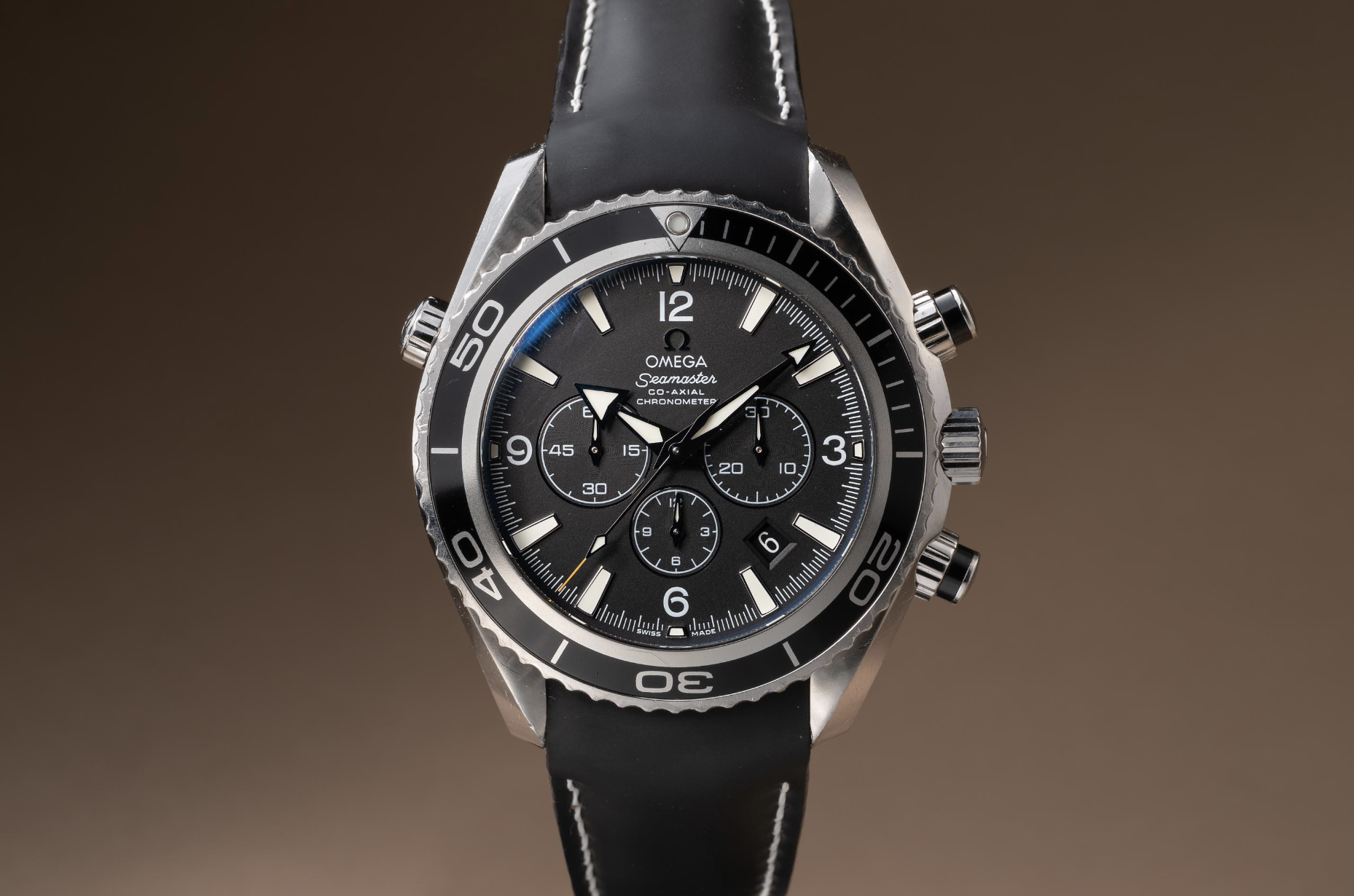
This is where personal taste enters the picture, and honestly, it matters more than people admit. The Omega Seamaster Diver 300M presents a more refined, elegant silhouette. The wave-pattern dial is immediately distinctive, the overall proportions feel balanced, and there is a polish to the execution that makes it comfortable in both casual and semi-formal settings. The newer generation ceramic bezel and co-axial crown system give it a modern, sophisticated feel without losing its diving credentials. The Breitling Superocean leans harder into the tool watch aesthetic. Dials tend toward bold, high-contrast readability. The case finishing is more utilitarian in spirit, even when executed beautifully. The Superocean Heritage line softens this considerably, offering a more vintage-influenced look with domed crystals and retro color combinations that have become genuinely popular. If you want a dive watch that can slide under a dress shirt cuff, the Seamaster probably wins. If you want something that looks like it means business on a boat or under water, the Superocean makes that statement without hesitation.
Movement and Technical Performance
Omega has made significant headlines in the movement department over the past decade. The Master Chronometer certification, developed in partnership with the Swiss Federal Institute of Metrology, sets an extremely high bar for accuracy, magnetic resistance, and reliability. The calibers inside current Seamaster models, particularly the 8800 series, are among the most technically accomplished in the industry. Breitling also uses high-quality in-house movements across many of its references, with COSC chronometer certification being standard across much of the lineup. The Superocean, depending on the specific reference, may use either an in-house Breitling caliber or a robust base movement. Neither brand produces unreliable movements, but Omega's Master Chronometer standard is currently one of the most rigorous third-party certifications available to any watchmaker, and that is worth acknowledging directly.
Water Resistance and Diving Credentials
Both watches are built to perform underwater, not just survive a splash. Key specifications worth noting side by side:
- Breitling Superocean: water resistance ratings range from 300 to 2000 meters depending on the reference
- Omega Seamaster Diver 300M: rated to 300 meters as the name states, with the Planet Ocean reaching 600 meters
- Both feature unidirectional rotating bezels in compliance with ISO 6425 dive watch standards
- Both use helium escape valves on certain references for saturation diving
- Breitling's Superocean 6000m Professional exists for extreme professional use cases
For recreational diving, both watches exceed any real-world requirement. The differentiation in water resistance becomes relevant only for professional commercial divers, and even then it is more about specification compliance than daily necessity.
Price Comparison and Value Proposition
Both brands occupy a similar retail tier, which is part of why this comparison exists in the first place. Current Omega Seamaster Diver 300M models generally start around $5,000 to $7,000 USD depending on materials and bracelet choice. The Planet Ocean variant runs higher, often reaching $8,000 to $10,000 or more for steel, and considerably more in precious metals. Breitling Superocean references typically begin around $3,500 to $4,500 for entry-level steel configurations, with the Superocean Heritage and special editions climbing toward the $6,000 to $8,000 range. On paper, Breitling offers a slightly lower point of entry. The Omega carries stronger resale value in most cases, which is a practical consideration for buyers who view watches as both possessions and potential assets. Neither brand is a bad investment in the traditional sense, but Omega's secondary market performance has historically been more consistent.
Who Each Watch Is Really For
The Seamaster tends to appeal to buyers who want a dual-purpose watch: capable in the water, polished enough out of it. It suits professionals, collectors who appreciate movement innovation, and anyone drawn to the Omega brand legacy and its cultural presence. The Superocean appeals to buyers who value a cleaner, more focused tool watch identity. It sits naturally with those who appreciate aviation and maritime heritage, prefer bolder aesthetics, or want a strong dive watch without the premium Omega commands in certain references. Neither answer is wrong. The watches attract different personalities, and that is a perfectly reasonable basis for a decision.
Bracelet and Wearing Experience
How a watch wears daily is often underrated in comparison articles, and it should not be. The Omega Seamaster on its metal bracelet is widely praised for its fit, finishing, and the micro-adjustment clasp that makes fine-tuning comfortable. On rubber or leather, it transitions smoothly. The Breitling Superocean typically ships with either a metal bracelet, rubber strap, or Ocean Rubber option, and Breitling bracelets have improved significantly in finishing quality over recent years. Both watches sit comfortably on mid-sized wrists, though case diameters across various references range considerably from 36mm to 46mm, giving buyers flexibility in sizing.
Why Tropical Watch Should Be Your First Call for Luxury Dive Watches
Whether you are leaning toward the Seamaster or the Superocean, the place you source your watch matters as much as the reference you choose. Tropical Watch is a trusted destination for collectors and first-time luxury buyers alike, offering carefully curated inventory with the knowledge and transparency that serious watch buyers deserve. If your research is pulling you toward vintage references or investment-grade pieces, exploring luxury dive watches and vintage Omega Seamaster references at Tropical Watch is a genuinely smart starting point. The team understands provenance, condition grading, and market value in ways that general retailers simply do not, and that expertise protects buyers who want to make decisions they will not regret.
Frequently Asked Questions
Is the Breitling Superocean better than the Omega Seamaster?
Neither watch is objectively better. The Omega Seamaster offers stronger movement credentials with Master Chronometer certification and generally higher resale value. The Breitling Superocean provides a more focused tool watch aesthetic and often a lower entry price. The better choice depends entirely on your priorities in design, budget, and intended use.
Which watch holds its value better, Breitling or Omega?
Omega generally holds its value more consistently on the secondary market, particularly for iconic references like the Seamaster Diver 300M. Breitling watches do retain value but tend to depreciate more at the initial point of sale. For resale potential, Omega has the stronger track record historically.
Is the Omega Seamaster good for actual diving?
Yes. The Omega Seamaster Diver 300M meets ISO 6425 certification standards, which means it is tested and verified for genuine dive use. Its 300-meter water resistance rating far exceeds the depth of recreational scuba diving, and the unidirectional bezel and legible dial meet professional standards.
What is the water resistance of the Breitling Superocean?
The Breitling Superocean lineup offers water resistance ranging from 300 meters on standard sport models up to an exceptional 2000 meters on the Superocean II, and even 6000 meters on the Superocean 6000m Professional reference designed for extreme commercial diving applications.
Are Breitling Superocean watches considered luxury watches?
Yes. Breitling is a Swiss luxury watch brand and the Superocean line is firmly positioned in the luxury sports watch category. With Swiss-made movements, high-grade materials, and retail prices starting above $3,500, the Superocean competes directly with other recognized luxury dive watches from Omega, TAG Heuer, and IWC.
Which is easier to wear daily, the Seamaster or the Superocean?
Both are wearable daily with moderate case sizes available in each lineup. The Omega Seamaster Diver 300M is often considered slightly more versatile in dressed-down professional environments due to its refined dial and finishing. The Superocean suits a more casual or active daily context and is available in sizes ranging from 36mm to 46mm to accommodate different wrist preferences.