


Rolex Deepsea: The Deep-Diving Icon Explained
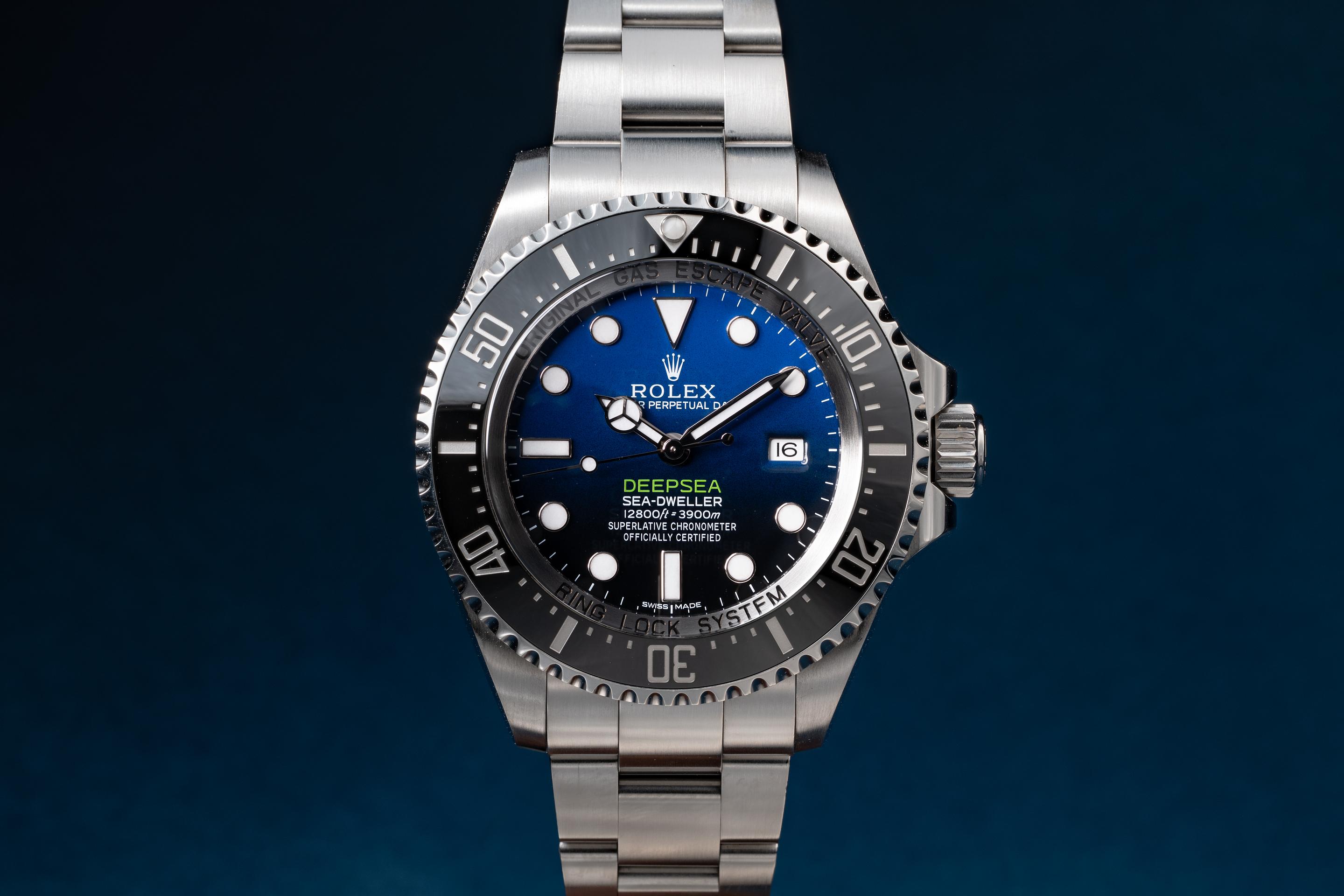
The Rolex Deepsea: Everything You Need to Know About This Deep-Diving Icon
There are dive watches, and then there is the Rolex Deepsea. One is a tool you can take snorkeling. The other is a precision instrument engineered to survive depths most humans will never see, rated to 3,900 meters — that is 12,800 feet below the ocean surface. The Rolex Sea-Dweller Deepsea, introduced in 2008, is not just a watch. It is a statement about what modern watchmaking is capable of when a brand refuses to compromise. Whether you are researching this watch for a potential purchase, trying to understand how it differs from other Rolex dive references, or simply fascinated by watches that push engineering to its limits, this guide covers all of it.
A Brief History of the Rolex Deepsea
The story of the Deepsea does not begin in 2008. It begins decades earlier. Rolex has been in the deep-sea game since the 1950s, when the Oyster case proved itself on the wrist of explorers and divers. The Sea-Dweller, introduced in 1967, was a professional evolution of the Submariner, designed to handle saturation diving. But the real leap came in 2008 when Rolex launched the reference 116660, the first watch to carry the Deepsea name officially. That 44mm case with its Ringlock System was unlike anything Rolex had produced before. Then in 2018, they updated it to the reference 126660, refining the case sizing slightly and adding the Glidelock clasp. It has been a steady evolution, always anchored in one guiding principle: survive what the ocean throws at it.
What Makes the Rolex Deepsea Different From the Submariner
This is probably the most common question people ask, and it is a fair one because from a distance, both watches look related. They share DNA, but they serve different purposes and the differences are significant once you start looking closely. The Submariner is rated to 300 meters. The Deepsea is rated to 3,900 meters — thirteen times deeper. That difference in water resistance demands a fundamentally different case architecture. The Deepsea uses the Ringlock System, a proprietary Rolex technology consisting of a nitrogen-alloyed steel ring inside the case that absorbs the enormous compressive forces encountered at extreme depth. The sapphire crystal on the Deepsea is 5.5mm thick. The caseback is domed outward to resist implosion. It is a thicker, heavier watch than the Submariner, measuring around 17.7mm in thickness compared to the Sub's more refined profile. The Deepsea is a professional tool first, a luxury item second — though it manages to be both convincingly.
The Ringlock System: Rolex Engineering Explained
It is worth spending a moment on the Ringlock System because it is genuinely fascinating engineering. Most watch cases handle water resistance through gaskets and a sealed crown system. That works fine to a few hundred meters. But at 3,900 meters, the pressure is roughly 390 atmospheres. That is enough to crush most objects. Rolex addresses this with a three-component internal structure: a frame made from grade 5 titanium that resists deformation, a nitrogen-alloyed steel inner ring that bears the compressive load, and that notably thick sapphire crystal. The combination means the watch maintains its structural integrity at depths that would destroy virtually any other timepiece on the market. Rolex tested the Deepsea against those pressures repeatedly before releasing it, and the watch continues to carry that rating with full confidence. It is not marketing — it is verified engineering.
The D-Blue Dial: A Watch With a Story On Its Face
When Rolex introduced the D-Blue dial variant alongside the updated reference 126660, it created one of the most visually striking dials in the brand's modern catalog. The D-Blue references James Cameron's 2012 solo dive to the Challenger Deep, the deepest point in the ocean at approximately 10,900 meters. Rolex partnered with Cameron on that expedition, and the D-Blue dial — transitioning from black at the bottom to deep blue at the top, representing the ocean surface — is the visual result of that collaboration. It is a rare case of a watch dial telling a genuine story rather than just looking appealing. Collectors and enthusiasts who appreciate the narrative behind their timepieces are consistently drawn to the D-Blue for exactly that reason. The standard black dial version remains equally respected, but the D-Blue has taken on a cultural significance of its own.
Wearing the Deepsea in Daily Life
Here is where things get practical. The Rolex Deepsea is a large watch. At 44mm with that considerable lug-to-lug length and nearly 18mm of thickness, it wears substantially on the wrist. People with smaller wrists should handle one in person before purchasing. That said, the OYSTERSTEEL bracelet is superbly finished, the Glidelock clasp allows for micro-adjustment over a range of 20mm, and Rolex has put genuine care into making something this big feel balanced. It reads as a professional instrument on the wrist, not an oversized fashion accessory. For divers, offshore workers, or anyone who genuinely needs that level of water resistance, the size is purposeful. For collectors who simply admire what it represents, the proportions grow on you quickly. Do not dismiss it until you have worn it.
Key Specifications at a Glance
For those who prefer the numbers laid out cleanly, here is a quick reference for the current reference 126660:
- Case diameter: 44mm
- Case material: OYSTERSTEEL (904L stainless steel)
- Water resistance: 3,900 meters / 12,800 feet
- Crystal: Scratch-resistant sapphire, 5.5mm thick
- Movement: Calibre 3235 (self-winding, chronometer-certified)
- Power reserve: Approximately 70 hours
- Dial options: Black or D-Blue gradient
- Bracelet: Oyster with Glidelock extension system
- Bezel: Unidirectional rotatable, ceramic insert
Rolex Deepsea Pricing and Market Value
The Rolex Deepsea sits in a specific tier of the Rolex catalog — above the Submariner, positioned alongside other professional references. At retail, the reference 126660 has been priced in the range of approximately $15,000 to $16,000 USD for the steel versions, though authorized dealer pricing varies by region and availability has historically been constrained. On the secondary market, the Deepsea has shown healthy demand, though it has not experienced the same extreme premiums seen with the Submariner Date or the GMT-Master II in popular configurations. That actually makes it interesting from a collector standpoint — you are getting a more attainable entry point into a serious professional Rolex reference. The D-Blue variants tend to carry a modest premium over the standard black dial on the pre-owned market, largely due to the narrative and visual distinction they carry.
Why Tropical Watch Is Your Best Source for Vintage and Pre-Owned Rolex
If the Rolex Deepsea has captured your attention, or if exploring this reference has deepened your appreciation for Rolex's broader catalog of serious watchmaking, then where you buy matters enormously. The pre-owned and vintage luxury watch market rewards knowledge, and it punishes shortcuts. Tropical Watch has built a reputation on exactly the kind of expertise this market demands. Whether you are searching for a modern reference like the Deepsea or exploring earlier Sea-Dweller references that trace the lineage of this iconic line, the team at Tropical Watch brings genuine depth of knowledge to every piece. For collectors who want confidence in provenance, condition, and authenticity, finding a trusted source for pre-owned Rolex Deepsea and vintage Sea-Dweller watches is not optional — it is essential. This is the kind of purchase you research carefully, and it deserves a dealer who has done the same.
Frequently Asked Questions About the Rolex Deepsea
What is the water resistance rating of the Rolex Deepsea?
The Rolex Deepsea is rated to 3,900 meters, or 12,800 feet. This is achieved through Rolex's proprietary Ringlock System, which includes a titanium frame, a nitrogen-alloyed steel inner ring, and a 5.5mm thick sapphire crystal to withstand extreme underwater pressure.
How does the Rolex Deepsea compare to the Submariner?
The Submariner is rated to 300 meters and is a more streamlined, versatile watch. The Deepsea is rated to 3,900 meters, features a significantly more robust case architecture, and is physically larger at 44mm with a thickness of approximately 17.7mm. The Deepsea is a professional-grade diving instrument; the Submariner is a refined all-purpose sports watch.
What is the D-Blue dial on the Rolex Deepsea?
The D-Blue dial features a gradient that transitions from black at the six o'clock position to deep blue at the twelve o'clock position, representing the ocean floor and surface. It was created to honor James Cameron's 2012 solo dive to the Challenger Deep, in which Rolex participated as a technical partner.
What movement does the Rolex Deepsea use?
The current reference 126660 uses the Rolex Calibre 3235, a self-winding movement certified as a chronometer by COSC. It offers approximately 70 hours of power reserve and features Rolex's Chronergy escapement for improved energy efficiency and reliability.
Is the Rolex Deepsea a good investment watch?
The Deepsea has demonstrated stable demand on the secondary market, though it has not reached the premium multiples of some other Rolex sport references. It represents solid value as a serious professional tool watch with genuine engineering pedigree, making it appealing to both active users and collectors who value function alongside form.
What wrist size is suitable for the Rolex Deepsea?
The Deepsea has a 44mm case diameter and a lug-to-lug length that makes it a substantial watch on the wrist. It is generally recommended for wrists measuring 17cm or larger for a proportionate fit, though the Glidelock clasp system allows for fine-tuned sizing adjustments. Trying the watch in person before purchasing is always advised.


