Rolex Serial Numbers Guide: Decode Age, Authenticity, and Value
Why Your Rolex Serial Number Tells You More Than You Think
There is a small engraved sequence of characters on your Rolex that most people glance at once and never think about again. That is a mistake. The serial number on a Rolex watch is one of the most informative pieces of data attached to the timepiece, and once you understand how to read it, a lot becomes clear — the approximate production year, whether the watch is authentic, and in many cases, a better sense of its current market value. Whether you are buying, selling, insuring, or simply satisfying your curiosity about a watch you already own, decoding that serial number is worth your time.
A Brief History of Rolex Serial Number Systems
Rolex has been using serial numbers to track production since the early twentieth century. In the early decades, the numbering system was relatively straightforward — a sequential numeric format that simply counted upward as watches were produced. By the mid-twentieth century, production volume had increased significantly, and the serial numbers reflected that growth. The numbers climbed through the millions, then into letter-prefix formats, and eventually Rolex transitioned to a completely randomized alphanumeric system. That shift happened around 2010 and was a deliberate move to make counterfeit dating harder. Prior to that transition, collectors and dealers could pinpoint a production window with reasonable precision just by knowing the serial range. Understanding both systems — the sequential and the randomized — gives you a more complete picture of Rolex's manufacturing history.
Where to Find the Serial Number on Your Rolex
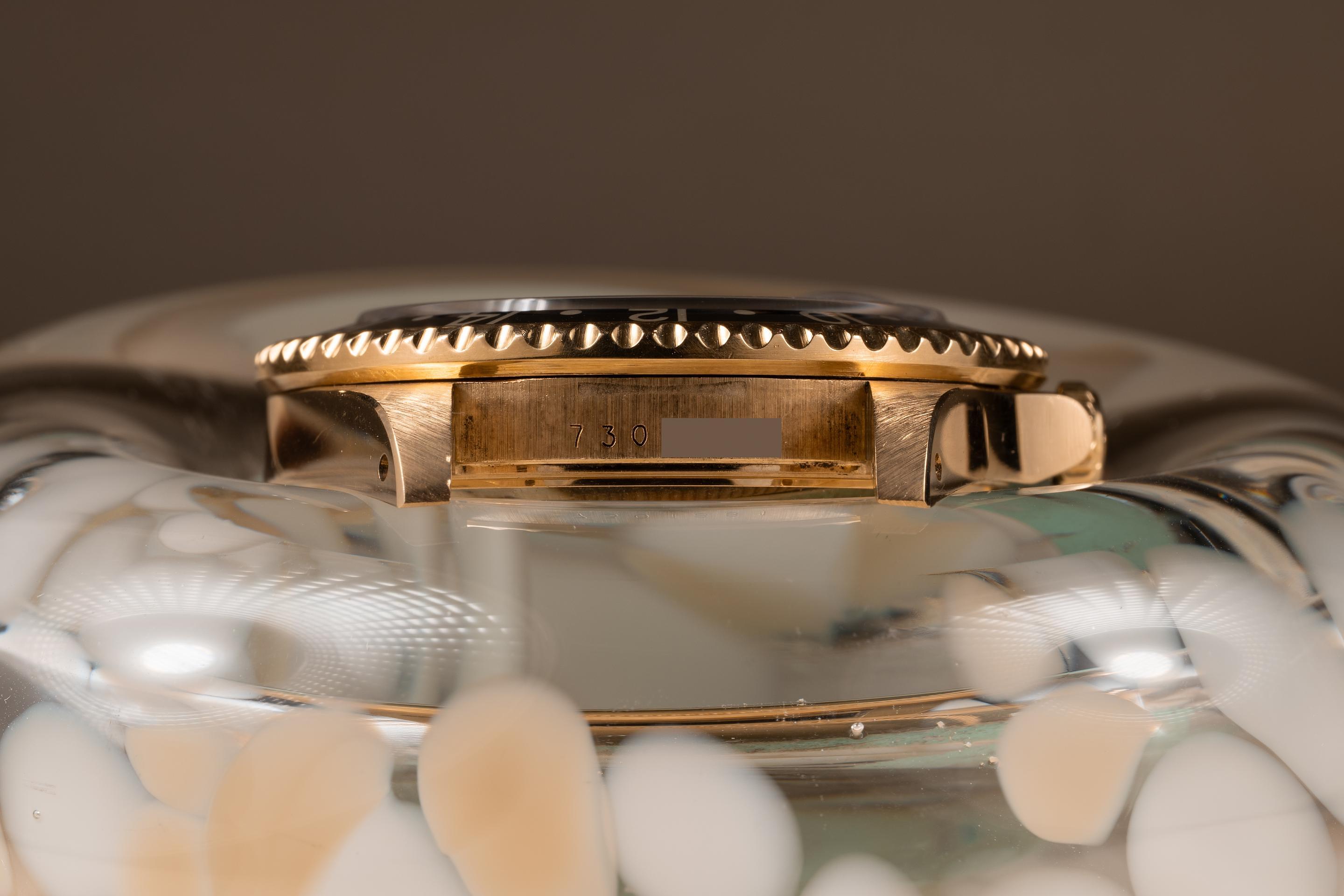
The location of the serial number depends on when the watch was made. On vintage Rolex models produced before approximately 2005, the serial number is engraved between the lugs on the six o'clock side of the case, underneath the bracelet where it meets the case. You typically need to remove or open the bracelet to see it clearly. On newer models, starting around 2005 and becoming standard through subsequent years, Rolex moved the serial number to the inner bezel ring, visible through the crystal when the dial is removed — though on many pieces it can also be seen at the edge of the dial. Some modern references have the serial number rehaut-engraved, meaning it wraps around the inner edge of the dial face. If you are examining a vintage piece, that six o'clock lug engraving is your starting point.
Decoding the Sequential Serial Number Ranges
For watches produced before the randomized system took effect, Rolex serial numbers followed a generally predictable numeric sequence. Here is a practical reference for the major production eras:
Serials beginning with 1,000 – 10,000 correspond roughly to the 1920s 100,000 range watches date to the early 1930s Numbers in the 1,000,000 range generally indicate mid-1950s production 2,000,000 range places production around the early 1960s 4,000,000 to 5,000,000 range suggests late 1960s 7,000,000 to 8,000,000 range points to the mid-1970s By the 1,500,000 to 2,000,000 range in letter-prefix era, production is typically early 1990s Letter prefixes such as A, P, U, and Y were used from the mid-1980s into the 2000sIt is worth noting that Rolex produced watches in batches, and distribution to dealers happened over extended periods. A watch with a serial number suggesting a 1999 production year may not have reached the market until 2001 or 2002. This is a known and accepted nuance in Rolex dating, and experienced collectors account for it when assessing a piece.
The Letter Prefix Era Explained
Starting around 1987, Rolex introduced single-letter prefixes before the numeric serial sequence. These letters do not correspond to any alphabetical logic tied to years — they were simply sequential designations used by Rolex internally. The prefix letters used during this era include A, E, L, N, C, D, F, P, K, U, A, Y, and others, each covering a specific production window of roughly one to three years. By cross-referencing the letter prefix with documented production data, a dealer or collector can narrow down the approximate manufacturing year quite reliably. The letter prefix system remained in use until Rolex shifted to the randomized format around 2010, which effectively ended the ability to date watches purely by serial number.
How Serial Numbers Help Verify Authenticity
Counterfeit Rolex watches have existed for decades, and the serial number is one of the first things a knowledgeable buyer examines. On a genuine Rolex, the serial number engraving is precise, fine, and consistent — produced by acid etching or laser engraving with exceptional clarity. Fakes often show shallow, uneven, or smudged engravings. Beyond the physical quality of the engraving, the serial number should be consistent with the reference number of the watch. The reference number, located between the lugs at the twelve o'clock side, identifies the specific model. If a serial number dates a watch to a period when a particular model was not yet in production — or had already been discontinued — that is a significant red flag. Cross-referencing serial against reference is a foundational step in authentication.
Serial Numbers and Their Impact on Value
Production year, confirmed through the serial number, has a direct relationship to market value — particularly in the vintage segment. Certain years produced specific dial variants, case configurations, or material combinations that are highly sought after by collectors. A tropical dial Submariner or a gilt dial GMT-Master from the early 1960s commands dramatically different prices depending on the confirmed production window. The serial number does not create value on its own, but it is a key factor in verifying that a watch's claimed provenance aligns with its physical characteristics. A mismatched serial and reference, or a serial inconsistent with the watch's stated history, raises questions that affect both authenticity and price.
Practical Tips for Using Serial Numbers Responsibly
When evaluating any Rolex, approach the serial number as one piece of a larger picture. No single factor determines authenticity or value in isolation. That said, here are the most important practices to follow when working with Rolex serial data:
Always cross-reference the serial number with the reference number for model consistency Use documented serial range databases — several reputable ones exist within the collector community Examine the engraving quality closely under magnification if possible Request service records or original papers when available, as they often confirm production details Consult a certified watchmaker or established dealer for any pre-purchase authentication Be aware that the post-2010 randomized serials cannot be used for production dating in the traditional senseWhy Tropical Watch Is the Right Source for Vintage Rolex
If understanding serial numbers has sparked a deeper interest in acquiring a vintage Rolex, the next logical question is where to buy with confidence. Tropical Watch is a trusted destination for collectors and enthusiasts seeking authenticated vintage Rolex timepieces, with expert knowledge baked into every transaction. When you are ready to explore a curated selection of authenticated pieces, browsing the inventory at Tropical Watch means accessing vintage Rolex watches verified by serial number and reference — handled by specialists who understand the nuances of production eras, dial variants, and market value in a way that casual resellers simply cannot replicate. The vintage Rolex market rewards the informed buyer, and having Tropical Watch in your corner means the research has already been done carefully before any piece reaches the listing stage.
Frequently Asked Questions About Rolex Serial Numbers
Can I determine the exact production year of my Rolex using the serial number?
For watches produced before approximately 2010, you can narrow down the production year to a window of one to three years using documented serial number ranges. After 2010, Rolex shifted to a randomized alphanumeric system that does not allow production year dating through serial number alone.
Where is the serial number located on a vintage Rolex watch?
On vintage Rolex watches, the serial number is typically engraved between the lugs at the six o'clock position on the case, beneath the bracelet. On models produced after approximately 2005, it may also appear on the rehaut, which is the inner bezel ring visible at the edge of the dial.
Does the Rolex serial number confirm authenticity on its own?
No single element confirms authenticity in isolation. The serial number must be evaluated alongside the reference number, the quality of the engraving, the movement, and the physical characteristics of the watch. A consistent and well-engraved serial that aligns with the reference number is a positive indicator, but professional authentication is always recommended.
What does it mean if the serial number and reference number do not match on a Rolex?
A mismatch between the serial number's implied production date and the reference number's known production window is a serious concern. It may indicate that the case or dial has been swapped, that the watch has been altered, or in more serious cases, that the watch is not genuine. This warrants immediate professional evaluation.
Do Rolex serial numbers affect the resale value of the watch?
Yes, indirectly. The serial number helps confirm the production year, which in turn verifies whether the watch's physical characteristics — dial type, case material, movement generation — are consistent with that era. Watches with confirmed, consistent histories typically command stronger prices in the secondary market.
What changed when Rolex introduced the randomized serial number system around 2010?
The shift to a randomized alphanumeric serial format eliminated the ability to date Rolex watches by serial number alone. Rolex made this change primarily to complicate counterfeiting efforts and to protect production data. Watches from this era forward require other documentation, such as warranty cards or purchase receipts, to establish approximate production or sale dates.