Rolex GMT-Master II Batman: Technical Mastery in Dual Time
What Makes the Rolex GMT-Master II Batman So Special?
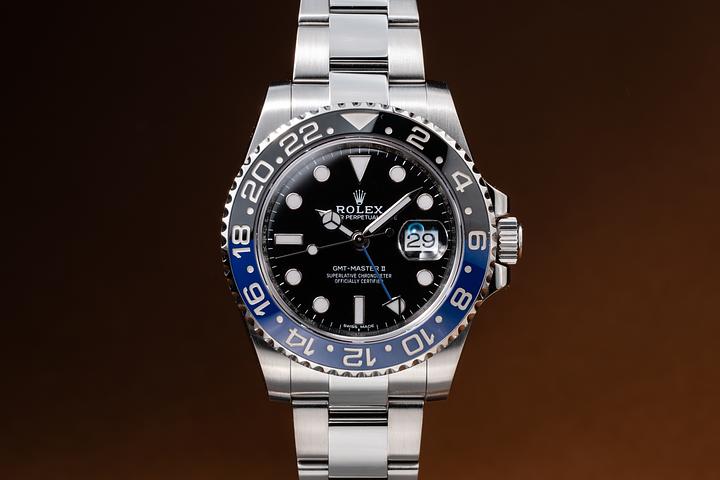
There are tool watches, and then there is the Rolex GMT-Master II "Batman." It sits in a category that very few timepieces ever reach — functional enough for a pilot crossing six time zones, striking enough to anchor any serious watch collection. The nickname comes from the two-tone black and blue ceramic bezel, a detail that immediately separates this reference from every other GMT-Master II in the lineup. Since its debut at Baselworld in 2013, the Batman has built a reputation that goes well beyond a clever color story. It represents a genuine evolution in Rolex engineering and a turning point in how the modern luxury watch market perceives sports watches. Whether you are exploring it for the first time or considering it as a serious acquisition, understanding what sits beneath that iconic bezel matters more than most people realize.
A Brief History of the GMT-Master II Lineage
To appreciate the Batman, it helps to understand where it came from. The original GMT-Master was developed in the early 1950s in collaboration with Pan American World Airways. Pilots needed a reliable way to track time across multiple time zones simultaneously, and Rolex delivered — a watch with a fourth hand that completed one rotation every 24 hours, combined with a rotating bezel that allowed a second time zone to be read at a glance. The GMT-Master II arrived in 1982, introducing the ability to independently set the hour hand without stopping the watch — a meaningful upgrade for anyone living across multiple time zones. Decades of refinement followed, and by the time Rolex introduced reference 116710BLNR, they had something technically and aesthetically mature on their hands. The Batman was not an accident. It was the result of years of material development and deliberate design intention.
The Ceramic Bezel That Started Everything
The defining characteristic of the Batman GMT-Master II is its bi-color Cerachrom bezel in black and blue. Rolex developed Cerachrom ceramic specifically for this application — it is extraordinarily scratch-resistant, maintains color integrity under prolonged UV exposure, and has a depth and sheen that acrylic or aluminum simply cannot replicate. What makes the two-tone execution particularly impressive is that it is produced from a single piece of ceramic. Creating a clean, precise color transition in a material this hard, at this scale, without a seam or fade, required significant investment in proprietary manufacturing processes. The result is a bezel that ages beautifully and reads with complete clarity — black for PM hours, blue for AM hours, exactly as a GMT traveler needs. When the Pepsi GMT (reference 126710BLRO) arrived in 2018 on a Jubilee bracelet, it drew enormous attention. But for many collectors, the Batman's more subdued, sophisticated palette remained the more compelling choice.
Movement Precision — The Caliber 3186 Inside
The original Batman references, 116710BLNR, ran on the Rolex Caliber 3186 — a movement that deserves real attention. It featured the Parachrom hairspring, manufactured in-house by Rolex from a paramagnetic niobium-zirconium alloy. This hairspring is ten times more resistant to shocks than traditional steel alternatives and performs reliably in temperatures that would destabilize lesser movements. The Caliber 3186 also delivered a power reserve of approximately 48 hours and met the strict COSC chronometer certification standards, achieving accuracy within -4 to +6 seconds per day. In 2023, Rolex updated the Batman — now reference 126710BLNR — with the Caliber 3285, which introduced a Chronergy escapement, improved efficiency, and an extended power reserve of approximately 70 hours. This movement also carries the Superlative Chronometer designation, held to Rolex's own internal standard of -2 to +2 seconds per day. The upgrade was significant and meaningful for a watch this capable.
Case, Bracelet, and Wearability
The Batman wears on an Oyster bracelet, rendered in 904L stainless steel — a grade typically reserved for aerospace and chemical processing industries due to its superior corrosion resistance and polish retention. The case measures 40mm in diameter, a size that has aged exceptionally well and continues to suit a wide range of wrist sizes. The Oyster case provides water resistance to 100 meters, secured by the Twinlock crown system on the original references and Triplock on later references. The overall wearability of the Batman is one of its strongest attributes. It transitions from a board meeting to a long-haul flight without missing a beat. The proportions are confident without being aggressive, and the black and blue bezel integrates naturally with both formal and casual contexts in ways that brighter alternatives sometimes do not.
Understanding GMT Functionality — How to Actually Use It
The GMT complication is genuinely useful, but it is worth understanding how it works before making a purchase decision. The watch displays three time zones simultaneously. The main hour and minute hands show local time. The GMT hand — the distinctive red-tipped arrow hand — completes one rotation every 24 hours and references a home time zone set against the bezel. The bezel itself allows a third time zone to be tracked. On the GMT-Master II, the local hour hand can be moved independently in one-hour increments without disrupting the running seconds, which is critical when crossing time zones. For frequent travelers, this is a practical feature used consistently. For those who wear watches primarily as collector pieces, the complication adds depth and technical credibility without complicating daily operation.
Batman vs. Other GMT-Master II References — How to Choose
Rolex offers several GMT-Master II variants, and comparing them honestly helps clarify the Batman's position. The key references currently in or recently from production include the following:
Pepsi (126710BLRO) — red and blue ceramic bezel, Jubilee bracelet, broader mainstream appeal Batman (126710BLNR) — black and blue ceramic bezel, Oyster bracelet, more understated palette Starbucks (126720VTNR) — black and green ceramic bezel, left-hand crown configuration Root Beer (126711CHNR) — two-tone Everose and steel, brown and black bezel, warm tones Black Bezel (116710LN) — all-black ceramic, clean and versatile, no color contrastThe Batman occupies a middle ground that appeals to collectors who want the dual-color drama without the brighter, more declarative energy of the Pepsi. It is also worth noting that the original 116710BLNR references, now discontinued in favor of the updated caliber version, have developed their own secondary market presence and collector following.
Market Value and What to Expect When Buying
The Batman has historically traded above retail on the secondary market, a pattern consistent with most high-demand Rolex sports references. Original 116710BLNR pieces in excellent condition represent solid collector value, particularly those with original bracelets, boxes, and papers. The updated 126710BLNR, with the Caliber 3285 movement, commands a premium that reflects its mechanical upgrades. Condition, service history, and provenance all influence pricing significantly. Buyers entering the pre-owned or vintage market should prioritize sourcing from reputable dealers who specialize in authenticated luxury timepieces and can provide documented histories. The spread between poorly documented and well-documented examples of the same reference can be substantial.
Why Tropical Watch Is the Right Partner for Your GMT-Master II Search
Navigating the market for a Rolex GMT-Master II Batman — whether original or updated — requires access to properly authenticated inventory and expertise that comes from years inside the luxury watch trade. Tropical Watch has built its reputation on exactly this kind of specialization. Their curated selection of vintage and pre-owned Rolex references, including highly sought GMT-Master II variants, reflects a genuine commitment to quality, provenance, and client education. For collectors who want to explore authenticated pre-owned Rolex GMT-Master II watches available from trusted specialists, Tropical Watch provides both the inventory depth and the expertise to guide informed decisions. The team understands not just what makes a Batman valuable today, but how these references are likely to perform as collector pieces over time — which matters considerably when you are making a purchase at this level.
Frequently Asked Questions About the Rolex GMT-Master II Batman
What does the "Batman" nickname refer to on the GMT-Master II?
The nickname Batman refers to the two-tone black and blue Cerachrom ceramic bezel on Rolex GMT-Master II reference 116710BLNR and its successor 126710BLNR. The color combination reminded collectors of the classic Batman color palette, and the name became universally adopted in the watch community shortly after the watch debuted in 2013.
What is the difference between the GMT-Master II Caliber 3186 and Caliber 3285?
The Caliber 3186 powered the original Batman references and offered approximately 48 hours of power reserve with a Parachrom hairspring. The Caliber 3285, introduced in updated references, features a Chronergy escapement, improved energy efficiency, and a power reserve of approximately 70 hours, along with Rolex's Superlative Chronometer rating of plus or minus two seconds per day.
Is the Rolex GMT-Master II Batman a good investment?
The Batman has demonstrated strong value retention on the secondary market over time, consistently trading at or above retail for well-documented examples. While no watch purchase should be made purely on investment rationale, the combination of high demand, limited availability, and Rolex's brand equity makes the Batman a historically resilient asset within the luxury watch category.
How do I read the GMT complication on the Batman?
The GMT hand, marked with an arrow tip, tracks a 24-hour cycle and is set against the rotating bezel or used alongside a fixed 24-hour scale. The main hour hand shows local time, the GMT hand shows a second time zone, and the bezel can be adjusted to reference a third. The local hour hand can be advanced or reversed independently without affecting the running of the movement.
What bracelet does the Batman GMT-Master II come on?
Both the original 116710BLNR and the updated 126710BLNR come standard on the Oyster bracelet in 904L stainless steel, featuring the Oysterlock clasp with Easylink comfort extension. This differentiates the Batman from the Pepsi GMT-Master II, which Rolex released on the Jubilee bracelet in 2018.
How can I verify the authenticity of a pre-owned Rolex GMT-Master II Batman?
Authentication requires examination of the movement, case engravings, dial printing, bezel quality, and serial and model numbers against Rolex documentation standards. The safest approach is to purchase from an established dealer who specializes in authenticated luxury timepieces and provides documented provenance, ideally including original box and papers where available.