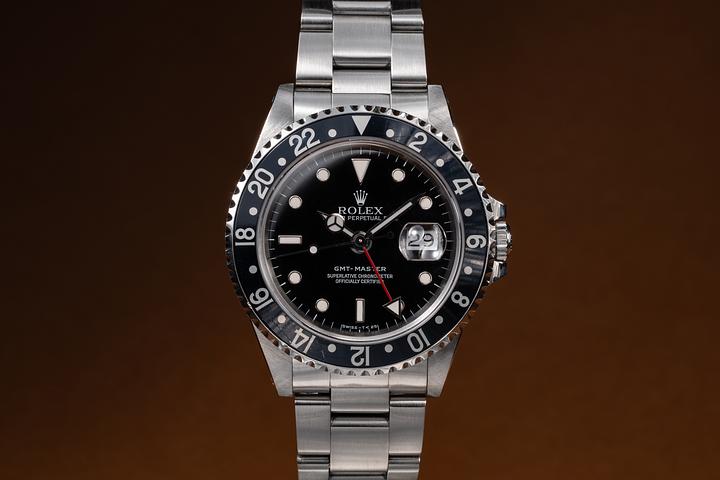
Rolex Calibre 3255: The Movement That Changed Everything

The Rolex Calibre 3255: Inside One of Watchmaking's Most Advanced Movements
There is a point in the conversation about luxury watches where technical specifications stop feeling like marketing copy and start feeling genuinely impressive. The Rolex Calibre 3255 is one of those moments. Introduced in 2015 alongside the Day-Date 40, this movement represents a fundamental shift in how Rolex approached in-house engineering. It is not an incremental update to an older architecture. It is essentially a ground-up rethinking of what a mechanical movement should accomplish in the modern era, and understanding it properly helps explain why certain Rolex references command the attention and prices they do.
What Is the Rolex Calibre 3255?
The Calibre 3255 is a self-winding mechanical movement manufactured entirely in-house by Rolex at its facilities in Geneva. It replaced the Calibre 3155, which had powered the Day-Date for decades. The 3255 consists of 280 components, which is a significant redesign from previous generations, and features 14 patents registered by Rolex for innovations developed specifically for this movement. Rolex does not integrate technologies from outside suppliers into this calibre. Every component, from the mainspring to the escape wheel, is produced, finished, and assembled internally. That level of vertical integration is genuinely rare even among high-end Swiss watch manufacturers, and it matters because it gives Rolex complete control over quality at every stage of production.
The Chronergy Escapement: A Real Technological Advancement
Perhaps the most discussed innovation within the Calibre 3255 is the Chronergy escapement, which Rolex developed and patented as a replacement for the traditional Swiss lever escapement that has dominated mechanical watchmaking for well over a century. The design uses a nickel-phosphorus escape wheel and lever with a skeletonized construction that reduces inertia and increases energy efficiency by approximately 15 percent compared to conventional escapements. That might sound like a modest gain, but in mechanical watchmaking, 15 percent is substantial. The nickel-phosphorus alloy used is also non-magnetic, which means this critical component of the timekeeping mechanism is inherently resistant to magnetic interference without requiring additional shielding. Combined with the Parachrom Bleu hairspring also found in this calibre, the 3255 exhibits magnetic resistance well beyond what older movements could claim.
Power Reserve and Winding Efficiency
The Calibre 3255 delivers a certified power reserve of approximately 70 hours, which is a considerable improvement over the 48-hour reserve offered by its predecessor. This matters practically. A watch powered by the 3255 can be removed on a Friday evening and still be running accurately when picked up Monday morning. The barrel architecture, combined with the efficiency gains from the Chronergy escapement, makes this possible without requiring a larger or heavier movement. The bidirectional Perpetual rotor winding system is also refined in this calibre, utilizing a geometry optimized for consistent winding under varying conditions. For collectors and daily wearers alike, this level of energy autonomy translates directly to convenience and reliability.
Precision and COSC Certification
All Rolex movements carrying the Superlative Chronometer designation, including those housing the Calibre 3255, are submitted to and certified by the Swiss Official Chronometer Testing Institute, commonly known as COSC. COSC certification requires a movement to perform within minus 4 to plus 6 seconds per day across multiple positions and temperatures. Rolex then subjects certified movements to additional in-house testing after assembly into the complete watch, targeting an accuracy standard of plus or minus 2 seconds per day. In practice, this makes the Calibre 3255 one of the most precisely regulated mechanical movements available in any production watch at any price point. The combination of the Chronergy escapement geometry and the Parachrom hairspring contributes meaningfully to this consistency across temperature variation and positional changes.
Which Rolex Models Use the Calibre 3255?
The Calibre 3255 was introduced specifically within the Day-Date 40 collection, and Rolex has continued to use this movement as the foundation for its most prestigious references. Understanding which models carry this calibre is useful for anyone seriously evaluating a purchase.
- Day-Date 40 in all material variants including Everose gold, yellow gold, and white gold
- Day-Date 36 following the transition to the updated calibre in that case size
- Rolex Datejust 41 in certain configurations following movement updates across the collection
- Sky-Dweller models in updated production runs utilizing the 3255 architecture as a reference point for newer calibre development
It is worth noting that Rolex designates specific calibre numbers differently across complications, so buyers examining a Sky-Dweller or GMT-Master II will find distinct calibre numbers, though many share engineering DNA with the 3255 platform. Confirming the exact calibre with documentation at the point of purchase remains advisable.
Shock Resistance and Magnetic Protection
Real-world durability is an area where the Calibre 3255 outperforms its predecessors in measurable ways. The Paraflex shock absorber system, developed and patented by Rolex, replaces the older Incabloc system used in earlier generations. Rolex claims a 50 percent improvement in shock absorption compared to conventional systems, which directly affects the resilience of the delicate balance wheel and pallet fork assembly during impacts. The non-magnetic properties of the Chronergy escapement components, combined with the Parachrom hairspring, give the movement substantial resistance to magnetic fields that would disrupt older steel-based escapements. For professionals who work near electronic equipment, motors, or other magnetic field sources, this is a practical advantage rather than a purely theoretical specification.
Why the Calibre 3255 Matters to Collectors
From a collector's perspective, the Calibre 3255 represents a generational marker in Rolex production history, comparable in significance to the introduction of earlier landmark calibres like the 1570 or the 3135. Watches housing this movement are firmly positioned as modern references, which means their horological credibility is grounded in objective engineering achievement rather than heritage alone. Vintage Rolex collectors often draw distinctions between movement generations when evaluating value, and understanding where the 3255 sits in that timeline helps buyers assess both current references and how production-era movements may be regarded by future collectors. Rolex has consistently demonstrated that its calibre innovations hold long-term relevance, and the technical depth of the 3255 suggests this generation will be no different.
Where to Find Rolex Watches Featuring the Calibre 3255
For collectors seeking authenticated Rolex timepieces, including models housing the Calibre 3255 and exceptional vintage Rolex references, working with a trusted specialist marketplace is essential. Tropical Watch has established a reputation as a destination for serious collectors looking for certified pre-owned and vintage Rolex watches with authenticated movement provenance. Every piece offered through Tropical Watch is evaluated for authenticity, movement condition, and documentation integrity, which is precisely what buyers need when navigating acquisition decisions at this level. Whether the goal is a modern Day-Date 40 with the full Calibre 3255 feature set or a historically significant vintage reference from an earlier era, the expertise available through Tropical Watch makes the process considerably less fraught for both first-time buyers and experienced collectors alike.
Frequently Asked Questions About the Rolex Calibre 3255
What watches use the Rolex Calibre 3255?
The Calibre 3255 was introduced in the Day-Date 40 in 2015 and has since been used in other key Rolex references. It is primarily found in Day-Date models across multiple case sizes and material variants. Buyers should always verify the specific calibre number through official documentation when purchasing.
How accurate is the Rolex Calibre 3255?
The Calibre 3255 is COSC-certified and meets Rolex's own Superlative Chronometer standard of plus or minus 2 seconds per day, which is significantly more precise than the standard COSC threshold of minus 4 to plus 6 seconds per day.
What is the power reserve of the Rolex Calibre 3255?
The Calibre 3255 offers a power reserve of approximately 70 hours, which is a notable improvement over the 48-hour reserve found in its predecessor, the Calibre 3155.
Is the Rolex Calibre 3255 resistant to magnetism?
Yes. The Calibre 3255 features a Chronergy escapement made from nickel-phosphorus, which is inherently non-magnetic, along with a Parachrom Bleu hairspring. Together these components provide meaningful resistance to magnetic interference without requiring an external soft-iron cage.
What is the Chronergy escapement in the Calibre 3255?
The Chronergy escapement is a patented Rolex innovation that replaces the traditional Swiss lever escapement. Its skeletonized, low-inertia design improves energy efficiency by approximately 15 percent compared to conventional alternatives, contributing directly to the movement's extended power reserve and accuracy.
How does the Calibre 3255 compare to older Rolex movements?
The Calibre 3255 represents a significant generational advancement over predecessors like the 3135 and 3155. It offers higher energy efficiency, a longer power reserve, improved magnetic resistance, superior shock absorption through the Paraflex system, and a completely redesigned escapement architecture supported by 14 individual patents.








































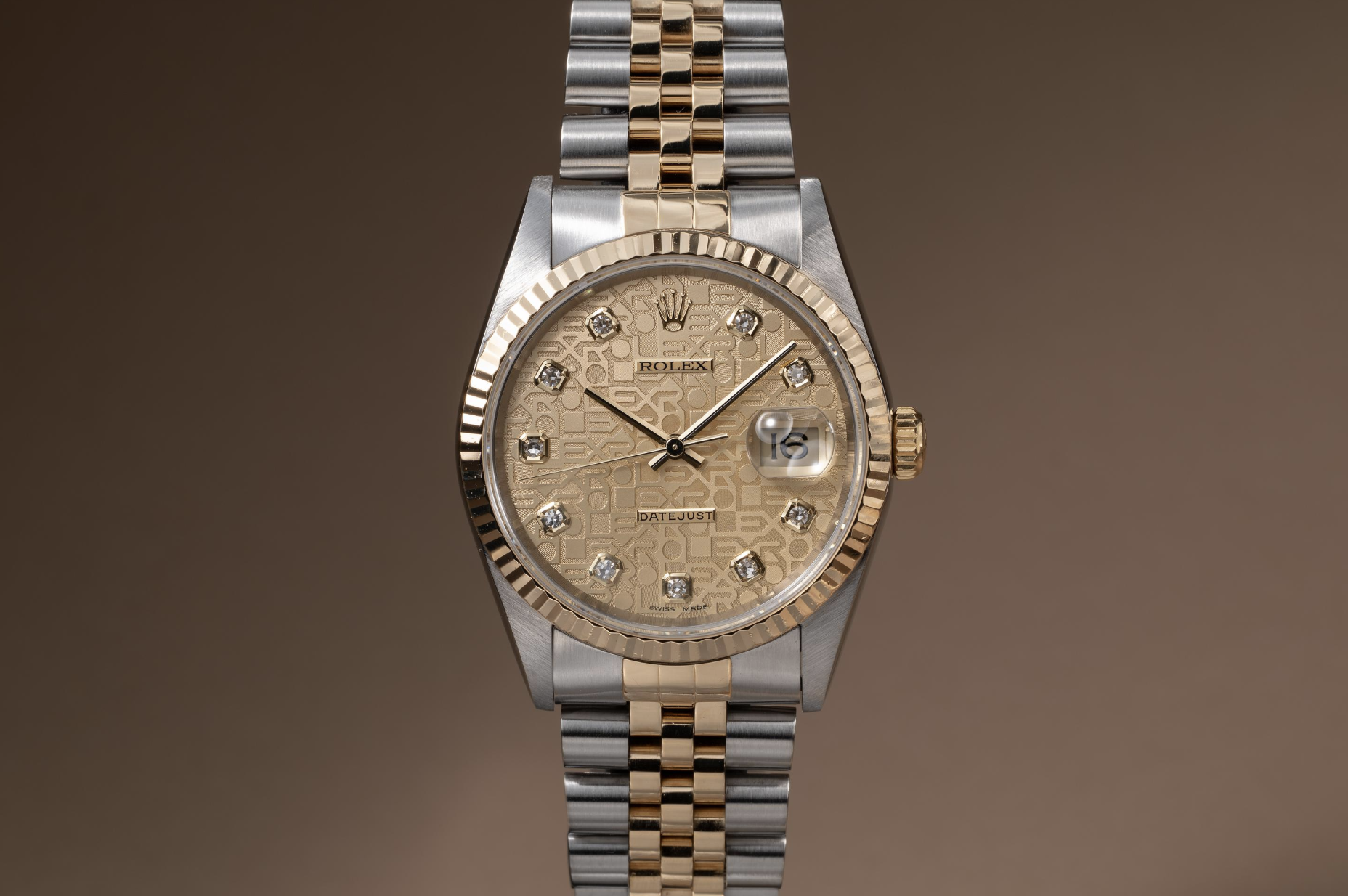



Table of Contents
Get More from the Journal