Why Rolex Watches Are So Expensive and Iconic in Swiss Craftsmanship

Why Rolex Watches Carry a Price Tag That Demands Attention
There is a moment, usually when you first see the price on a Rolex, where the number just sits there. You look at it. You look again. And then, if you take the time to actually understand what goes into that watch, the number starts making a different kind of sense. Rolex is not expensive because of marketing alone. The price reflects something more substantive — a convergence of precision engineering, rare materials, decades of institutional knowledge, and a brand philosophy that has never once chased trends. This article breaks down exactly why Rolex watches cost what they cost, and why that cost has proven, time and again, to be justified.
A Brief History of Rolex and How It Built Its Reputation
Rolex was founded in 1905 by Hans Wilsdorf in London, though the brand eventually relocated its operations to Geneva, Switzerland — the heartland of fine watchmaking. From the beginning, Wilsdorf had a singular obsession: accuracy. He wanted wristwatches, which were not yet taken seriously as precision instruments, to compete with pocket watches in reliability and performance. By 1910, Rolex had earned the first wristwatch chronometer certification ever issued by an official Swiss timing institute. That was not a small thing. It was a declaration of standards. Over the following decades, Rolex introduced the first waterproof wristwatch case, the Oyster, in 1926, and the first self-winding rotor mechanism, the Perpetual, in 1931. These were genuine innovations, not cosmetic ones. They changed what wristwatches could do. That legacy of meaningful technical achievement is baked into every watch Rolex produces today, and it is one of the core reasons the brand commands the prices it does.
Swiss Precision and In-House Manufacturing
One of the most significant factors behind the cost of a Rolex watch is the degree to which the company controls its own production. Rolex is almost entirely vertically integrated. That means they design, develop, and manufacture most of the components in their watches internally — from the movements and cases to the bracelets and dials. They even produce their own alloys. Their proprietary 904L stainless steel, for example, is harder and more corrosion-resistant than the 316L steel used by most of the watch industry. Machining it requires specialized equipment and expertise. Their Oystersteel bracelets are polished using a process refined over decades to achieve a finish that holds up and looks exceptional. Every detail is manufactured to tolerances most brands would consider excessive. But that is exactly the point.
The Movement Inside Every Rolex
The mechanical movement — the engine of a watch — is where the true craftsmanship lives. Rolex movements are COSC-certified chronometers, which means they are independently tested and verified to meet stringent accuracy standards. But Rolex goes further than COSC. Their in-house movements are then tested against an even more demanding internal standard. The Calibre 3235, for instance, which powers the Datejust line, features a patented Chronergy escapement that improves energy efficiency, a Parachrom hairspring made from a proprietary paramagnetic alloy that is more resistant to shocks and magnetic fields, and a Paraflex shock absorber system for additional durability. These are not off-the-shelf solutions. They are years of engineering work translated into extraordinarily small, extraordinarily reliable components. The attention to what most buyers will never see is, frankly, part of what you are paying for.
Materials That Are Anything But Ordinary
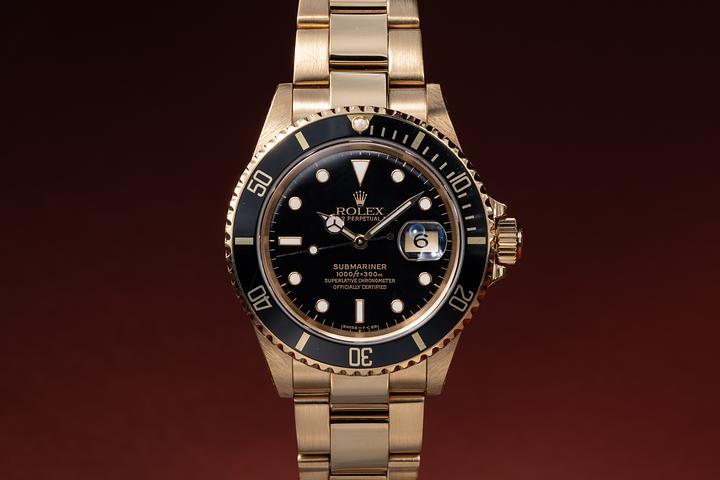
Rolex sources materials with an almost obsessive attention to quality. Their gold watches — Day-Date models, certain Submariner configurations, the Daytona in yellow, white, or Everose gold — use alloys developed and refined in-house. Everose gold, for example, is a proprietary rose gold formulation that resists fading better than standard rose gold alloys. Rolex's ceramic bezels, used on models like the GMT-Master II and the Submariner, are manufactured from a material called Cerachrom. It is virtually scratchproof, colorfast, and resistant to ultraviolet light. Sapphire crystals are standard across the entire lineup, providing scratch resistance that mineral glass simply cannot match. Even the clasps and adjustment systems on Rolex bracelets reflect significant engineering investment. The Glidelock extension system on the Submariner and the Easylink system on the Daytona allow for precise, tool-free adjustments to bracelet length. These are not gimmicks. They are functional refinements that took real development time and cost to bring to market.
Rarity, Production Discipline, and Market Demand
Rolex does not flood the market. Annual production estimates hover around one million watches per year, which sounds substantial until you consider global demand. The brand deliberately maintains a level of scarcity that supports both resale value and the perception of exclusivity — but this is not artificial scarcity for the sake of optics. It reflects a genuine commitment to quality control that limits how many watches can be completed to the required standard in a given year. Certain references, particularly the steel sports models like the Submariner, GMT-Master II, and Daytona, have wait lists that stretch years at authorized dealers. That kind of sustained demand, over decades, is not manufactured. It is earned.
Rolex as a Long-Term Investment
Few consumer goods hold their value the way Rolex watches do. Vintage Rolex references regularly sell at auction for multiples of their original retail price. A Rolex Daytona ref. 6263 in exceptional condition, for instance, can command six figures. Even modern references, purchased new from an authorized dealer, tend to hold or appreciate in value over time in ways that other luxury purchases simply do not. This is not true of every Rolex model in every condition, and anyone approaching a Rolex purchase purely as a financial strategy should do careful research. But the broader pattern holds. Rolex watches are among the most durable stores of value in the luxury goods category. That track record adds a dimension to the price that most consumer products cannot claim.
Iconic Design That Has Stood Decades of Scrutiny
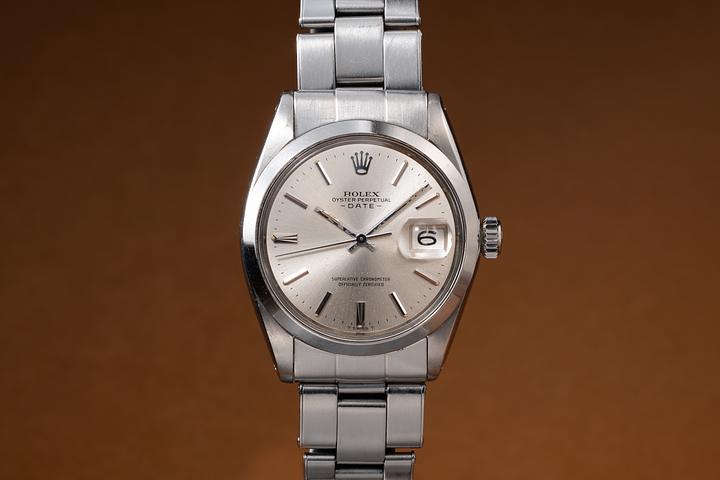
Design matters here too, and it deserves its own space in this conversation. The Submariner, introduced in 1953, looks remarkably similar today to the way it looked seventy years ago. The Datejust, launched in 1945, is still immediately recognizable. Rolex refines rather than reinvents. Proportions are adjusted, materials are updated, movements are upgraded — but the visual identity of each model line remains coherent across generations. That kind of design restraint is harder to execute than it sounds. It requires confidence in the original design language and resistance to trend cycles. The result is a watch that does not look dated because it never tried to look fashionable in the first place. It simply looks like a Rolex.
Why Tropical Watch Should Be Your Starting Point for Vintage Rolex
If any of this has made you curious about owning a Rolex — especially a vintage reference — then where you buy matters as much as what you buy. The vintage Rolex market is exceptional, but it requires expertise to navigate well. Tropical Watch specializes in exactly this space, offering carefully authenticated, expertly curated pieces that reflect the full depth of Rolex's history. Whether you are searching for a specific reference, exploring what vintage Rolex ownership looks like in practice, or simply want guidance from people who genuinely understand the market, finding a trusted source is the first step. For those serious about acquiring a timepiece with real history and lasting value, exploring vintage Rolex watches with verified provenance and expert authentication is a far more reliable path than navigating the secondhand market alone. The knowledge base at Tropical Watch reflects years of experience in a space where the details genuinely matter.
Frequently Asked Questions About Why Rolex Watches Are So Expensive
Why is Rolex more expensive than other Swiss watch brands?
Rolex invests heavily in vertical integration, proprietary materials, in-house movement development, and quality control standards that exceed industry norms. Most other Swiss brands, even respected ones, rely on outside suppliers for certain components. Rolex manufactures the vast majority of its parts internally, which adds cost but also ensures a level of consistency and precision that is difficult to replicate.
Do Rolex watches hold their value over time?
Yes, Rolex watches are among the most value-retentive luxury goods available. While not every model appreciates at the same rate, most Rolex references maintain strong resale values, and vintage references — particularly sports models in good condition — have historically sold well above their original retail prices.
What makes a Rolex movement special compared to other watch movements?
Rolex movements are designed and manufactured entirely in-house, tested to exceed COSC chronometer standards, and feature proprietary components including the Parachrom hairspring and Chronergy escapement. These elements improve accuracy, reliability, and resistance to environmental factors like magnetism and shock.
Is a vintage Rolex a good investment?
Vintage Rolex watches have demonstrated strong long-term value retention, with certain references appreciating significantly at auction. However, condition, provenance, reference number, and authenticity all affect value substantially. Purchasing from a reputable, knowledgeable dealer is essential to making a sound decision in the vintage market.
What is the difference between buying a new Rolex and a vintage Rolex?
A new Rolex comes with current movement technology, a manufacturer warranty, and the full retail experience through an authorized dealer. A vintage Rolex offers historical significance, often a more distinguished aesthetic character, and in many cases, stronger investment potential — but requires authentication and expert assessment to buy with confidence.
Why are certain Rolex models harder to buy than others?
Models like the Submariner, GMT-Master II, and Daytona in stainless steel consistently face high demand relative to limited production. Rolex does not overproduce, which preserves quality control and long-term brand value but results in extended wait lists at authorized dealers and a premium secondhand market for the most sought-after references.