Rolex Daytona Panda Dial: The Collector's Guide
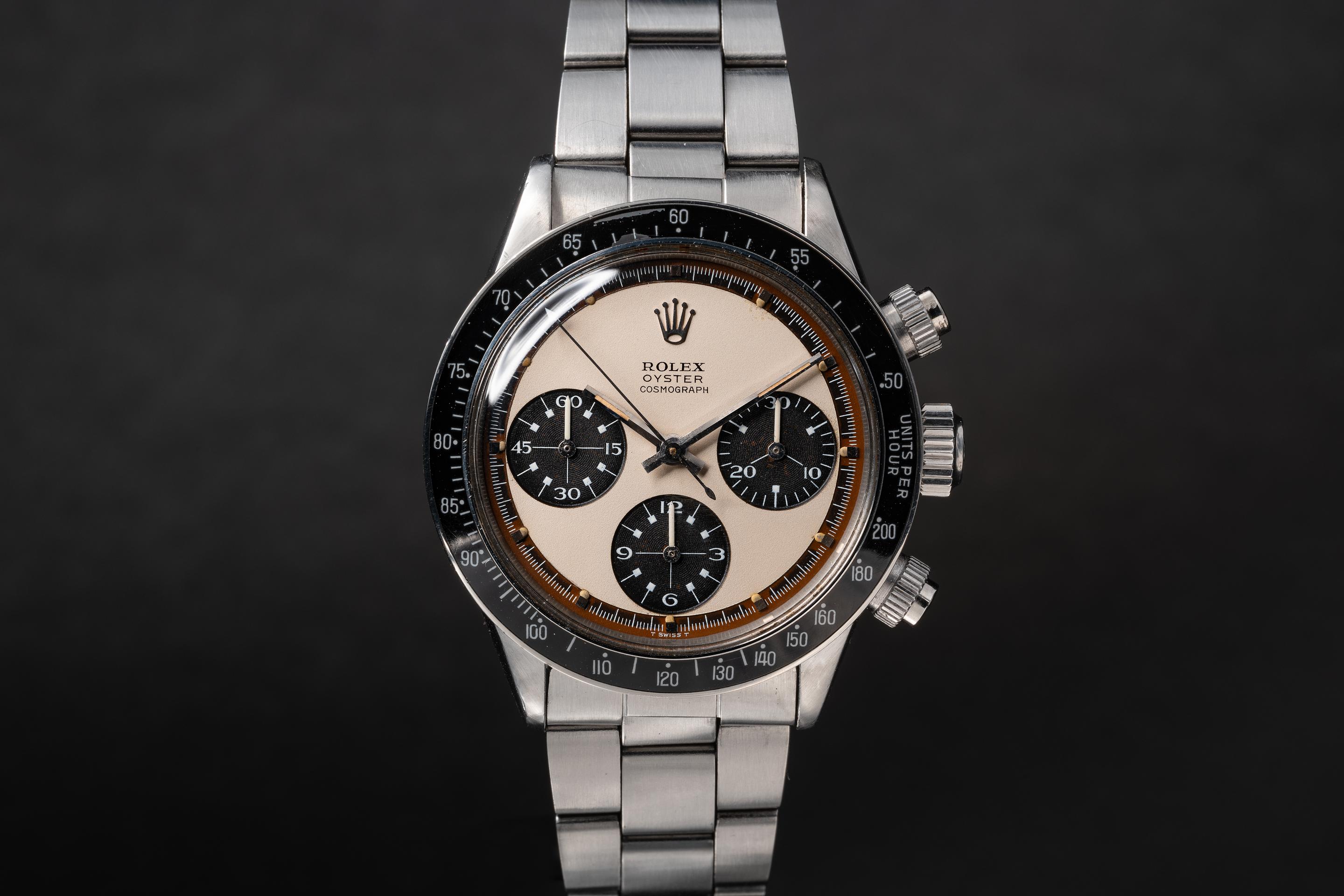
The Rolex Daytona Panda: A Dial That Defined Motorsport Luxury
There are watch dials, and then there are icons. The Rolex Daytona Panda sits firmly in the latter category. Named not by Rolex itself, but by collectors and enthusiasts who saw the striking contrast between its white dial and black subdials and thought — well, panda — the nickname has since become one of the most recognized pieces of informal vocabulary in the entire luxury watch world. If you have ever found yourself curious about what makes this particular configuration so enduring, so consistently desirable, and so worth understanding before you buy, this is the guide for you.
What Exactly Is the Daytona Panda Dial Configuration
The term Panda refers specifically to the color contrast found on certain Rolex Daytona dials. In the classic Panda configuration, the main dial is white or cream, while the three chronograph subdials are black. The result is a high-contrast, immediately legible, almost graphic visual that manages to feel both sporty and refined simultaneously. There is also an Inverse Panda or Reverse Panda variant, where the main dial is black and the subdials are white. Both have devoted followings. The original white-dial version is generally what collectors mean when they say Panda without qualification. It is a simple distinction, but knowing it matters when you are having a conversation with a dealer or browsing a catalog.
The History Behind the Daytona and Its Racing Roots
The Rolex Cosmograph Daytona was introduced in 1963 and named after the famous Daytona International Speedway in Florida. It was designed with professional racing drivers in mind, built around a tachymeter bezel and a chronograph movement capable of precise elapsed-time measurements. The watch was not an immediate commercial success, which is something of a footnote in horological history worth knowing. By the 1980s, however, demand had grown so dramatically that waitlists at authorized dealers became the norm rather than the exception. The Panda dial configuration has existed in various forms throughout the Daytona's production history, appearing across multiple references and generations. Each era brought its own nuances in dial printing, subdial layouts, and case finishing, which is a significant part of why vintage examples command such serious attention today.
Key Rolex Daytona References Featuring the Panda Dial
Understanding which references carry the Panda configuration helps buyers narrow their focus quickly. Several references stand out in particular when it comes to collector relevance and market presence.
Reference 6263
- Produced from the late 1960s through the mid-1980s, this is arguably the most iconic Panda Daytona reference. It featured an acrylic crystal and pump pushers, and the white dial examples from this era are among the most sought-after vintage Rolexes in existence.
Reference 6265
- Running concurrently with the 6263, the 6265 featured a screw-down pushers system for enhanced water resistance. Both references used the Valjoux-based caliber, and examples in Panda configuration with original tropical dials can achieve extraordinary prices at auction.
Reference 16520
- Known as the Zenith Daytona because it houses the modified Zenith El Primero movement, this model was produced from 1988 to 2000. The white dial versions of this reference are classic Panda examples and remain extremely popular among collectors who want a vintage aesthetic with improved mechanical performance.
Reference 116520
- The in-house caliber era began with this reference, introduced in 2000. It brought Rolex's own 4130 movement to the Daytona and continued the white dial tradition that Panda enthusiasts had come to expect.
What Makes the Panda Dial So Visually Compelling
There is a functional logic behind the Panda configuration that goes beyond pure aesthetics. The high contrast between the white main dial and dark subdials makes reading chronograph elapsed time easier at a glance, which is relevant in a racing context where seconds matter. At the same time, the visual balance that the layout creates — three evenly spaced, dark circular windows on a light ground — has an almost architectural quality to it. It is restrained and geometric. That balance between utility and design is arguably what has kept the Panda dial relevant across decades. It does not feel trend-dependent because it was never really a trend in the first place. It was a decision rooted in clarity of function, and clarity tends to age well.
Panda vs. Reverse Panda: Which Should You Consider
This is a question worth thinking through rather than answering reflexively. The classic Panda with its white dial reads lighter on the wrist and pairs naturally with a wider range of clothing and contexts. Many collectors describe it as the more versatile choice, particularly in professional or formal settings. The Reverse Panda, with its black dial and white subdials, leans sportier and arguably more dramatic. On a steel bracelet it can read almost tool-watch adjacent, which has its own appeal. Collector values for the two configurations tend to differ by reference and era, so if investment or resale value is part of your calculus, it is worth researching specific reference-by-reference comparisons rather than making a broad assumption. Neither is objectively better — it is genuinely a matter of personal preference and intended use.
How to Authenticate a Vintage Daytona Panda Dial
Authentication is not optional when buying vintage Rolex. The Daytona Panda, precisely because of its desirability, has been the target of dial swaps, reproductions, and outright forgeries for decades. Several key points of evaluation apply when examining any vintage Daytona Panda example.
- Dial printing should be sharp and consistent, with no signs of fading that look artificial or inconsistent with the watch's stated age.
- The lume plots, if present, should show age-appropriate patina that matches the hands. Mismatched aging between the dial and hands is a red flag.
- Serial numbers on the case back should correspond to known production years for the reference in question.
- Subdial registers should sit flush and move freely during chronograph operation.
- Documentation and box and papers, while not always available on vintage pieces, significantly support authenticity and typically affect value.
- When in doubt, purchase only from reputable dealers with verifiable authentication processes and a clear return or guarantee policy.
The Investment Case for the Daytona Panda
The Rolex Daytona has consistently been one of the strongest performers in the secondary luxury watch market over the past three decades. Panda dial references, particularly early examples in excellent original condition, have shown appreciation that outpaces many other watch categories. The 6263 and 6265 references in white Panda configuration have achieved prices at major auction houses well into six figures when condition and provenance align. Even the later Zenith Daytona references have climbed meaningfully in value over time. This is not financial advice, and watch values can and do fluctuate — but the historical trajectory of Daytona Panda references is difficult to dismiss if you are thinking about watches as part of a broader approach to acquiring meaningful, tangible assets. The fundamentals here are strong: limited supply, sustained global demand, and a cultural cachet that shows no sign of fading.
Styling the Daytona Panda in Everyday Wear
One of the underappreciated aspects of the Panda dial is how well it transitions across contexts. On a steel Oyster bracelet, a classic Panda Daytona reads clean and capable. Swap that bracelet for a leather strap and the same watch takes on a considerably more refined character. The white dial absorbs and reflects ambient light in a way that makes the watch feel present without being aggressive on the wrist. It is a watch that holds its own in a boardroom and looks equally at ease at a weekend event. For a chronograph, that versatility is notable. Many sport-oriented complications feel out of place in formal settings. The Panda Daytona, perhaps owing to the inherent elegance of its contrast layout, does not carry that limitation in the same way.
Why Tropical Watch Is Your Source for Vintage Daytona Panda References
Finding an authentic, well-preserved Daytona Panda is not something you want to leave to chance. The market is competitive, and the margin for error when buying vintage Rolex is thin. Tropical Watch specializes in precisely the kind of carefully sourced, thoroughly authenticated vintage Rolex pieces that serious collectors and first-time buyers alike are looking for. If you are ready to explore what genuine horological heritage looks like, browsing the curated inventory of vintage Rolex Daytona Panda dial watches at Tropical Watch is a natural and well-considered starting point. The team brings deep expertise, transparent provenance standards, and a genuine passion for watches that distinguishes the experience from generic marketplace browsing. When the piece you are considering carries real history and real value, working with people who understand both matters considerably.
Frequently Asked Questions About the Rolex Daytona Panda
What does Panda mean in reference to a Rolex Daytona?
Panda is a collector nickname for a Rolex Daytona featuring a white main dial with black chronograph subdials. The high-contrast color combination resembles the coloring of a giant panda, which is where the informal name originates. Rolex does not use this term officially.
Which Rolex Daytona references are considered classic Panda dials?
The most notable Panda dial references include the 6263, 6265, 16520, and 116520. Each represents a different era of Daytona production and carries its own collector significance. The 6263 and 6265 are particularly revered among vintage watch enthusiasts.
Is the Reverse Panda Daytona worth as much as the standard Panda?
Values vary by reference and condition rather than dial configuration alone. In some references, white Panda dials command premiums over Reverse Panda equivalents, while in others the difference is negligible. Research specific reference comparisons for accurate current market guidance.
How can I tell if a vintage Daytona Panda dial is original and unrestored?
Original dials typically show consistent, age-appropriate patina, sharp printing, and lume aging that matches the hands. Restored or replaced dials often look unnaturally clean relative to the case and hands. Professional authentication from a trusted dealer or independent expert is strongly recommended before purchase.
Why are vintage Daytona Panda watches so expensive?
Demand significantly outpaces available supply for desirable vintage Daytona references. Combined with the watch's iconic status, historical connection to motorsport culture, and Rolex's sustained global brand prestige, pricing in the secondary market reflects both rarity and enduring desirability.
Does the Rolex Daytona Panda hold its value over time?
Historically, Daytona Panda references have demonstrated strong value retention and meaningful appreciation, particularly for early references in excellent original condition. Past performance does not guarantee future results, but the fundamentals supporting Daytona values — scarcity, demand, and cultural significance — remain consistently strong.