Rolex Explorer 2: The Complete Buyer's Guide
The Rolex Explorer 2: A Complete Guide to One of Horology's Most Purposeful Watches
There are watches made to look the part, and then there are watches built to actually do the job. The Rolex Explorer 2 falls firmly into the second category. Born from a genuine need and refined over decades, this is a timepiece that earns its reputation the hard way. Whether you are considering your first serious watch purchase or trying to understand what separates the Explorer 2 from everything else in the Rolex lineup, this guide covers the full picture. History, specifications, variations, and what to look for when buying. All of it.
The Origins of the Explorer 2: Why This Watch Exists
Rolex introduced the Explorer 2 in 1971, roughly eighteen years after the original Explorer debuted alongside Sir Edmund Hillary's summit of Everest. The original Explorer was built for mountaineers. The sequel had a different audience in mind entirely. Rolex designed the Explorer 2 specifically for speleologists, which is the technical term for cave explorers. Deep inside cave systems, natural light disappears completely. Without the sun as a reference point, distinguishing day from night becomes genuinely difficult. The Explorer 2 addressed this with a distinctive 24-hour bezel and a secondary orange GMT hand that could track a second time zone or indicate AM versus PM at a glance. It was a functional solution to a real problem, not a marketing exercise.
Reference 1655: The Original Explorer 2 and Its Legacy
The first Explorer 2, reference 1655, is one of the most recognizable watches in vintage Rolex collecting. It featured a fixed 24-hour graduated bezel, a bold orange GMT hand that critics called the "freccione" (Italian for big arrow), and a dial that read simply "Explorer II." The case measured 40mm, which was generously sized for the era. Early models came with what collectors now call the "Steve McQueen" dial, a nickname that emerged somewhat speculatively over the years but stuck regardless. Reference 1655 remained in production until 1985 and is now among the most sought-after vintage Rolex references on the secondary market, appreciated for its raw, utilitarian design language that was ahead of its time.
The Evolution from 1655 to Modern References
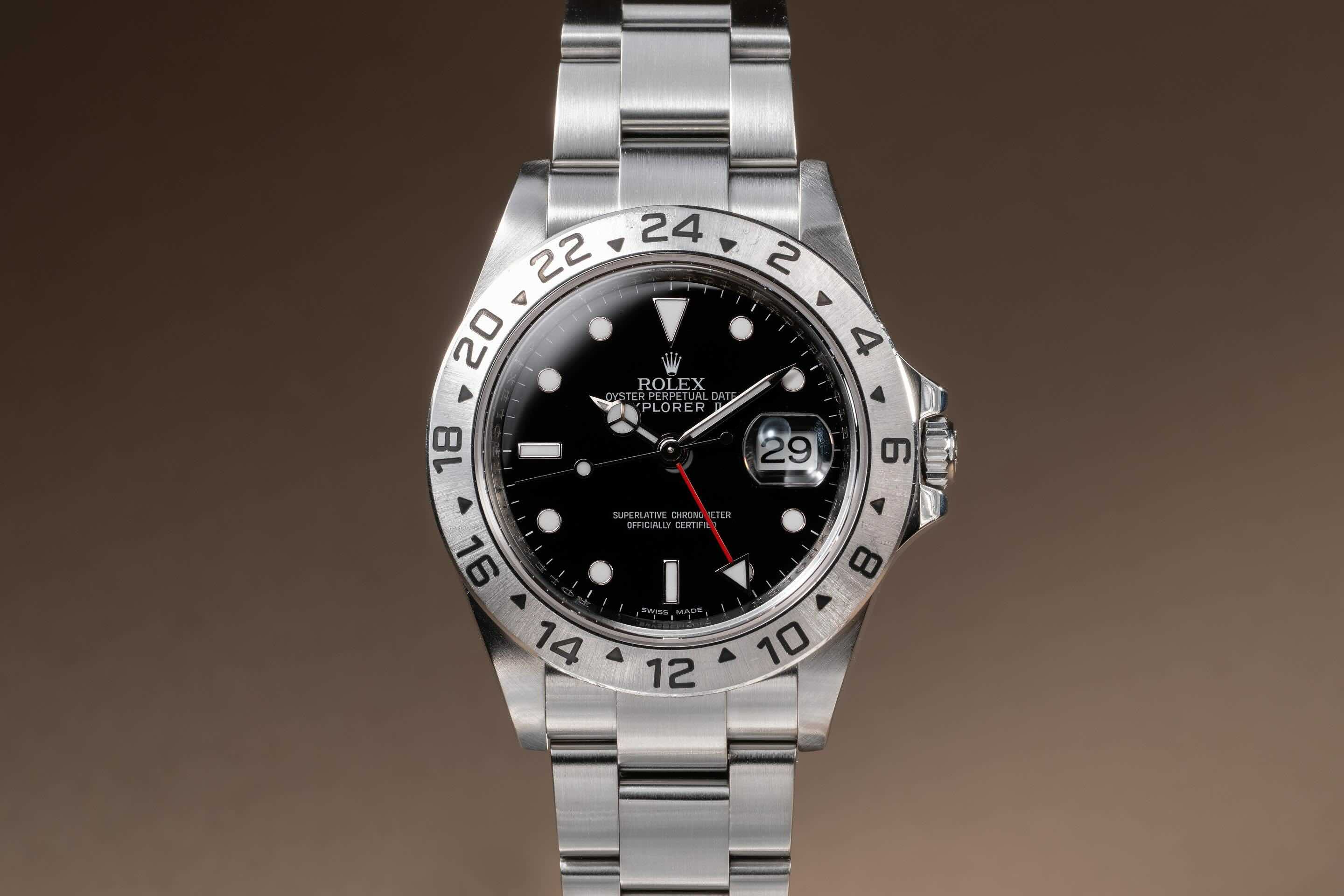
After reference 1655 was discontinued, Rolex introduced reference 16550 in 1984, followed by 16570 in 1989. These models moved away from the fixed bezel concept and introduced a rotating GMT bezel, improving functionality for travelers and explorers alike. The dial options expanded too, with both white and black variants available across different production years. Reference 16570 remained in production until 2011, making it one of the longer-running references in the Explorer 2 line. Today's current model is reference 226570, released in 2021 as part of a significant update that brought the case size back to 42mm after a brief period at 40mm. The modern version uses the caliber 3285 movement, offering roughly 70 hours of power reserve and a Chronergy escapement for improved efficiency.
Explorer 2 vs. Explorer 1: Understanding the Difference
The question comes up constantly, and it is worth answering clearly. The Explorer 1 and Explorer 2 share a DNA but serve different purposes. Here is how they compare at a glance.
- Explorer 1 is typically 36mm or 39mm depending on the reference
- Explorer 2 has historically run at 40mm or 42mm
- Explorer 1 features a cleaner, more minimalist dial with no GMT complication
- Explorer 2 includes a 24-hour bezel and secondary hand for dual time or AM/PM reading
- Explorer 1 is often considered the more understated everyday watch
- Explorer 2 offers more technical utility and visual boldness
- Both share the same core Rolex build quality and use in-house movements
Neither watch is objectively better. The right choice depends entirely on what the wearer values in a daily timepiece. That said, the Explorer 2 tends to attract collectors who appreciate a watch with a stronger visual identity and a more specific backstory.
What Makes the Explorer 2 a Sound Investment
Rolex watches in general tend to hold value exceptionally well over time, and the Explorer 2 is no exception. Vintage references, particularly early production 1655 models in good condition, have appreciated significantly over the past decade. The combination of limited original production numbers, recognizable design, and genuine historical purpose creates the kind of scarcity that drives collector interest. Current production models also tend to sell above retail on the secondary market, which reflects both strong demand and constrained supply through authorized dealers. From a value retention standpoint, few watches in this price category perform as consistently as the Explorer 2 across different market conditions.
Key Specifications to Know Before You Buy
Understanding the technical details makes the buying process considerably easier, whether you are purchasing new or exploring the vintage market.
- Reference 226570 (current): 42mm Oystersteel case, caliber 3285, 70-hour power reserve, sapphire crystal, 100m water resistance
- Reference 16570: 40mm case, caliber 3186, available in black or white dial variants
- Reference 16550: First Explorer 2 with rotating bezel, transitional reference, produced 1984 to 1989
- Reference 1655: Original model, fixed 24-hour bezel, orange GMT hand, produced 1971 to 1985
- All references feature Rolex's Oyster case construction for dust and moisture resistance
- Vintage references will vary in service history, dial condition, and originality of components
Knowing these reference points before entering any conversation with a seller puts the buyer in a significantly stronger position. It signals knowledge, which tends to result in more honest transactions.
Buying a Vintage Explorer 2: What to Look For
The vintage Rolex market is rewarding but requires careful navigation. Condition, originality, and provenance are the three pillars of any sound vintage purchase. For the Explorer 2 specifically, dial condition matters enormously. Faded or damaged dials can dramatically affect value, though in some cases natural aging and patina actually increase desirability among collectors. Original hands, correct bezels, and an unpolished case are all indicators of a watch that has been preserved rather than refurbished. Always request service history where available, and be cautious of prices that seem too favorable. Authentic vintage Rolex watches in good condition hold real value, and sellers typically price accordingly.
Why Tropical Watch Is the Right Partner for Your Explorer 2 Journey
Finding a trustworthy source for vintage Rolex watches is genuinely one of the harder parts of the process. The market is filled with options, but not all of them come with the expertise, authenticity guarantees, or transparent communication that serious collectors require. Tropical Watch has built its reputation specifically within this space, offering an expertly curated selection of vintage and modern Rolex timepieces with the depth of knowledge to match. For anyone seriously exploring the vintage Rolex market or considering a purchase like the Explorer 2, working with trusted vintage Rolex specialists with decades of expertise in rare and collectible timepieces means you are not navigating the process alone. The team brings both passion and precision to every piece they handle, and that combination is rarer than most buyers realize until they have experienced the difference firsthand.
Frequently Asked Questions About the Rolex Explorer 2
What is the Rolex Explorer 2 designed for?
The Explorer 2 was originally designed for cave explorers and speleologists who needed a reliable way to distinguish AM from PM in environments where natural light is absent. Its 24-hour bezel and secondary GMT hand were built specifically for this functional purpose.
What is the difference between the Explorer 1 and Explorer 2?
The Explorer 1 is a cleaner, more minimalist sports watch without a GMT complication. The Explorer 2 features a 24-hour graduated bezel and a second time zone hand, making it more technically complex and visually distinctive.
Is the Rolex Explorer 2 a good investment?
Historically, yes. Both vintage references like the 1655 and modern production models have demonstrated strong value retention. Early references in original, unpolished condition have appreciated considerably on the secondary market over the past decade.
What is the current Rolex Explorer 2 reference?
The current production reference is 226570, introduced in 2021. It features a 42mm Oystersteel case, the caliber 3285 movement with a 70-hour power reserve, and is available in black or white dial variants.
Why is the reference 1655 Explorer 2 so collectible?
Reference 1655 is the original Explorer 2, produced from 1971 to 1985. Its bold design, fixed 24-hour bezel, distinctive orange GMT hand, and historical significance make it one of the most desirable vintage Rolex references among serious collectors.
What should I look for when buying a vintage Explorer 2?
Focus on dial condition, originality of components including hands and bezel, case condition with preference for unpolished surfaces, and available service history. Purchasing from a reputable specialist significantly reduces the risk of acquiring a watch with undisclosed issues or non-original parts.