Timeless Allure of the "Pepsi" GMT: Swiss Craftsmanship

The "Pepsi" GMT: A Watch That Earned Its Nickname the Hard Way
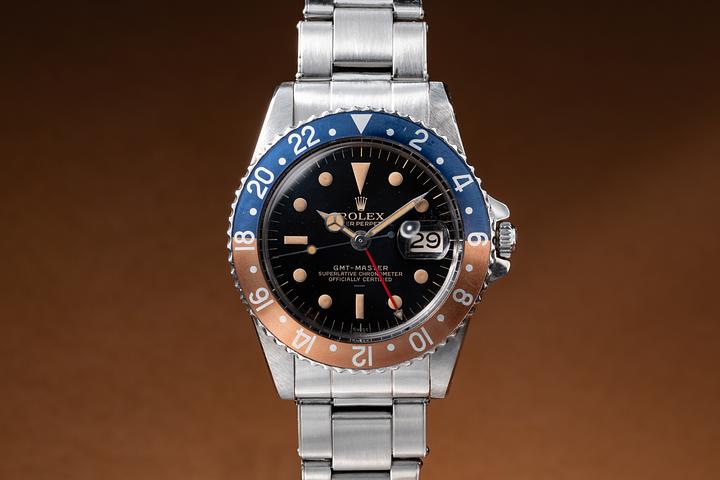
There are watches that tell time, and then there are watches that tell a story. The GMT-Master with its iconic red and blue bezel — affectionately known as the "Pepsi" — belongs firmly in the second category. Few timepieces in the history of horology have captured the imagination of collectors, travelers, and enthusiasts quite like this one. It is a watch born out of genuine professional necessity, refined over decades of Swiss craftsmanship, and elevated by a nickname that stuck because it simply fits. If you have ever wondered what all the fuss is about, this is where the story starts.
Where It All Began: The Origins of the GMT-Master
The GMT-Master was not designed as a luxury statement piece. It was designed to solve a real problem. In the early 1950s, commercial aviation was expanding rapidly, and pilots flying intercontinental routes needed a reliable way to track multiple time zones simultaneously. Rolex partnered with Pan American World Airways to develop a watch that could meet this precise demand. The result, introduced in 1955, was the GMT-Master reference 6542. It featured a 24-hour rotatable bezel and a dedicated fourth hand that completed one rotation every 24 hours, allowing the wearer to read a second time zone at a glance. The red and blue two-tone bezel was not an afterthought — it was a functional design choice. The red indicated daytime hours and the blue indicated nighttime, giving pilots an intuitive way to distinguish between day and night across time zones without lifting their eyes from their instruments. Practical, precise, and distinctly purposeful.
Why "Pepsi"? The Story Behind the Nickname
The nickname is straightforward once you see it. The combination of red and blue on the bezel mirrors the color scheme of the Pepsi Cola brand, and the comparison is hard to unsee once it is made. Watch collectors have a tradition of giving beloved references informal names — the "Batman," the "Root Beer," the "Coke" — and the "Pepsi" earned its place in that lineage decades ago. It is not an official designation from any manufacturer, but in the world of vintage and modern watch collecting, it carries enormous weight. Saying you own a "Pepsi GMT" communicates something instantly recognizable to anyone who follows the luxury watch market. The name has transcended slang and become something close to official shorthand.
The Evolution of the Reference: Key Milestones
The Pepsi GMT has not stood still over the decades. It has evolved through a series of references, each carrying incremental improvements while maintaining the visual identity that made it famous. The reference 6542 came first, with a Bakelite bezel insert that proved too fragile for long-term use and was replaced with aluminum. The reference 1675 followed and became one of the most produced and recognizable GMT-Master models, running from approximately 1959 into the early 1980s. The reference 16750 and later the 16700 brought updated movements and case refinements. Then, in 2018, Rolex reintroduced the Pepsi colorway on the GMT-Master II reference 126710BLRO, but with a critical upgrade: the bezel was now crafted from Cerachrom ceramic, offering dramatically improved resistance to scratching and UV fading. The modern iteration is arguably the most technically accomplished Pepsi GMT ever made, while the vintage references carry a historical and aesthetic character that continues to command serious collector attention.
Swiss Craftsmanship: What Goes Into Making a GMT
The Pepsi GMT is not simply a pretty watch. The engineering behind it reflects decades of accumulated expertise in Swiss watchmaking. Modern GMT-Master II references run on the Rolex caliber 3285, a movement that features a Chronergy escapement — a patented advancement offering improved energy efficiency — along with a paramagnetic blue Parachrom hairspring that provides exceptional resistance to temperature variations and magnetic fields. The watch offers approximately 70 hours of power reserve and meets Rolex's internal Superlative Chronometer certification, which requires accuracy to within plus or minus two seconds per day. The Oyster case, crafted from Oystersteel, is designed to be waterproof to 100 meters. Every component, from the clasp to the crystal to the crown, reflects an exacting standard that defines what the term Swiss Made means at its highest level.
Vintage vs. Modern: Understanding the Collector's Perspective
The conversation around Pepsi GMT watches almost always divides into two camps: those drawn to vintage references and those who prefer modern production models. Neither preference is wrong, and both have compelling arguments behind them. Vintage Pepsi GMT references — particularly the 6542 and 1675 — carry historical provenance, original patina, and a tangible connection to the golden age of aviation and exploration. Collectors prize examples with original dials, unpolished cases, and matching serial number components. The aging of aluminum bezels on vintage references produces color shifts that are now considered desirable rather than signs of wear. Modern references, on the other hand, offer current mechanical technology, manufacturer warranties, and the Cerachrom bezel that will not fade over time. The choice ultimately depends on what a buyer values most: historical authenticity or contemporary performance.
What to Look for When Buying a Pepsi GMT
Purchasing a Pepsi GMT — vintage or modern — requires careful consideration. The market for these watches is active and nuanced, and informed buyers fare considerably better than those who approach it without preparation. Key factors to evaluate include:
Condition of the dial — original, unrestored dials are significantly more valuable than refinished ones Bezel condition — on vintage models, the color and integrity of the aluminum insert matters greatly Case condition — unpolished or lightly polished cases preserve the original lines and carry higher collector value Movement service history — knowing when and by whom a movement was serviced adds confidence Provenance documentation — original box and papers, where available, enhance authenticity and value Reference accuracy — confirming that all components match the correct reference period is essential for vintage purchases
The Pepsi GMT on the Secondary Market
Demand for the Pepsi GMT on the pre-owned and vintage market has remained consistently strong. The modern reference 126710BLRO has frequently appeared on waiting lists at authorized dealers, pushing buyers toward the secondary market where premiums above retail are common. Vintage references, particularly the 6542 and well-preserved examples of the 1675, command prices that reflect both their historical significance and their relative scarcity in genuine original condition. As with all collectible watches, condition, completeness, and provenance are the primary drivers of value. The Pepsi GMT is not just a watch purchase — for many buyers, it represents a long-term asset within a broader collection strategy.
Why Tropical Watch Is the Right Partner for Your Pepsi GMT Journey
Finding the right Pepsi GMT — especially a vintage example — requires more than browsing listings. It requires a trusted source with genuine expertise, a curated inventory, and a commitment to authenticity that matches the seriousness of the investment. Tropical Watch has built its reputation on exactly that foundation. Specializing in rare and collectible timepieces, Tropical Watch offers access to a carefully vetted selection that includes some of the most sought-after references in the market. Whether you are searching for your first vintage Rolex GMT or expanding a collection with a precision-graded example, working with vintage Rolex GMT-Master Pepsi watch specialists who understand the nuances of dial originality, case integrity, and market value makes a meaningful difference. The Pepsi GMT deserves the kind of attention and sourcing that only a dedicated specialist can provide, and Tropical Watch delivers that with confidence and transparency at every step.
Frequently Asked Questions About the Pepsi GMT Watch
What makes a Rolex GMT-Master called a "Pepsi"?
The nickname "Pepsi" refers to the red and blue two-tone bezel found on certain GMT-Master references, which mirrors the color scheme associated with the Pepsi Cola brand. It is an informal but widely recognized term used by collectors and enthusiasts globally.
What is the difference between the GMT-Master and the GMT-Master II?
The original GMT-Master allowed the wearer to track a second time zone using a fixed 24-hour bezel. The GMT-Master II, introduced in 1983, improved the design by allowing the hour hand to be independently set, enabling easier adjustment when crossing time zones without stopping the movement.
Are vintage Pepsi GMT watches a good investment?
Vintage Pepsi GMT references have shown strong long-term value retention, particularly examples in original, unrestored condition with matching components and documentation. As with any collectible, condition and provenance are critical factors in determining investment quality.
What is a Cerachrom bezel and why does it matter?
Cerachrom is Rolex's proprietary ceramic material used for bezel inserts on modern references. It is highly resistant to scratching and will not fade when exposed to UV light, making it significantly more durable than the aluminum inserts used on older GMT-Master models.
How do I verify the authenticity of a vintage Pepsi GMT?
Authenticating a vintage Pepsi GMT involves examining the dial for originality, confirming that the reference and serial number align with the correct production period, assessing the movement for authenticity and service history, and ideally working with a reputable specialist who has documented experience with Rolex vintage references.
What reference numbers are associated with the Pepsi GMT?
The primary references associated with the Pepsi colorway include the 6542, 1675, 16750, 16700, and the current production reference 126710BLRO. Each reference represents a distinct era in the GMT-Master's development, with variations in case design, movement, and bezel material.