Blue Rolex Daytona: The Complete Collector's Guide
The Blue Rolex Daytona: Everything You Need to Know About One of Watchmaking's Most Iconic Dials
There are blue dials, and then there is the blue Rolex Daytona. If you have spent any time researching luxury sport watches, you have almost certainly come across this reference and probably found yourself wondering what exactly makes it so special, so sought after, and in many cases, so expensive. The answer is layered, and it involves history, materials, rarity, and the particular way Rolex has used the color blue to create some of its most compelling references over the decades. This guide covers all of it in plain terms, so you can walk away with a clear understanding of where this watch came from, what your options are today, and what to look for whether you are buying new or vintage.
A Brief History of the Rolex Daytona
The Rolex Cosmograph Daytona was introduced in 1963, designed specifically for professional racing drivers who needed a reliable chronograph with a tachymeter scale to measure average speeds. Named after the famous Daytona International Speedway in Florida, the watch was built for function first. Early references, including the 6239 and 6241, were manual-wind models with relatively modest market appeal at the time. That changed dramatically through the 1970s and 1980s as the watch grew into a cultural icon, partly thanks to its association with the actor and racing enthusiast Paul Newman. Today the Daytona is one of the most recognized and coveted luxury sports watches in the world, and the blue dial versions sit at the top of that hierarchy for a number of very good reasons.
What Makes the Blue Dial So Distinctive
Blue dials on the Rolex Daytona are not a single uniform category. The shade, material, and finish vary significantly depending on the reference and era. Some blue dials are lacquered, some are meteorite, some are made from sunburst-finished steel, and others are crafted from exotic materials including sapphire or blue varnish over brass. In more contemporary references, particularly those housed in white gold or platinum cases, Rolex has used deep blue hues that range from a vivid cerulean to a near-midnight navy. The color interacts differently with each case material, and that relationship between case metal and dial color is a significant part of what makes specific combinations so visually arresting. The dial is not just decoration; it is a design statement that communicates the entire personality of the watch.
Key Blue Daytona References Worth Knowing
Understanding the landscape of blue Daytona references helps you make a far more informed purchasing decision. Here are some of the most notable examples across both modern and vintage categories:
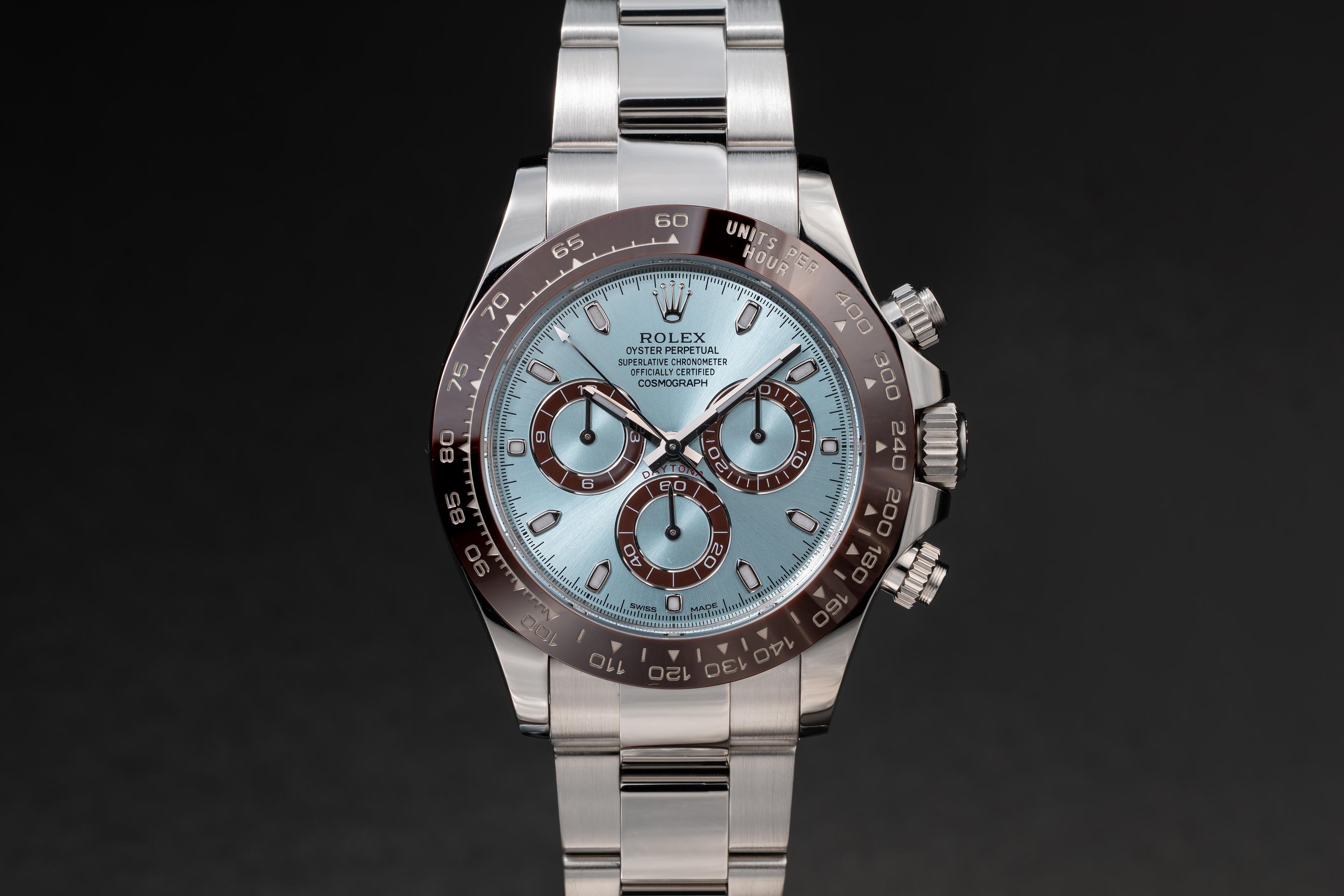
- Reference 116506 in platinum with an ice blue dial
- Reference 116519 in white gold with a variety of blue dial options
- Reference 116509 featuring a blue dial in white gold
- Reference 116520 in steel with a blue dial, discontinued and now highly collectible
- The 6263 and 6265 vintage references with aftermarket blue dials that have become desirable in their own right
- Newer generation 126500LN references with updated movements and refined dial options
Each of these represents a different chapter in the Daytona story, and the value, availability, and collector appeal of each one shifts considerably based on the market at any given time. The platinum 116506 with the ice blue dial remains one of the most visually dramatic Daytonas ever produced, and its secondary market pricing reflects that status clearly.
The Role of Rarity in Blue Daytona Pricing
One of the most common questions buyers ask is why certain blue Daytonas command such significant premiums. The honest answer is multifaceted. Rolex produces the Daytona in controlled quantities, and specific dial configurations are often discontinued or introduced in limited production windows. When a particular reference is retired, demand from collectors who missed it the first time creates a supply imbalance on the secondary market. Blue dials in precious metal cases are especially susceptible to this dynamic because the case material itself limits the production volume. Add to that the global demand for Rolex watches broadly, and you have a market environment where certain blue Daytonas regularly trade at multiples of their original retail price.
Modern vs. Vintage Blue Daytona: Understanding the Difference
The decision between a modern and vintage blue Daytona is genuinely one of personal preference layered over practical considerations. Modern references benefit from Rolex's current generation movements, including the caliber 4130 in more recent models, which offers impressive accuracy, a longer power reserve, and improved serviceability. Vintage blue Daytonas, particularly those with original or well-preserved dials, offer something different entirely: a connection to a specific period of watchmaking history that cannot be replicated. Tropical dials, original patina, and period-correct details are part of what drives the collector market for vintage Daytona references. If authenticity and historical character appeal to you, vintage is a fascinating direction. If you want a watch you plan to wear regularly with confidence in its mechanical reliability, a modern reference may serve you better.
What to Look For When Buying a Blue Daytona
Whether you are purchasing from a dealer, an auction house, or a private seller, there are several factors that should guide your evaluation:
- Dial originality and condition, including signs of refinishing or color inconsistencies
- Case sharpness and whether the watch has been over-polished
- Movement service history and the presence of documentation
- Matching serial numbers between the case and bracelet end links
- Box and papers, which significantly affect resale value
- Provenance and any documented ownership history for vintage references
The dial is particularly critical for blue Daytona references. Original dials in excellent condition are increasingly scarce in the vintage market, and replacement or refinished dials can drastically reduce a watch's collectible value regardless of how attractive they appear at first glance.
The Investment Perspective on Blue Rolex Daytonas
It would be irresponsible to frame any luxury watch purely as a financial investment without acknowledging the variables involved. That said, the blue Rolex Daytona has demonstrated a strong historical track record of value retention and appreciation, particularly in the vintage and precious metal categories. The steel Daytona with a blue dial, most notably the reference 116520, appreciated substantially after its discontinuation and continues to hold strong secondary market values. The more exotic configurations in platinum and white gold tend to hold their value well due to the intrinsic cost of their materials in addition to their collectible status. If you are purchasing with any consideration of long-term value, buying a complete set with original box and papers is always the more prudent approach.
How to Authenticate a Blue Daytona Before You Buy
Authentication is non-negotiable in today's market. The global appetite for Rolex Daytonas has created a sophisticated network of counterfeit and frankenwatches, which are watches assembled from a mix of genuine and non-genuine parts. For a blue Daytona specifically, authentication should involve a thorough inspection of the dial text and printing quality, the movement through the caseback or under the dial if accessible, the crown and pushers, and the overall finishing of the case and bracelet. Rolex serial number databases and reference-specific knowledge are essential tools. Working with a trusted specialist or a reputable dealer who offers documented authenticity assurances is the most reliable way to protect your purchase.
Why Tropical Watch Is the Right Partner for Your Blue Daytona Search
Finding a blue Rolex Daytona that meets serious collector standards is not something that happens by accident. It requires access to a curated inventory, deep reference knowledge, and a buying experience that prioritizes transparency. Tropical Watch has built its reputation specifically around this kind of expertise, with a focus on rare and collectible Rolex references that demand more than surface-level familiarity. Whether you are looking for a vintage reference with original dial integrity or a modern precious metal configuration, the team at Tropical Watch brings the kind of focused attention that makes a meaningful difference. If you are serious about acquiring a blue Rolex Daytona from a trusted vintage and luxury watch specialist, Tropical Watch offers the inventory depth and authenticating expertise that discerning collectors rely on. This is not a transactional marketplace. It is a curated experience designed around the standards that serious watch buyers actually care about.
Frequently Asked Questions About the Blue Rolex Daytona
What is the most collectible blue Rolex Daytona reference?
The platinum reference 116506 with an ice blue dial is widely regarded as one of the most collectible modern blue Daytonas. In the vintage category, early manual-wind references with original blue or blue-toned dials in well-preserved condition attract the strongest collector interest.
Why is the blue dial Daytona more expensive than other dial colors?
Blue dial Daytonas are often paired with precious metal cases, which increases the base cost significantly. Additionally, certain blue dial configurations have been produced in limited quantities or have since been discontinued, creating elevated demand on the secondary market.
Is the blue Rolex Daytona a good investment?
Historically, select blue Daytona references have demonstrated strong value retention and appreciation, particularly those in precious metals or discontinued references with complete box and papers. No luxury watch purchase should be approached solely as a financial investment, but the Daytona has one of the stronger track records in the category.
What is the difference between the ice blue dial and a standard blue dial on a Daytona?
The ice blue dial is exclusive to Rolex's platinum Daytona references and features a pale, almost silvery-blue tone that is distinct from the deeper, more saturated blue dials found on white gold or steel references. The pale color is a deliberate visual cue used by Rolex to signal the platinum case material.
How can I tell if a blue Daytona dial is original?
Original blue Daytona dials display consistent printing depth, correct font weights, and age-appropriate patina if vintage. Refinished or replacement dials often show inconsistencies in color saturation, print quality, or surface texture. Working with an experienced authenticator is the most reliable method of verification.
Does Rolex currently produce a steel Daytona with a blue dial?
Rolex has offered blue dials on steel Daytona references in the past, most notably on the discontinued reference 116520. Current steel Daytona production does not consistently feature blue dials as a standard catalog option, which has contributed to the strong secondary market demand for earlier steel blue dial examples.