Rolex Serial Number Guide: History, Verification, and Value
Why Your Rolex Serial Number Matters More Than You Think
There is a moment every Rolex owner or prospective buyer experiences — that quiet pause when you flip the watch over, squint at the case, and wonder what exactly those engraved numbers mean. Serial numbers on a Rolex are not administrative formalities. They are gateways into a watch's complete identity. They tell you when it was made, help confirm whether it is genuine, and in many cases, they directly influence what a watch is worth on the secondary market. Understanding how to read and verify a Rolex serial number is one of the most practical skills a collector or buyer can develop. It sounds technical, but once you understand the system, it becomes second nature.
A Brief History of How Rolex Numbered Its Watches
Rolex has been assigning serial numbers to its timepieces since the early twentieth century. The numbering system has evolved considerably over the decades, but the principle has remained constant — each watch receives a unique sequential number that corresponds to its approximate production period. In the early years, serial numbers were relatively short, sometimes just five digits. As production scaled globally and demand for Rolex grew, the numbers expanded. By the mid-twentieth century, six and then seven-digit serials became standard. For collectors of vintage references, these early serial ranges carry enormous significance. A five-digit serial on a vintage Submariner or Datejust can place a watch precisely in a narrow production window, often down to a specific year or even a specific run. That kind of precision is exactly what serious collectors depend on when authenticating or valuing a piece.
The Serial Number Eras: What the Numbers Tell You
Rolex serial numbers have passed through several distinct eras, and each one corresponds to a different range of numbers and production periods. Here is a general overview of the major phases collectors reference most often:
Serial numbers below 10,000 — typically associated with pre-World War II production, extremely rare 100,000 to 999,999 range — general mid-century production, spanning roughly the 1950s 1,000,000 range — associated with late 1950s to early 1960s production Numbers entering the millions — expanding through the 1960s and 1970s Letter-prefix serials introduced in 1987 — beginning with R, then L, E, X, N, C, D, Z, M, F, A, P, K, Y, and so on Rolex transitioned to random serial numbers in 2010, eliminating sequential codes entirely
That last point is worth pausing on. In 2010, Rolex deliberately moved away from sequential numbering. Modern Rolex watches now carry randomized serials, which means you cannot use a contemporary serial alone to establish a production date. For vintage watches, however, the sequential system remains a foundational research tool.
Where to Find the Serial Number on a Rolex
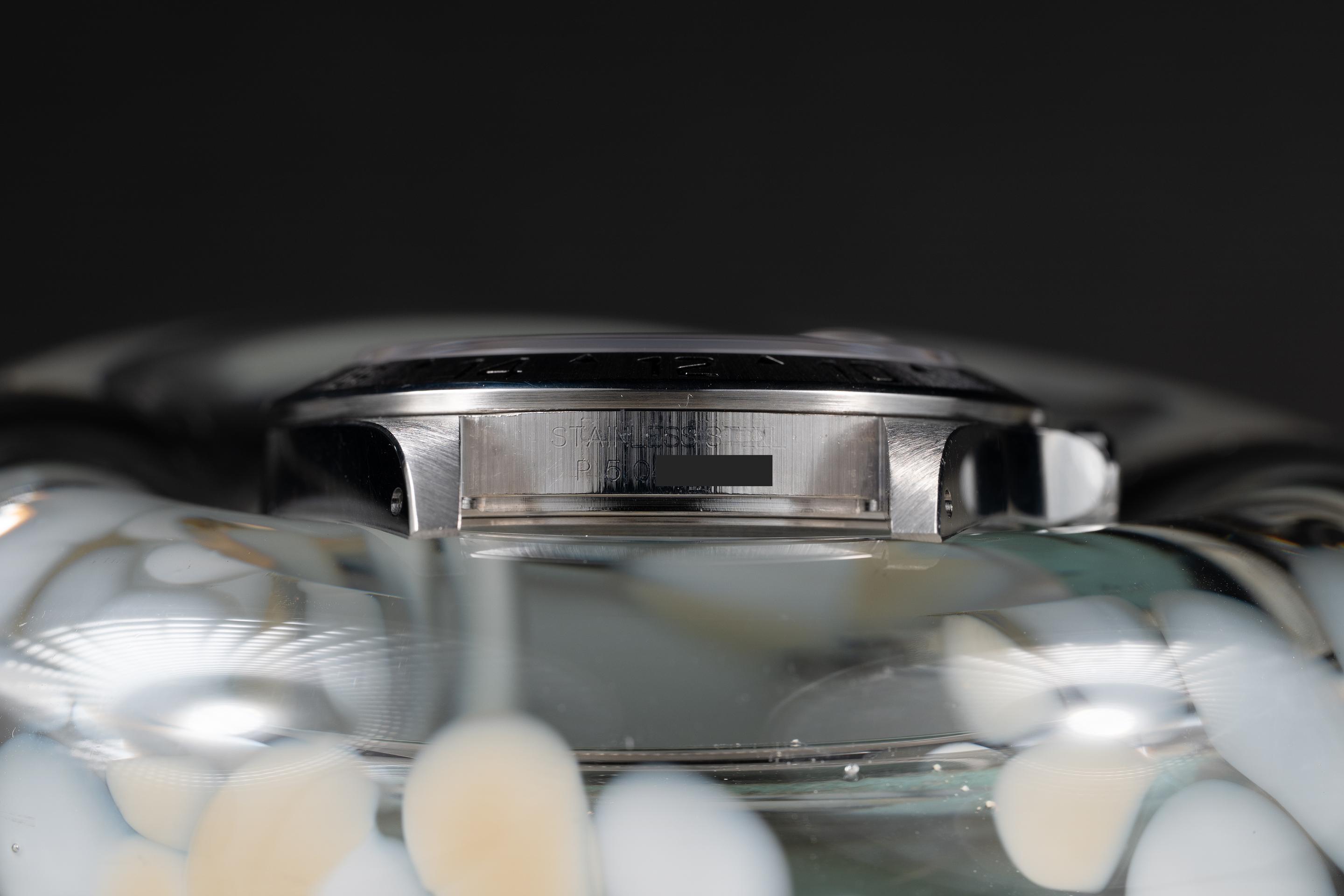
Location matters, and it has actually changed depending on the era of the watch. For vintage Rolex models produced before approximately 2005, the serial number is engraved between the lugs at the six o'clock position on the case. You typically need to remove the bracelet to see it clearly. From around 2005 onward, Rolex began engraving the serial number on the inner bezel, visible through the crystal when you look at the dial from the front. This shift was partly a response to the growing problem of counterfeit watches, as moving the number made it harder to swap cases. If you are examining a vintage piece and the serial is not where you expect it to be, that is a meaningful red flag worth investigating further.
How to Verify a Rolex Serial Number for Authenticity
Verification is where the serial number becomes a protective tool. Counterfeit Rolex watches have existed for decades, and some modern fakes are surprisingly sophisticated. Knowing how to cross-reference a serial number with known production data gives buyers and sellers a layer of confidence that no visual inspection alone can provide. There are several approaches to serial number verification that experienced collectors and dealers use:
Cross-reference the serial against published Rolex production date charts to confirm the approximate year aligns with the model reference Confirm the model reference number matches the serial era — for example, if a serial suggests 1965 production but the reference number belongs to a model introduced in 1972, something is wrong Check that engravings are crisp and evenly spaced — counterfeit serials are often poorly executed, with uneven depth or spacing Have the watch examined by a certified watchmaker or authorized Rolex service center when significant value is involved Request documentation including original papers, service history, or correspondence with Rolex if purchasing through the secondary market
No single method is foolproof on its own, but used together they create a reliable picture of authenticity.
How Serial Numbers Affect Rolex Value
Serial numbers do not just confirm what a watch is — they can meaningfully affect what it is worth. In the vintage Rolex market, provenance and production specificity are everything. A Submariner with a serial that places it in a particularly desirable production year may carry a premium over an otherwise identical example from a different period. Tropical dials, early bezels, and other era-specific variations are inseparable from the serial number evidence that places them in the correct production window. Buyers and auction houses take serial numbers seriously, and watches with matching, verifiable serials on both the case and movement command stronger prices. Mismatched serials, while not always indicative of fraud, can suppress a watch's market value because they raise questions that cannot be fully resolved without extensive documentation.
Common Mistakes Buyers Make When Checking Serials
Even experienced buyers occasionally miss details that serial number verification would have caught. The most common errors include assuming a clean serial engraving means the watch is genuine, failing to match the serial era to the specific model reference, not checking whether the serial appears on the movement as well as the case, and overlooking the fact that a refinished case can sometimes mean a partially re-engraved serial. These are not hypothetical risks. They represent real situations that arise in the secondary market regularly. Taking the time to cross-reference carefully before any significant purchase is not excessive caution — it is standard practice.
Understanding Reference Numbers Alongside Serials
Serial numbers work in tandem with reference numbers, and both are necessary for a complete picture. The reference number identifies the specific model, while the serial number identifies the individual watch and its production period. For vintage Rolex collectors, certain reference and serial combinations are particularly sought after. A Rolex reference 1680 Submariner with a serial placing it in the early 1970s tells a collector an enormous amount about what they are looking at — the likely dial configuration, bezel type, and original bracelet options that would have been available. The combination of both numbers creates a research framework that shapes almost every meaningful decision in vintage watch collecting.
Why Tropical Watch Is the Right Place to Explore Vintage Rolex
Understanding serial numbers is one thing. Finding watches where that knowledge is already applied with precision is another. For collectors who take authenticity and provenance seriously, working with a trusted source is not optional — it is essential. Tropical Watch has built a reputation within the vintage Rolex community for sourcing, authenticating, and presenting timepieces with the kind of transparency that serious buyers require. Whether you are searching for a specific reference tied to a narrow production window or simply exploring what is available, the expertise behind every listing is evident. Collectors who want to shop with confidence for authenticated vintage Rolex watches with verified serial numbers will find that Tropical Watch operates with exactly the standard of care that the vintage market demands. The knowledge does not just live in a guide — it is embedded in every watch they offer.
Frequently Asked Questions About Rolex Serial Numbers
How do I find my Rolex serial number?
On vintage Rolex watches produced before approximately 2005, the serial number is engraved between the lugs at the six o'clock position and requires bracelet removal to view. On models produced from around 2005 onward, the serial number is engraved on the inner bezel and visible through the crystal from the front of the watch.
Can a Rolex serial number tell me the exact year my watch was made?
For vintage Rolex watches using sequential serial numbers, a serial can typically narrow production down to a specific year or short range of years. For modern Rolex watches produced after 2010, the serial numbering is randomized and cannot be used to determine a production date without documentation from Rolex directly.
What does it mean if my Rolex has mismatched serial numbers?
Mismatched serials between the case and movement suggest the watch may have had parts swapped at some point, which can occur during servicing or may indicate more serious alterations. It does not automatically mean a watch is counterfeit, but it typically reduces collector value and warrants thorough professional inspection before purchase.
Are Rolex serial numbers unique to each watch?
Yes, each Rolex receives a unique serial number assigned sequentially during production in the vintage era. No two genuine Rolex watches produced during the sequential numbering period should share an identical serial number, which is why matching a serial against known production records is a useful authenticity check.
Why did Rolex switch to random serial numbers in 2010?
Rolex transitioned to randomized serial numbers primarily as an anti-counterfeiting measure. Sequential serials made it easier for counterfeiters to produce plausible-looking fakes by referencing known production data. Randomized serials make it significantly harder to replicate a believable serial without access to Rolex's internal records.
Does a Rolex serial number affect the watch's resale value?
Yes, significantly in the vintage market. A verifiable serial that places a watch in a desirable production period, especially when it matches the case, movement, and reference number, supports stronger resale pricing. Watches with clear, unaltered, well-documented serials consistently perform better at auction and in private sales than those with unverifiable or mismatched numbers.