Maya Calendar, Luxury Watches, and the Art of Time

The Maya Calendar and the Art of Measuring Time: What It Means for Luxury Watch Collectors
There is something deeply human about the need to track time. Long before mechanical movements and sapphire crystals, the ancient Maya were constructing one of the most sophisticated timekeeping systems the world had ever seen. Their calendar was not just a tool. It was a philosophy, an astronomical achievement, and a reflection of how seriously a civilization can take the passage of moments. For anyone who collects luxury watches, that obsession with precision should feel familiar. The Maya calendar and the modern mechanical timepiece share more common ground than most people realize, and understanding that history can genuinely deepen your appreciation for what sits on your wrist.
A Brief History of the Maya Calendar System
The Maya civilization, which flourished across Mesoamerica from roughly 2000 BCE through the arrival of Spanish colonizers in the 16th century, developed a calendar system of extraordinary complexity. They did not use a single calendar but rather a series of interlocking cycles, each serving a different purpose. The most widely known include the Tzolkin, a 260-day ritual calendar used for ceremonies and divination, and the Haab, a 365-day solar calendar divided into 18 months of 20 days each, plus a short five-day period at the end. These two systems would mesh together like gears, repeating their combined cycle every 52 years, a period the Maya called the Calendar Round. Then there was the Long Count, a linear calendar designed to track vast stretches of historical and mythological time. It was the Long Count that generated the now-famous 2012 date, which marked the end of a roughly 5,125-year cycle. The precision required to build and maintain these systems, using only naked-eye astronomy and mathematical logic, remains staggering even by modern standards.
Why Maya Timekeeping Was Essentially an Engineering Marvel
What makes the Maya calendar remarkable from an engineering standpoint is the level of interdependence between its components. Each cycle informed the others. Adjustments had to account for planetary movements, solar cycles, and astronomical phenomena observed over generations. Their calculations of the Venus cycle, for example, were accurate to within a fraction of a day over centuries. That kind of rigorous, iterative precision is exactly what defines the finest Swiss watchmaking. When a master watchmaker at a storied manufacture calculates a gear train ratio to achieve a specific frequency, or engineers a tourbillon to counteract gravitational error, they are operating in the same intellectual tradition: the belief that time deserves to be tracked with honesty and discipline.
How Ancient Calendar Culture Connects to the Value of Mechanical Watches
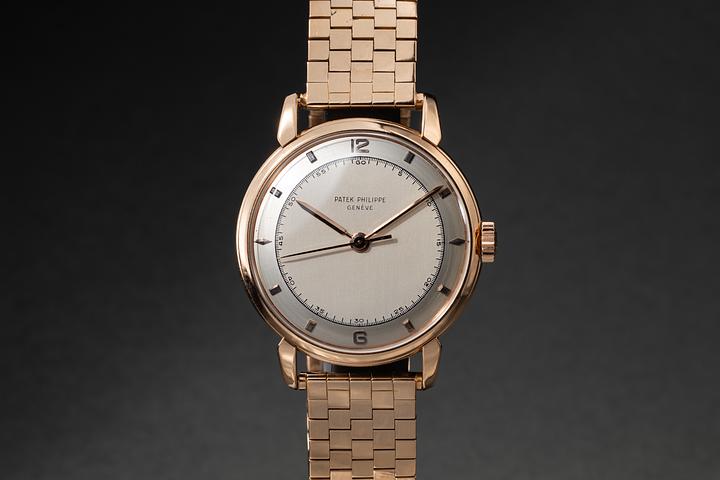
Collectors of vintage and luxury timepieces often talk about the soul of a watch. It is a phrase that can sound vague, but it points to something real. A mechanical watch is not simply a device for reading the hour. It is a philosophical statement about precision, craftsmanship, and the human relationship with time. The Maya understood this intuitively. Their calendar was not practical in a modern sense. It was a commitment to understanding time as something worthy of deep study. Luxury watchmakers operate from the same conviction. When Rolex developed its perpetual rotor in the 1930s, or when Patek Philippe engineered a perpetual calendar complication that accounts for leap years automatically, these were not purely functional achievements. They were acts of devotion to the idea that time matters and that tracking it well is a form of respect.
What Collectors Can Learn From the Maya Approach to Timekeeping
If you are considering entering the world of luxury or vintage watches, the Maya calendar offers a useful mental framework. Think about these parallels when evaluating a timepiece:
- Complexity as craftsmanship: The Maya layered multiple calendar systems because no single one captured every dimension of time. High-complication watches, those featuring perpetual calendars, chronographs, and moon phases, operate on the same principle.
- Precision as philosophy: The Maya invested enormous resources in accuracy. Watches with certified chronometric precision, such as COSC-certified movements, reflect that same conviction.
- Longevity as value: The Maya Long Count was designed to track thousands of years. A well-maintained mechanical watch, particularly a vintage Rolex, can function across generations.
- Aesthetic intention: Maya calendar stones were also works of art. The finest luxury watches balance engineering with visual beauty in ways that command the same reverence.
- Cultural significance: Just as the Maya calendar carried deep cultural meaning, certain watches carry the weight of history, innovation, and identity in ways that transcend their function.
The Rolex Perpetual Calendar and the Long Count: An Unlikely Comparison
The Rolex Day-Date, introduced in 1956, was the first wristwatch to display both the date and the full day of the week. Patek Philippe's perpetual calendar references account for the irregular lengths of months automatically, without manual correction, for decades at a time. These complications are, in their own way, a modern parallel to the Maya Long Count, systems engineered to track time across extended spans without human intervention. The Maya astronomers who kept the Long Count were doing something similar: building a structure that could operate faithfully across thousands of years. Both require an almost reverent belief that time, properly counted, reveals something true about the world.
Vintage Rolex Watches and the Enduring Language of Time
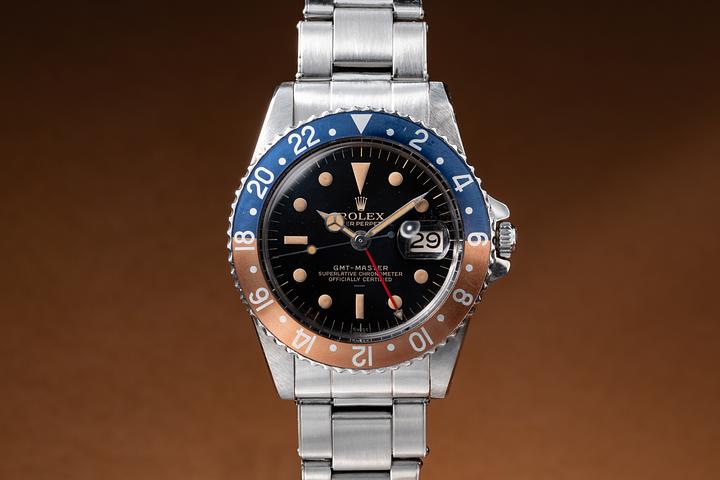
Among luxury timepieces, vintage Rolex holds a particular place in the collector world. Models like the Submariner, Daytona, Explorer, and GMT-Master were built with an engineering integrity that continues to function decades after production. A vintage Rolex from the 1960s or 1970s is not a relic. It is an active instrument with a provenance, and that provenance tells a story much the way the Maya Long Count did. Each watch carries dates, caliber numbers, case references, and dial variations that specialists can read like a historical text. A Paul Newman Daytona, a Gilt dial Submariner, or a Tropical brown dial GMT-Master are not just watches. They are artifacts that compress time into something you can wear.
Tips for Buying a Luxury or Vintage Watch With Confidence
Whether you are drawn in by the engineering, the history, or the aesthetic, entering the luxury watch market requires the same discipline the Maya applied to their calendar systems. Due diligence is everything. Here are practical considerations before making a purchase:
- Authenticate before you commit: For vintage pieces, provenance matters. Look for original dials, hands, and cases. Any replacement part affects both value and integrity.
- Understand the reference: Every Rolex model has a reference number that tells you the case material, bezel type, and era of production. Know what you are looking at before you negotiate.
- Condition is context: A patinated dial on a vintage watch can be desirable. Refinished dials, however, typically reduce collector value significantly.
- Buy from specialists: The vintage watch market rewards expertise. Work with dealers who can document a watch's history and stand behind their authentication.
- Think long term: Like the Maya calendar, a fine watch is built for duration. Prioritize quality over trend when selecting a reference.
Why Tropical Watch Is the Right Source for Your Next Timepiece
If the Maya calendar taught us anything, it is that the finest timekeeping instruments deserve custodians who understand them deeply. Tropical Watch approaches the luxury watch market with exactly that kind of seriousness. As a destination for collectors who prioritize authenticity, rarity, and investment-grade quality, Tropical Watch specializes in the pieces that matter most: rare vintage references, desirable dial variants, and watches with the kind of documented provenance that separates a great acquisition from a great story. For collectors drawn to the intersection of history and horology, exploring vintage Rolex watches with historical significance and collector-grade provenance through Tropical Watch offers access to a curated inventory that reflects genuine expertise. The team understands not just what a watch is worth today, but why it holds meaning across time, which is, after all, the point.
Frequently Asked Questions
What is the Maya calendar and how many systems did it include?
The Maya calendar was not a single system but a series of interlocking cycles. The three most prominent were the Tzolkin, a 260-day ritual calendar; the Haab, a 365-day solar calendar; and the Long Count, a linear calendar used to track thousands of years of historical and mythological time.
How does the Maya calendar relate to luxury watchmaking?
Both the Maya calendar and high-complication mechanical watches reflect a deep commitment to precision, longevity, and the belief that time deserves to be tracked with discipline and intention. Complications like perpetual calendars mirror the Maya approach of building systems that account for time across extended, often irregular cycles.
What makes a vintage Rolex worth collecting?
Vintage Rolex watches are valued for their mechanical integrity, historical provenance, original parts, and rarity. Specific dial variations, case references, and production eras significantly affect desirability and market value. Originality is the single most important factor for serious collectors.
How can I verify the authenticity of a vintage luxury watch?
Authentication involves examining the dial, hands, case, and movement for originality and period-correct components. Reference numbers, serial numbers, and supporting documentation such as box and papers all contribute to verification. Purchasing from a reputable specialist with a documented authentication process is the most reliable approach.
What is the significance of a tropical dial on a vintage Rolex?
Tropical dials refer to vintage Rolex dials that have developed a brown or chocolate patina over time due to exposure to heat and humidity, often in tropical climates. These dials are highly sought after by collectors because of their rarity and the organic, unrepeatable character they develop, which adds both visual distinction and historical depth to the timepiece.
Is the luxury watch market a good long-term investment?
Certain luxury watches, particularly vintage Rolex references in original condition, have historically held or increased in value over time. Investment outcomes vary based on reference, condition, originality, and market trends. Collecting should be driven by genuine appreciation for the craft, with investment value treated as a secondary benefit rather than a primary motivation.