Rolex Serial Number Guide: Authenticate and Date Your Watch
Why Your Rolex Serial Number Matters More Than You Think
There is something quietly powerful about a Rolex serial number. It is just a handful of digits stamped into the case, easy to overlook if you are not paying attention. But those numbers carry an enormous amount of information — the production year, the model era, and a critical piece of authentication data that separates a genuine timepiece from a convincing counterfeit. Whether you are buying, selling, insuring, or simply satisfying your own curiosity, understanding how to read a Rolex serial number is one of the most practical things you can do as a watch owner or collector.
Where to Find the Rolex Serial Number
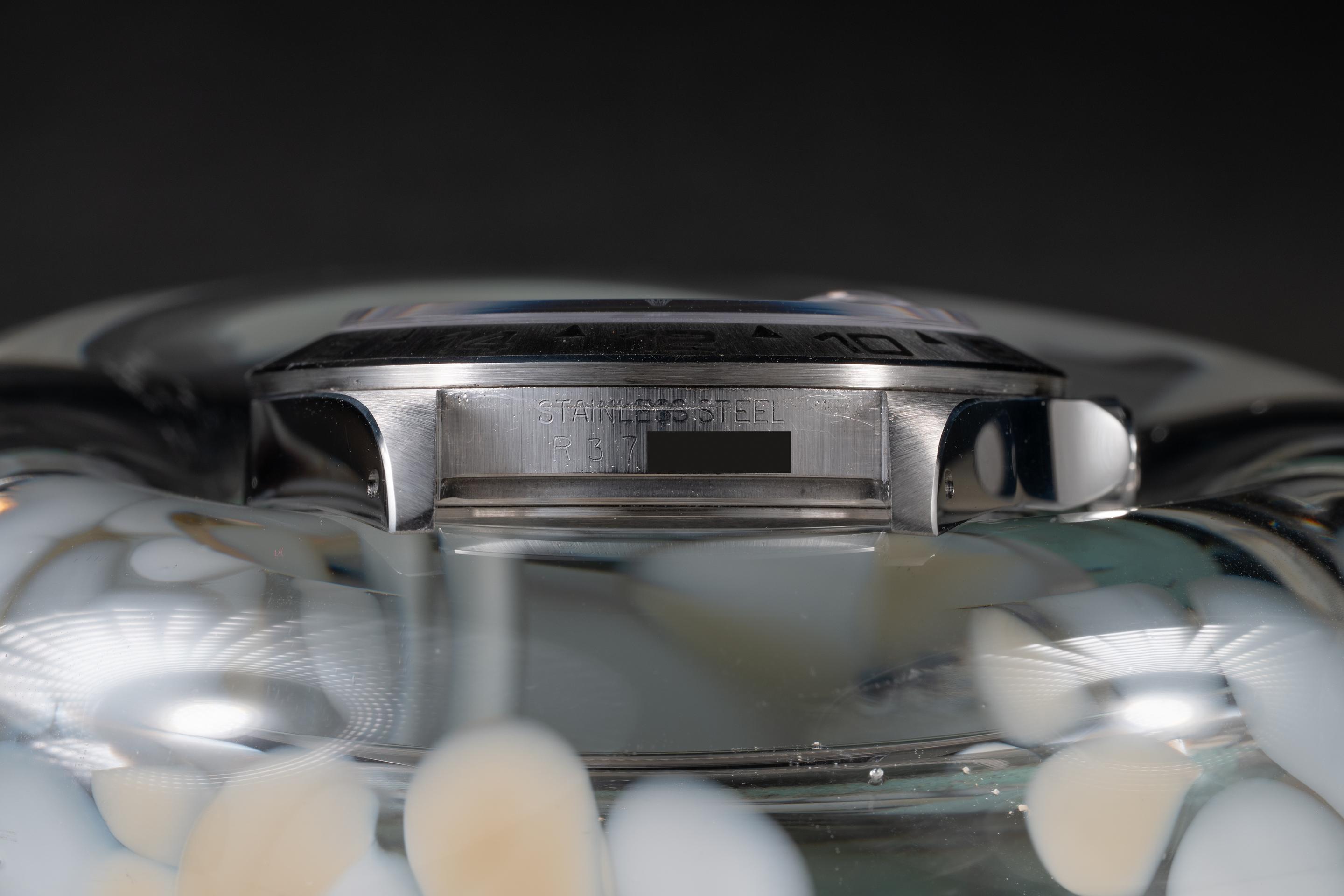
The location of the serial number has actually changed over the decades, which is worth knowing before you start looking. On watches produced before approximately 2005, the serial number is engraved between the lugs on the six o'clock side of the case — you need to remove the bracelet to see it clearly. Starting around 2005, Rolex began transitioning to a new placement, engraving the serial number on the inner bezel ring, visible through the crystal at the six o'clock position. By 2008, most new production models carried this updated placement. If you are examining a vintage piece, you will almost always find the number at the case edge. Either way, the number itself remains the key to dating and authenticating the watch.
A Brief History of the Rolex Serial Number System
Rolex has been assigning serial numbers to their watches since the early 1900s, and the system has evolved considerably over time. In the earliest decades, serial numbers were relatively short — just four or five digits. By the 1920s and 1930s, the numbers had grown, and Rolex was producing enough volume that the sequences moved quickly. Through the mid-twentieth century, collectors use serial number ranges to narrow production dates to within a year or two, which matters quite a bit when you are looking at vintage references where the dial and case variations changed frequently. In 2010, Rolex moved away from sequential numbering entirely and introduced a randomized serial number system. This shift was a deliberate counterfeit deterrent, making it impossible to predict or replicate serial numbers based on existing patterns.
How to Date Your Rolex Using the Serial Number
For watches produced before 2010, dating a Rolex by serial number is a well-documented process. The watch community and expert dealers have compiled extensive records correlating serial number ranges with approximate production years. Here is a general outline of those ranges to give you a working reference point:
Serials in the 10,000 to 30,000 range correspond roughly to the 1920s Serials around 100,000 to 300,000 correspond to the late 1930s to early 1940s Serials in the 1,000,000 range point to the early 1950s Serials around 2,000,000 indicate the late 1950s Serials in the 4,000,000 to 5,000,000 range correspond to the mid-1960s Serials reaching 8,000,000 suggest the early 1970s By the late 1980s, serials had reached into the 9,000,000 range The letter-prefix system began in the mid-1980s, starting with R, then L, E, X, N, C, A, P, K, Y, and F series The random serial system replaced all of this beginning around 2010These ranges are approximations. Rolex did not produce watches in strict numerical order, and batches could sit in inventory before being cased and sold. A two-year window of uncertainty is normal for vintage serial dating, and that is actually considered precise within the collector community.
Understanding the Letter-Prefix Serial System
The letter-prefix era, running roughly from 1984 to 2010, is especially relevant for collectors focused on late-vintage and modern-classic Rolex references. Each letter prefix corresponds to a specific production window. For example, the L series falls around 1988 to 1989, the A series around 1999 to 2000, and the Y series around 2002. These letter-prefix watches are increasingly desirable — particularly the earlier references — because they bridge the gap between true vintage production and fully modern manufacturing. Knowing the prefix helps you verify whether a specific dial variant, case configuration, or caliber is period-correct for that production window, which is a fundamental authentication check.
Using Serial Numbers as an Authentication Tool
A Rolex serial number alone cannot fully authenticate a watch — that would be too simple, and counterfeiters know the number ranges just as well as collectors do. What the serial number does is establish a baseline. Once you have the number, you cross-reference it against the model reference, the dial generation, the case back type, the movement caliber, and the overall condition of engravings. Genuine Rolex serial engravings are precise, crisp, and even in depth. Counterfeit engravings are often slightly inconsistent, poorly spaced, or shallow in a way that becomes obvious under magnification. A serial number that does not align with the expected model history for that production year is an immediate red flag. Think of it less as a standalone authenticator and more as the first question in a longer conversation.
Common Mistakes Collectors Make With Serial Numbers
One of the most frequent errors is assuming a single serial number lookup tool provides a definitive answer. Many online tools are approximate at best, and some are simply inaccurate. The serial number database is a research starting point, not a verdict. Another mistake is ignoring case back evidence. Rolex service history sometimes involves case back replacements, and a mismatch between serial placement or finish can create confusion. Additionally, some collectors overlook the fact that Rolex did not always produce watches in strict serial order — watches from the same year can occasionally show serials that appear to belong to a different window. Context and expertise matter, which is exactly why working with knowledgeable dealers and authenticators remains essential even in the age of digital lookup tools.
What Serial Numbers Reveal About Vintage Rolex Value
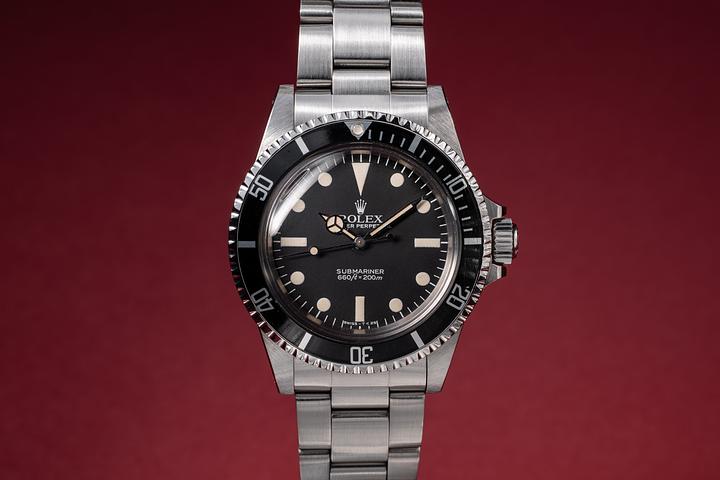
Production year directly influences collectibility and market value for many vintage Rolex references. An early dial variant of the Submariner, GMT-Master, or Daytona commands a premium precisely because the serial number confirms it belongs to a specific, historically significant production window. The so-called tropical dials — those with heat and UV-induced patina that shifted the original black or brown finish into warm caramel and chocolate tones — are particularly tied to early serial ranges. A serial number that confirms a late-1960s or early-1970s production date on a Submariner with a faded bezel and patinated dial can be the difference between a watch worth tens of thousands and one worth many multiples of that. The serial number is not just a dating tool; it is a value anchor.
Why Tropical Watch Is the Right Source for Authenticated Vintage Rolex
When the research is done and the serial numbers are cross-referenced, the next question is where to actually buy or sell with confidence. That is where having the right partner matters enormously. Tropical Watch has built its reputation on exactly the kind of precision and transparency that vintage Rolex collecting demands. Every timepiece in their inventory is carefully vetted, with serial numbers, case details, and provenance examined the way they should be — rigorously. For collectors who want to buy authenticated vintage Rolex watches with verified serial numbers, Tropical Watch offers the combination of expert knowledge and curated inventory that makes a real difference. This is not a marketplace where authenticity is an afterthought. It is a destination built for serious collectors who understand that the details — including every digit of a serial number — tell the whole story.
Frequently Asked Questions About Rolex Serial Numbers
How do I find the serial number on my Rolex?
On watches produced before approximately 2005, the serial number is engraved between the lugs at the six o'clock position and requires bracelet removal to view. On newer models produced from around 2005 onward, the serial number is engraved on the rehaut, which is the inner bezel ring visible through the crystal at six o'clock.
Can a Rolex serial number tell me the exact production year?
For pre-2010 models, serial numbers can narrow production down to within roughly one to two years using documented number ranges. For post-2010 models with randomized serials, Rolex no longer uses a sequential system, making year identification from the serial alone unreliable without official records.
What does it mean if my Rolex serial number does not match the model?
A mismatch between the serial number range and the expected model configuration for that period is a significant authentication concern. It may indicate that components have been swapped, the watch has been tampered with, or in serious cases, the piece may not be genuine. Expert evaluation is strongly recommended.
Are Rolex serial numbers unique to each watch?
Yes, each Rolex is assigned a unique serial number during production. However, counterfeiters do reproduce known serial numbers, which is why serial verification must be combined with a full physical inspection of the movement, case, and dial to constitute a proper authentication.
Why did Rolex switch to random serial numbers in 2010?
Rolex introduced randomized serial numbers primarily as an anti-counterfeiting measure. Sequential numbering allowed fraudsters to predict valid serials and replicate them more easily. Random serials eliminate that predictability, making it significantly harder to produce convincing fakes with plausible serial documentation.
Does a Rolex serial number affect the watch's resale value?
The serial number itself does not add value, but what it confirms can significantly affect value. For vintage references, a serial that places the watch in a desirable early production window — particularly for sought-after dial variants or case configurations — directly supports a higher market valuation. Clarity and legibility of the serial engraving also factor into condition assessments.