


Rolex Explorer Watch History and Legacy of Swiss Precision
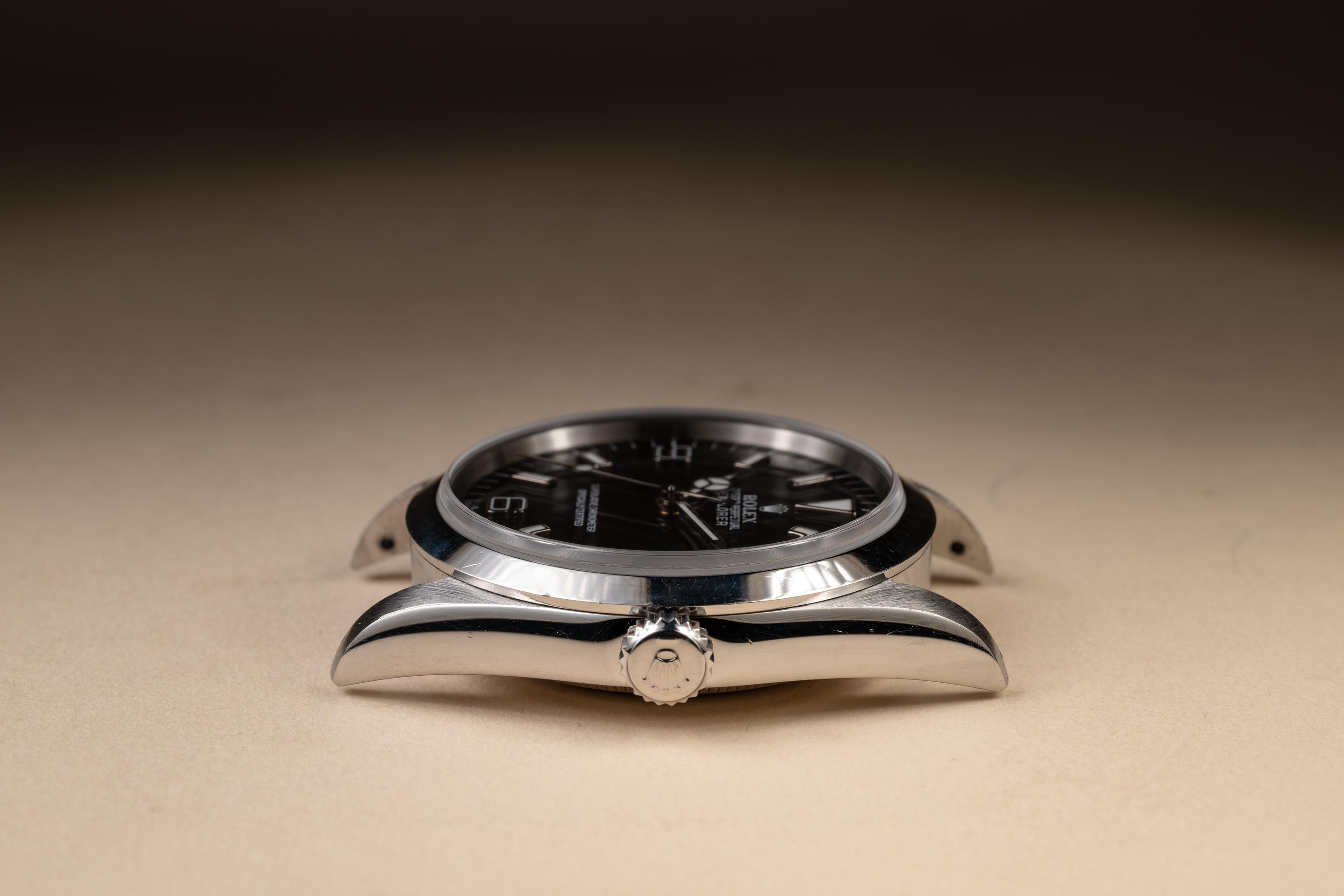
The Rolex Explorer: A Watch Built for the Edge of Human Possibility
There are watches designed to look impressive. Then there are watches designed to perform under conditions that would compromise almost anything else. The Rolex Explorer belongs firmly in the second category. Since its official introduction in 1953, the Explorer has become one of the most recognized and respected timepieces in the world — not because of marketing, but because of what it has actually done. Climbed mountains. Survived expeditions. Kept time when time really mattered. If you are considering the Rolex Explorer as your next luxury watch purchase, or simply want to understand what makes this reference so enduring, this is the guide worth reading.
Where It All Began: The Origins of the Rolex Explorer
The story of the Rolex Explorer is inseparable from one of the greatest human achievements of the twentieth century. On May 29, 1953, Sir Edmund Hillary and Tenzing Norgay reached the summit of Mount Everest for the first time in recorded history. Hillary wore a Rolex on his wrist. That expedition did not just plant a flag at 29,032 feet — it confirmed that Rolex could build a watch capable of surviving extreme altitude, dramatic temperature swings, and intense physical stress. The Explorer was officially launched that same year, drawing directly from those field tests at the roof of the world. It was not a watch inspired by adventure. It was tested by it first.
Design Philosophy: Functionality That Never Goes Out of Style
One of the more remarkable things about the Rolex Explorer is how consistent it has remained. The core design has not needed reinvention because it was right to begin with. A clean black dial. Luminous hour markers at 3, 6, and 9. The iconic Mercedes hands. Oyster case construction. These are not aesthetic decisions made for trend cycles — they are functional choices engineered for legibility, durability, and reliability in low-light or high-pressure environments. The Explorer has never chased fashion, which is part of why it has always been in fashion. For a watch that looks equally at home on a mountaintop and in a boardroom, the design logic is deliberately understated but entirely intentional.
The Two Reference Generations: Explorer I and Explorer II
Rolex expanded the Explorer family in 1971 with the introduction of the Explorer II, a distinct model designed with cave explorers and polar researchers in mind. Where the original Explorer prioritized simplicity and clean legibility, the Explorer II introduced a 24-hour hand and bezel to help wearers distinguish between day and night in environments without natural light cues. Both references share the same foundational DNA — Swiss precision, Oyster case construction, and that unmistakable purposeful design — but they serve different use cases. The original Explorer, now commonly called the Explorer I, remains the more streamlined option. The Explorer II carries a slightly larger case profile and has attracted a loyal following of its own over the decades.
Key Technical Specifications Worth Knowing
Understanding what you are buying is just as important as appreciating the history behind it. The current Rolex Explorer I runs on the caliber 3230 movement, introduced in 2020, featuring a 70-hour power reserve and Rolex's proprietary Chronergy escapement. The Explorer II uses the caliber 3285. Both movements are certified as Superlative Chronometers, meaning they are tested by Rolex after casing to meet accuracy standards of plus or minus two seconds per day — a benchmark that exceeds the official COSC chronometer certification. The Explorer I case measures 36mm in the vintage references and was updated to 39mm and later 36mm again in recent production years, a detail that matters considerably when shopping for specific references.
Notable specs across Explorer references include: Case materials: Oystersteel (904L stainless steel) Water resistance: 100 meters (330 feet) Crystal: Scratch-resistant sapphire with anti-reflective coating Bracelet: Oyster with Oysterlock clasp Movement: In-house Rolex caliber with COSC-plus certification
Vintage Rolex Explorer References Collectors Actually Pursue
If you are approaching the Explorer from a collector's perspective, a few references stand out as particularly significant. The reference 6350 from the early 1950s is among the earliest production Explorers and commands serious attention. The reference 1016, produced from approximately 1963 to 1989, is widely considered the definitive vintage Explorer — a long production run that generated numerous dial variations now studied and valued by collectors. Later, the reference 14270 introduced the sapphire crystal and updated movement in the 1990s. Each of these references tells a different chapter of the Explorer's story, and condition, originality, and provenance all play a role in determining value in today's market.
Why the Rolex Explorer Holds Its Value So Well
Few watches across any price category retain value the way a Rolex Explorer does. There are practical reasons for this. Rolex produces watches in carefully managed quantities, which limits market saturation. The brand invests in vertical integration, manufacturing its own movements, cases, bracelets, and even the alloys used in production. This means quality control is not outsourced — it is owned. Additionally, the Explorer's reputation was not manufactured through celebrity endorsements alone. It was built through documented performance in genuine extreme conditions. That kind of credibility compounds over time. For buyers thinking about the long-term value of their purchase, the Explorer is historically one of the safer positions in the luxury watch market.
Buying a Rolex Explorer: New Versus Pre-Owned Considerations
The decision between purchasing a new or pre-owned Rolex Explorer is worth considering carefully. New Explorers from authorized dealers offer the security of full warranty coverage and factory-fresh condition, but availability has been constrained for several years, and waiting lists are a genuine reality at many retailers. Pre-owned and vintage Explorers offer a different set of advantages: access to discontinued references, more immediate availability, and in many cases, appreciation potential that new watches cannot match. The vintage market also allows buyers to connect with specific historical moments in the Explorer's timeline. Whichever direction you go, condition verification and documentation authenticity are non-negotiable priorities.
Why Tropical Watch Is the Right Partner for Your Rolex Explorer Search
Finding the right Rolex Explorer — whether you are after a pristine vintage reference 1016 or a more recent pre-owned example — requires access to a trustworthy source with real expertise in the market. That is where vintage Rolex Explorer watches from Tropical Watch represent a genuinely compelling option for serious buyers. Tropical Watch operates with a collector's sensibility and a dealer's accountability, which is a combination that matters when you are making a significant investment in a luxury timepiece. The inventory is carefully curated, documentation is treated seriously, and the depth of knowledge available is the kind that only comes from years of direct market experience. If your goal is to find an Explorer that is historically significant, properly authenticated, and sourced through a team that actually understands what makes these watches worth pursuing, Tropical Watch is a platform built precisely for that purpose.
Frequently Asked Questions About the Rolex Explorer
What is the difference between the Rolex Explorer I and Explorer II?
The Explorer I is the original reference, characterized by its clean black dial, three luminous markers, and streamlined Oyster case. The Explorer II, introduced in 1971, added a 24-hour hand and bezel to help distinguish day from night, originally designed for spelunkers and polar explorers working in environments without natural light cycles. Both share the same core Rolex construction quality but serve distinct functional purposes.
What movement does the current Rolex Explorer use?
The current Rolex Explorer I is powered by the caliber 3230, an in-house movement introduced in 2020. It features a 70-hour power reserve, a Chronergy escapement for improved efficiency, and is certified as a Superlative Chronometer with an accuracy rating of plus or minus two seconds per day after casing.
Is the Rolex Explorer a good investment?
The Rolex Explorer has historically demonstrated strong value retention and, in many vintage references, meaningful appreciation over time. Factors including limited production, brand reputation, documented performance history, and collector demand all contribute to its stability as a luxury watch investment. Vintage references in original, documented condition tend to command the strongest premiums.
Which vintage Rolex Explorer reference is most collectible?
The reference 1016, produced from roughly 1963 to 1989, is widely regarded as the most collectible vintage Explorer. Its long production run generated a variety of dial configurations that collectors actively research and pursue. Earlier references such as the 6350 are historically significant but appear on the market far less frequently.
What size is the Rolex Explorer case?
Case size has varied across the Explorer's production history. Vintage references were typically 36mm. Rolex increased the Explorer I to 39mm in 2010, then returned to 36mm in 2021 for the current generation. The Explorer II runs at 42mm in current production. Case size is an important factor for collectors distinguishing specific references and production years.
How do I verify the authenticity of a pre-owned Rolex Explorer?
Authentication of a pre-owned Rolex Explorer should involve examination by a qualified watchmaker or experienced dealer, verification of serial and model numbers against Rolex production records, assessment of dial originality and case condition, and review of available documentation including box and papers where present. Purchasing through a reputable specialist in pre-owned and vintage Rolex watches significantly reduces authenticity risk.


