Rolex Datejust Watch History, Innovation, and Timeless Design
The Rolex Datejust: A Watch That Defined an Era and Never Stopped
There are watches that tell time. Then there is the Rolex Datejust — a watch that tells history. Since its debut in 1945, the Datejust has occupied a unique position in horology: technically impressive, aesthetically enduring, and culturally significant in a way that few timepieces have ever managed to achieve. Whether you are a seasoned collector or simply beginning to explore the world of luxury watches, understanding the Datejust is, in many ways, understanding the foundation of modern watchmaking itself.
The Origins of the Datejust: Born in a Landmark Year
The Rolex Datejust was introduced in 1945 to commemorate Rolex's 40th anniversary. That timing alone is notable — the world was in the final weeks of World War II, and here was a Swiss watchmaker releasing what would become one of the most consequential wristwatches in history. The reference 4467 was the first self-winding wristwatch in the world to feature an automatically changing date display on the dial. This was not a minor feature. At the time, a self-winding mechanism combined with a date complication was genuinely groundbreaking. Rolex called the mechanism the "Datejust," and the name stuck — permanently.
The Cyclops Lens: A Small Detail With a Big Impact
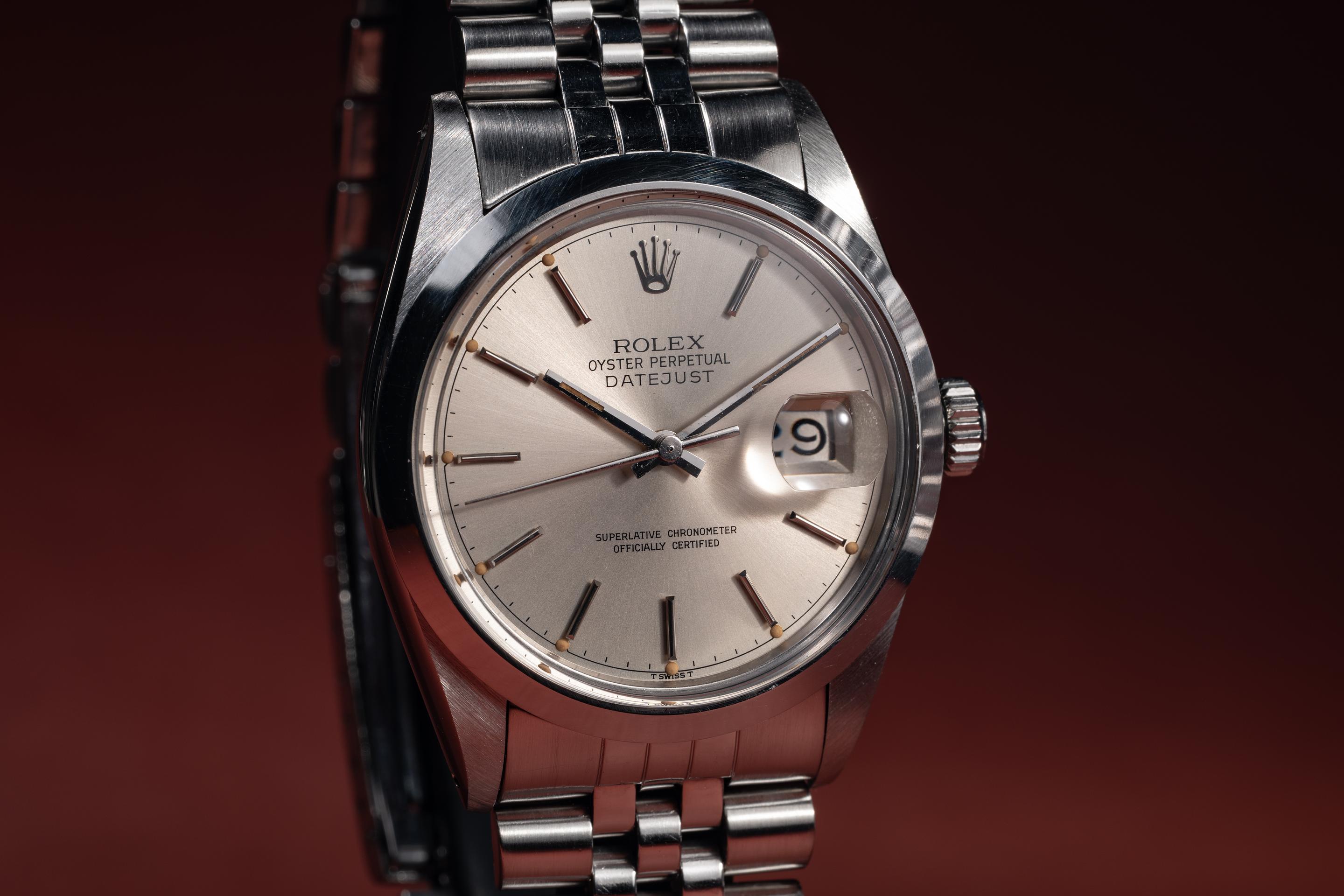
In 1953, Rolex introduced what would become one of its most recognizable design signatures: the Cyclops lens. This small, magnifying bubble positioned over the date window on the crystal magnifies the date by 2.5 times, making it significantly easier to read at a glance. It sounds simple, and in practice it is — but the decision demonstrated Rolex's consistent philosophy of purposeful design. Every element earns its place. The Cyclops lens has remained a defining feature of the Datejust for over seven decades, and it continues to be one of the most imitated details in the watch industry.
The Jubilee Bracelet: Designed Specifically for the Datejust
The Jubilee bracelet was created exclusively for the Datejust at its launch in 1945. Its five-link construction, with a distinctive center link flanked by two outer links on each side, gave the watch an elegant, dressy aesthetic that set it apart from sportier Rolex models. The bracelet was refined and sophisticated — something appropriate for boardrooms and formal occasions, yet durable enough for daily wear. It remains one of the most beloved bracelet designs Rolex has ever produced, and today it is available in a range of metals including Oystersteel, white gold, yellow gold, and Everose gold.
Movements, Calibers, and the Evolution of Precision
The Datejust has been powered by a succession of increasingly sophisticated movements throughout its history. Early models used the caliber 740 and later the caliber 1030, both of which were considered highly advanced for their era. Over the decades, Rolex continued to refine its movements, eventually introducing the caliber 3135 in 1988 — a movement so reliable and well-regarded that it remained in production for over three decades. Today, current Datejust models are powered by the caliber 3235, which features Rolex's proprietary Chronergy escapement, a 70-hour power reserve, and certification as a Superlative Chronometer by Rolex's internal standards. That certification means the movement has been tested and verified to a precision of plus or minus two seconds per day — significantly more accurate than the standard COSC chronometer certification.
Design Evolution: How the Datejust Changed Without Changing
One of the most fascinating aspects of the Datejust's history is how Rolex has managed to evolve the watch without losing what makes it essential. Case sizes have expanded over the years. The original 1945 model measured 36mm — a size that was considered substantial at the time, though today it reads as classic and refined. In 2012, Rolex introduced the Datejust 41, expanding the case to 41mm to meet contemporary preferences for larger watches. Dial options have multiplied dramatically, now available in materials ranging from sunburst lacquer to meteorite, diamond-set bezels, and fluted gold. Yet despite all of this variation, you can look at any Datejust from any decade and recognize it immediately. That is not accidental. It is design discipline of the highest order.
Cultural Significance: Who Has Worn the Datejust
The Datejust's cultural footprint is extraordinary. It has graced the wrists of world leaders, artists, athletes, and entertainers for eight decades. President Dwight D. Eisenhower received a Datejust as a gift following his military victories in Europe. Martin Luther King Jr. was photographed wearing one. The watch appeared throughout the golden age of Hollywood and has never really left popular culture since. This cross-generational, cross-cultural appeal is not incidental — it reflects the Datejust's genuine versatility. It is formal without being stiff. It is luxurious without being flashy. It functions equally well at a black-tie dinner and a Saturday afternoon lunch.
Datejust Reference Guide: Key Models Worth Knowing
If you are exploring the Datejust with an eye toward purchasing or collecting, understanding the reference landscape is genuinely useful. Here is a practical overview of some of the most significant references across the watch's history:
Reference 6305 — A transitional model from the early 1950s, notable for its engine-turned bezel options Reference 1601 — Produced from the 1960s through the 1970s, considered among the most collectible vintage Datejust references Reference 16013 — A two-tone model from the 1980s featuring yellow gold and stainless steel, extremely popular during that decade Reference 116234 — A modern classic with a fluted bezel and white gold applied hour markers, in production from 2009 to 2016 Reference 126300 — The current 41mm Datejust, powered by caliber 3235 and representing the contemporary standard for the modelEach reference tells a slightly different chapter of the same story. Collectors often develop strong preferences for specific eras, dial configurations, or case materials, and the depth of the Datejust's catalog gives them considerable room to explore.
Buying a Datejust: New, Pre-Owned, or Vintage
The decision between a new, pre-owned, or vintage Datejust depends on what you are looking for. New models offer the latest movement technology, factory warranty, and the ability to select your exact configuration from current production. Pre-owned examples in excellent condition can represent strong value, often at a meaningful discount to retail. Vintage Datejust watches, particularly those from the 1950s through the 1980s, carry a different kind of appeal — they are artifacts of watchmaking history with dial variations, patina, and character that no current production piece can replicate. When purchasing any Datejust, especially a vintage example, authenticity verification is critical. Look for matching serial numbers, original dials, correct hands for the reference, and a trustworthy seller with documented provenance.
Why Tropical Watch Is the Right Partner for Your Datejust Journey
If the history and craftsmanship of the Rolex Datejust has captured your attention — and it should — then where you buy matters as much as what you buy. Tropical Watch is a destination built for serious collectors and first-time luxury watch buyers alike, with a curated inventory that reflects a genuine understanding of what makes a timepiece worth owning. For anyone interested in exploring vintage and pre-owned Rolex Datejust watches with verified authenticity, Tropical Watch offers the kind of expertise, transparency, and selection that the luxury watch market demands. Every piece is evaluated with care, and the buying experience is built around education and trust — not pressure. The Datejust deserves that level of attention, and so do you.
Frequently Asked Questions About the Rolex Datejust
What makes the Rolex Datejust different from other Rolex models?
The Datejust was the first self-winding wristwatch in the world to display an automatically changing date, introduced in 1945. It occupies a space between Rolex's dress and sport categories, making it one of the most versatile references the brand produces. Its Cyclops lens, Jubilee bracelet option, and consistently refined aesthetic set it apart from other collections.
What is the current movement used in the Rolex Datejust?
Current Datejust models are powered by the Rolex caliber 3235, which features the proprietary Chronergy escapement, a 70-hour power reserve, and Superlative Chronometer certification verifying accuracy to within plus or minus two seconds per day.
What sizes does the Rolex Datejust come in?
The Datejust is currently produced in 36mm and 41mm case sizes. The 36mm version suits a wide range of wrist sizes and leans toward a classic aesthetic, while the 41mm Datejust offers a more contemporary, substantial presence on the wrist.
Is the Rolex Datejust a good investment?
The Datejust has demonstrated consistent value retention over decades, particularly in certain references and dial configurations. Vintage examples with original, unpolished cases and rare dial variants have shown notable appreciation. While no watch should be purchased solely as a financial investment, the Datejust has a strong track record in the secondary market.
What is the Cyclops lens on a Rolex Datejust?
The Cyclops lens is a small, convex magnification bubble positioned over the date aperture on the watch crystal. Introduced in 1953, it magnifies the date display by 2.5 times for easier readability. It has been a signature feature of the Datejust for over 70 years.
How do I authenticate a vintage Rolex Datejust?
Authenticating a vintage Datejust involves verifying serial and model numbers against known production records, examining the dial for correct fonts and aging consistent with the reference, confirming hands and indices are period-correct, and having the movement inspected by a qualified watchmaker. Purchasing from a reputable dealer with documented provenance significantly reduces authentication risk.