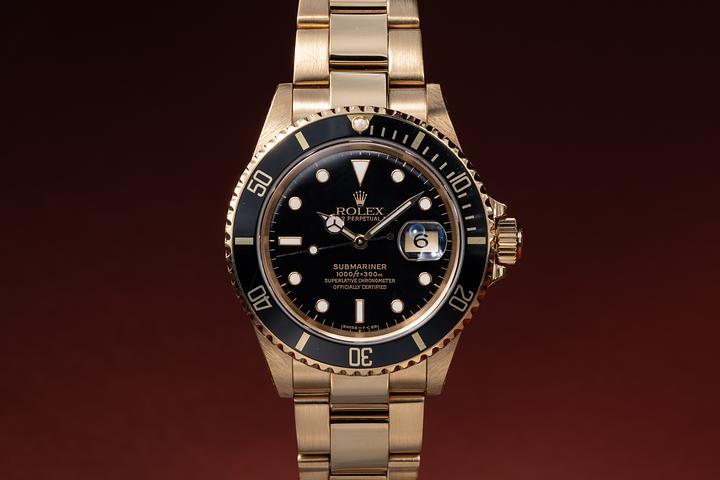
Rolex Oyster Legacy: Waterproof Innovation in Swiss Horology

The Rolex Oyster: A Waterproof Revolution That Changed Watchmaking Forever
There are moments in horological history that genuinely shift the trajectory of an entire industry. The introduction of the Rolex Oyster case in 1926 was one of those moments. Long before waterproofing was considered a standard feature in luxury timepieces, Rolex had already solved the problem — and done so in a way that was both elegant and technically remarkable. The Oyster was not a gimmick or a marketing claim. It was a genuine engineering breakthrough, and nearly a century later, it remains the foundation upon which Rolex builds every watch it produces. Understanding this legacy means understanding why Rolex continues to command the respect it does in the luxury watch world.
What Is the Rolex Oyster Case and Why Does It Matter
The Rolex Oyster case is, at its core, a hermetically sealed watch case designed to protect the movement inside from water, dust, and pressure. The brilliance of the design lies in its construction — three separate components that screw together with extraordinary precision. The caseback threads directly into the case middle, the bezel does the same from the top, and the winding crown screws down against a tube fitted into the case. The result is a completely sealed environment for the movement. No water gets in. No dust. Nothing. When Hans Wilsdorf, the founder of Rolex, introduced this design, he was responding to a very real problem facing watchmakers at the time: mechanical movements were fragile, sensitive to moisture, and extremely difficult to protect in everyday wear. The Oyster changed all of that in one decisive move.
The 1926 Debut and the Mercedes Gleitze Swim
The Rolex Oyster made its public debut in 1926, but its true moment of cultural breakthrough came a year later. In October 1927, a young English secretary named Mercedes Gleitze became the first British woman to swim the English Channel — and she did it wearing a Rolex Oyster on a cord around her neck. The swim took over ten hours in cold, open water. When she emerged on the other side, the watch was examined and found to be in perfect working order. Rolex took out a full-page advertisement in the Daily Mail the very next day, declaring the watch's waterproof performance to the world. It was one of the earliest and most effective product demonstrations in advertising history. From that point forward, the Oyster's reputation was built on proof, not promises.
How the Oyster Hermetic Seal Works in Practice
The technical details of the Oyster case are worth understanding because they explain why this design has endured for nearly one hundred years. The threaded caseback and bezel create mechanical resistance against any external pressure. The Twinlock and Triplock crown systems — innovations Rolex added over the decades — introduced additional sealing through the winding crown itself, which is one of the most vulnerable points on any watch case. Gaskets made from specially formulated materials sit within the crown tube, creating a watertight seal even when the watch is subjected to significant depth pressure. Modern Rolex Oyster watches are tested to specific water resistance ratings, with many professional models rated to depths well beyond typical recreational diving needs. The engineering, while refined considerably since 1926, remains true to Wilsdorf's original concept.
The Evolution of Waterproof Technology Across Rolex Models
The Oyster case did not stay static. Rolex continuously refined and expanded its waterproofing technology across different references and collections. Some of the key developments that shaped the Oyster legacy include the following:
Twinlock crown system, introduced in the 1950s, which added a double-sealed winding crown Triplock crown system, developed for professional diving models requiring deeper water resistance Oysterlock bracelets with safety clasps designed to prevent accidental opening underwater The helium escape valve on the Sea-Dweller, allowing saturation divers to safely decompress Updated gasket materials and machining tolerances that have improved the seal's longevity over timeEach of these innovations reflects Rolex's commitment to solving practical problems rather than simply adding features for marketing purposes. This is a company that tests its own products in the real world and responds to what it learns.
Vintage Rolex Oyster References and Their Collector Appeal
For watch collectors, vintage Rolex Oyster references carry a particular weight. Early references from the 1930s through the 1960s represent watchmaking history in tangible form — dials that have aged gracefully, cases that carry the patina of decades of wear, and movements that were assembled by hand with exacting care. The appeal is not simply aesthetic. Vintage Oyster references are tangible artifacts of horological history. Collectors pursue models like the Ref. 6062, the early Submariner references, and various Explorer variants precisely because they connect the owner to a period of genuine innovation. These watches were not produced in the enormous quantities seen today, which adds to their scarcity and long-term desirability in the secondary market.
Swiss Craftsmanship and What Sets Rolex Apart
Rolex operates as one of the most vertically integrated watch manufacturers in the world. The brand produces its own movements, cases, bracelets, and even develops its own alloys — including the proprietary Oystersteel used in its cases and bracelets. This level of control over the production process is rare, even among Swiss luxury watchmakers. It means that every component of a Rolex Oyster watch is made to Rolex's own specifications, inspected by Rolex's own quality teams, and assembled to Rolex's own standards. Swiss watchmaking carries a reputation built over centuries, but within that tradition, Rolex has established a benchmark that very few manufacturers can meet. The Oyster case is the most recognizable expression of that standard — a design that balances form, function, and longevity in a way that holds up to scrutiny across generations.
Caring for a Rolex Oyster Watch: Practical Guidance for Owners
Whether you own a current production Rolex or a vintage Oyster reference, proper care extends the life of the watch and preserves its value. A few essential practices every Rolex owner should follow include the following:
Service the watch according to Rolex's recommended intervals, typically every five to ten years, to maintain water resistance and movement health Have the gaskets and seals inspected and replaced during each service, even if the watch appears to be functioning normally Avoid operating the crown underwater unless the watch has been confirmed to be in proper sealed condition Rinse the watch with fresh water after exposure to saltwater or chlorinated environments Store the watch away from strong magnetic fields, which can affect the movement's accuracy over timeThese are straightforward habits that go a long way toward protecting an investment that, in many cases, only appreciates over time.
Why Tropical Watch Is the Right Source for Vintage Rolex Oyster Watches
Finding a genuine, properly authenticated vintage Rolex Oyster watch requires more than a casual search. The market for vintage Rolex is active, sophisticated, and — it has to be said — populated with misrepresented and outright counterfeit pieces. That is precisely where expertise matters. Tropical Watch has built a reputation as a trusted source for collectors and enthusiasts who want to acquire vintage and luxury Rolex watches with full confidence in their authenticity and condition. Whether you are seeking an early Oyster reference, a vintage Submariner, or a rare Explorer dial, working with specialists who understand provenance, case condition, dial authenticity, and movement integrity is not optional — it is essential. For anyone serious about entering the vintage Rolex market or expanding an existing collection, authenticated vintage Rolex Oyster watches from trusted specialists represent the clearest path to acquiring a piece of horological history with confidence.
Frequently Asked Questions About the Rolex Oyster
What does the term Oyster mean in Rolex watches?
The term Oyster refers to the hermetically sealed case design that Rolex introduced in 1926. Like the shell of an oyster, the case protects its contents from the external environment. It is the foundational technology behind Rolex's waterproofing capability and remains central to the brand's entire watch lineup today.
How waterproof are Rolex Oyster watches?
Water resistance varies by model. Standard Oyster models are rated to 100 meters, while professional models like the Submariner are rated to 300 meters and the Sea-Dweller and Deepsea models go significantly deeper. These ratings are tested under controlled conditions and represent reliable benchmarks for typical use.
Are vintage Rolex Oyster watches still waterproof?
A vintage Rolex Oyster watch may no longer maintain its original water resistance rating unless the gaskets and seals have been recently replaced and inspected. Age and wear degrade sealing materials over time. Any vintage Rolex intended for water exposure should be professionally serviced and pressure tested beforehand.
What makes the Rolex Oyster case different from other watch cases?
The Rolex Oyster case uses a system of threaded components — including a screwed caseback, screwed bezel, and screw-down crown — to create a sealed environment for the movement. This approach differs from watches with simple push-fit casebacks, which offer far less resistance to moisture and pressure.
Why do collectors value vintage Rolex Oyster references so highly?
Vintage Rolex Oyster references are valued for their historical significance, scarcity, and the quality of materials and craftsmanship used during their production period. Dials that have developed tropical or gilt patina over decades, along with original movements in unpolished cases, represent the kind of authenticity that modern production watches cannot replicate.
How do I know if a vintage Rolex Oyster is authentic?
Authentication requires examining multiple factors including the case reference and serial number, dial printing and aging consistency, movement condition and originality, and bracelet hardware. Working with a reputable specialist dealer who can provide documented provenance and a condition assessment is the most reliable method for confirming authenticity before purchase.