Rolex Legacy and Innovation in Swiss Horology Excellence

Rolex Legacy and Innovation: Understanding Over a Century of Swiss Horology Excellence
There is a reason certain watches hold their value, their reputation, and their cultural weight across generations. Rolex is one of those rare cases where the product and the legacy are almost inseparable. For over a century, the brand has operated at the intersection of precision engineering and enduring design, producing timepieces that feel as relevant today as they did the moment they were first introduced. Understanding what makes Rolex exceptional requires more than admiring the finished product. It means looking at the history, the innovation, the materials, and the philosophy that shapes every single watch that leaves Geneva.
The Origins of Rolex and Its Founding Vision
Rolex was founded in 1905 by Hans Wilsdorf and Alfred Davis in London, though its roots quickly shifted to Geneva as Swiss craftsmanship became central to the brand's identity. Wilsdorf had a clear vision from the start: produce a wristwatch that was both reliable and elegant at a time when wristwatches were largely considered novelties compared to pocket watches. That vision was bold for its era. By 1910, Rolex had earned the first wristwatch chronometer certification from the official Swiss Rating Centre. Three years later, in 1914, the Kew Observatory in England awarded a Class A precision certificate, a distinction previously reserved only for marine chronometers. The foundation had been set, and the standards Rolex established in those early years have never really been walked back.
Swiss Horology and What It Actually Means for Quality
Swiss horology is not simply a geographic designation. It represents a standard of craftsmanship, regulatory oversight, and technical precision that has been refined over centuries. For a watch to carry the Swiss Made label, it must meet strict criteria established by Swiss law, including that its movement is Swiss, cased in Switzerland, and inspected in Switzerland. Rolex goes considerably further than those baseline requirements. The brand produces the vast majority of its components in-house, including its own alloys, its own movements, and even its own bracelets. This level of vertical integration is rare in the watch industry and it allows Rolex to maintain consistency across every piece in a way that few manufacturers can match. When you wear a Rolex, you are wearing a product where almost nothing was outsourced.
Landmark Innovations That Changed the Watch Industry
Rolex has introduced several technical milestones that have shaped modern watchmaking well beyond their own catalogue. A few worth understanding in detail:
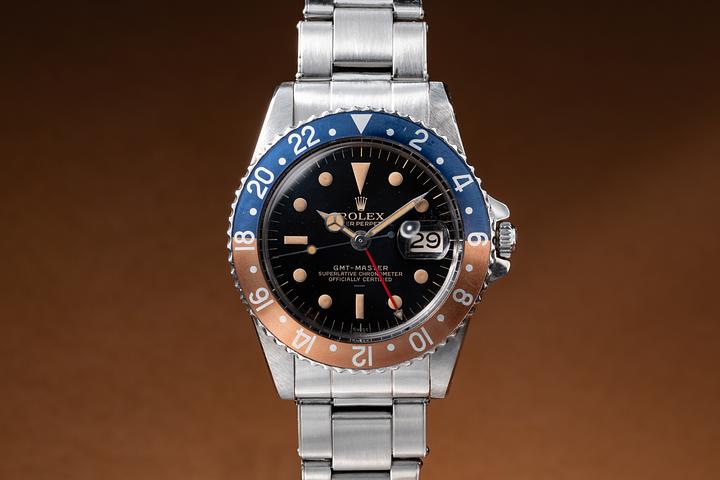
The Oyster Case, introduced in 1926, was the world's first waterproof wristwatch case. It used a system of screw-down components to create a hermetically sealed environment for the movement, protecting it from dust and moisture. The Perpetual Rotor, developed in 1931, became the foundation of nearly all modern automatic movements. This self-winding mechanism harvested energy from the natural motion of the wearer's wrist, eliminating the need to manually wind the watch. The Submariner, launched in 1953, was designed as a professional diving instrument, water resistant to 100 metres at introduction and evolving over decades to handle pressures far beyond that. The GMT-Master, introduced in 1955 in partnership with Pan American World Airways, allowed pilots and travellers to track two time zones simultaneously using a 24-hour rotating bezel. The Daytona Cosmograph, introduced in 1963, was built for motorsport professionals and became one of the most recognizable chronographs in history.Each of these introductions solved a specific professional need. That problem-solving instinct is core to how Rolex approaches product development, and it explains why so many of these references have remained in production for decades without losing relevance.
Rolex Materials and the Pursuit of Lasting Durability
One aspect of Rolex that separates the brand from many of its competitors is its commitment to developing proprietary materials. Oystersteel, the brand's own formulation of 904L stainless steel, offers superior corrosion resistance compared to the 316L steel commonly used across the broader watch industry. Rolex also developed Everose gold, a proprietary 18-karat rose gold alloy formulated to resist fading over time. For ceramic bezels, the brand pioneered the use of Cerachrom, a material that is essentially scratchproof under normal conditions and colour-stable even when exposed to prolonged UV radiation. These are not cosmetic decisions. They reflect a genuine obsession with producing watches that maintain their integrity across decades of daily wear, which is a significant part of why vintage Rolex watches remain so structurally sound long after production.
The Role of COSC Certification and In-House Standards
Every Rolex movement is certified as a chronometer by the Controle Officiel Suisse des Chronometres, known as COSC. This certification requires movements to maintain accuracy within minus four to plus six seconds per day, tested across multiple positions and temperatures. Rolex uses this as a starting point rather than a finish line. After COSC certification, movements undergo additional testing within the completed case, with Rolex's own standard requiring accuracy within plus two seconds per day. The brand officially designates these watches as Superlative Chronometers, a classification backed by an internal testing process that goes well beyond what any third-party body requires. For the buyer, this matters because it speaks directly to the reliability and precision you can expect from the watch on your wrist, day in and day out.
Understanding Rolex Value Retention and Collectability
Rolex watches are frequently cited as among the strongest value-retaining assets in the broader luxury goods category. This is not accidental. Consistent production standards, recognizable reference designs, and genuine scarcity at the authorized dealer level have all contributed to a secondary market where certain references command prices well above their original retail cost. Vintage Rolex models in particular have demonstrated remarkable appreciation over time. References like the Paul Newman Daytona, the Red Submariner, and the Double Red Sea-Dweller are sought after by collectors globally, with condition, provenance, and originality of components all playing significant roles in determining value. The collector market for vintage Rolex is sophisticated and well-documented, and for buyers approaching it seriously, understanding which details matter, from dial patina to case sharpness, is essential.
How to Approach Buying a Rolex: New Versus Vintage Considerations
Purchasing a Rolex is a meaningful decision, and buyers typically fall into two categories. Those seeking a current production model from an authorized dealer, and those drawn to the history, character, and investment potential of the vintage market. Current production watches offer the assurance of manufacturer warranty coverage and access to Rolex's official service network. Vintage watches, however, offer something that new production cannot replicate: originality, history, and the kind of aged patina that collectors find genuinely compelling. When evaluating a vintage Rolex, key considerations include:
Dial originality, meaning whether the dial is unrestored and matches the reference period Case sharpness and whether the watch has been over-polished, which can reduce collector value Movement service history and whether documentation exists Bracelet authenticity, particularly whether end links and clasps correspond correctly to the reference and era Overall completeness, including box and papers where availableUnderstanding these factors before entering the vintage market protects buyers and helps them make purchases they will be satisfied with long-term.
Why Tropical Watch Is the Right Partner for Your Rolex Journey
Navigating the Rolex market with confidence requires more than enthusiasm. It requires access to expertise, curated inventory, and a source you can genuinely trust. Tropical Watch has built its reputation specifically around that kind of trusted expertise, offering collectors and first-time buyers alike access to authenticated, carefully selected timepieces. If you are looking to explore vintage Rolex watches with certified provenance and expert authentication, Tropical Watch provides the depth of knowledge and the quality of inventory that the vintage Rolex market demands. Whether your interest lies in iconic sport references, elegant dress watches, or early Oyster-era pieces, the expertise brought to every transaction ensures that what you receive reflects exactly what was represented. For anyone serious about building a Rolex collection or acquiring a single meaningful timepiece, partnering with specialists who understand the nuances of this market is not optional. It is the difference between a confident purchase and an expensive mistake.
Frequently Asked Questions About Rolex History and Swiss Horology
When was Rolex founded and where does it produce its watches?
Rolex was founded in 1905 by Hans Wilsdorf and Alfred Davis. While originally established in London, the brand relocated its operations to Geneva, Switzerland, where it continues to produce watches today. Rolex manufactures the majority of its components in-house across its Geneva and Bienne facilities.
What does Swiss Made mean on a Rolex watch?
The Swiss Made designation on a Rolex indicates that the movement is Swiss, the watch is cased in Switzerland, and the final inspection takes place in Switzerland. Rolex exceeds the legal baseline for this designation by producing most components internally and applying its own Superlative Chronometer certification standards.
What is a Superlative Chronometer and how does it differ from a standard COSC certification?
A Superlative Chronometer is Rolex's proprietary designation applied after a movement has received COSC chronometer certification. While COSC permits a variance of minus four to plus six seconds per day, Rolex's internal standard requires accuracy within plus or minus two seconds per day when tested inside the fully assembled case.
Why do vintage Rolex watches hold or increase in value over time?
Vintage Rolex watches retain and appreciate in value due to a combination of factors including consistent brand prestige, limited availability of original unrestored examples, strong collector demand, and the enduring recognition of iconic references. Originality of components, condition, and provenance documentation significantly influence how individual pieces are valued.
What is Oystersteel and why does Rolex use it instead of standard stainless steel?
Oystersteel is Rolex's proprietary formulation of 904L stainless steel, chosen for its superior resistance to corrosion and its capacity to hold a high-quality polish. Most watch manufacturers use 316L stainless steel, which performs well but does not match the corrosion resistance or finishing qualities that 904L provides.
What should a buyer look for when purchasing a vintage Rolex?
When purchasing a vintage Rolex, buyers should prioritize dial originality, case sharpness to assess whether over-polishing has occurred, movement service history, bracelet authenticity, and the availability of original box and papers. Working with a reputable specialist dealer who authenticates and represents their inventory accurately is strongly recommended.