Rolex GMT-Master Legacy: Iconic Travel Watch Evolution
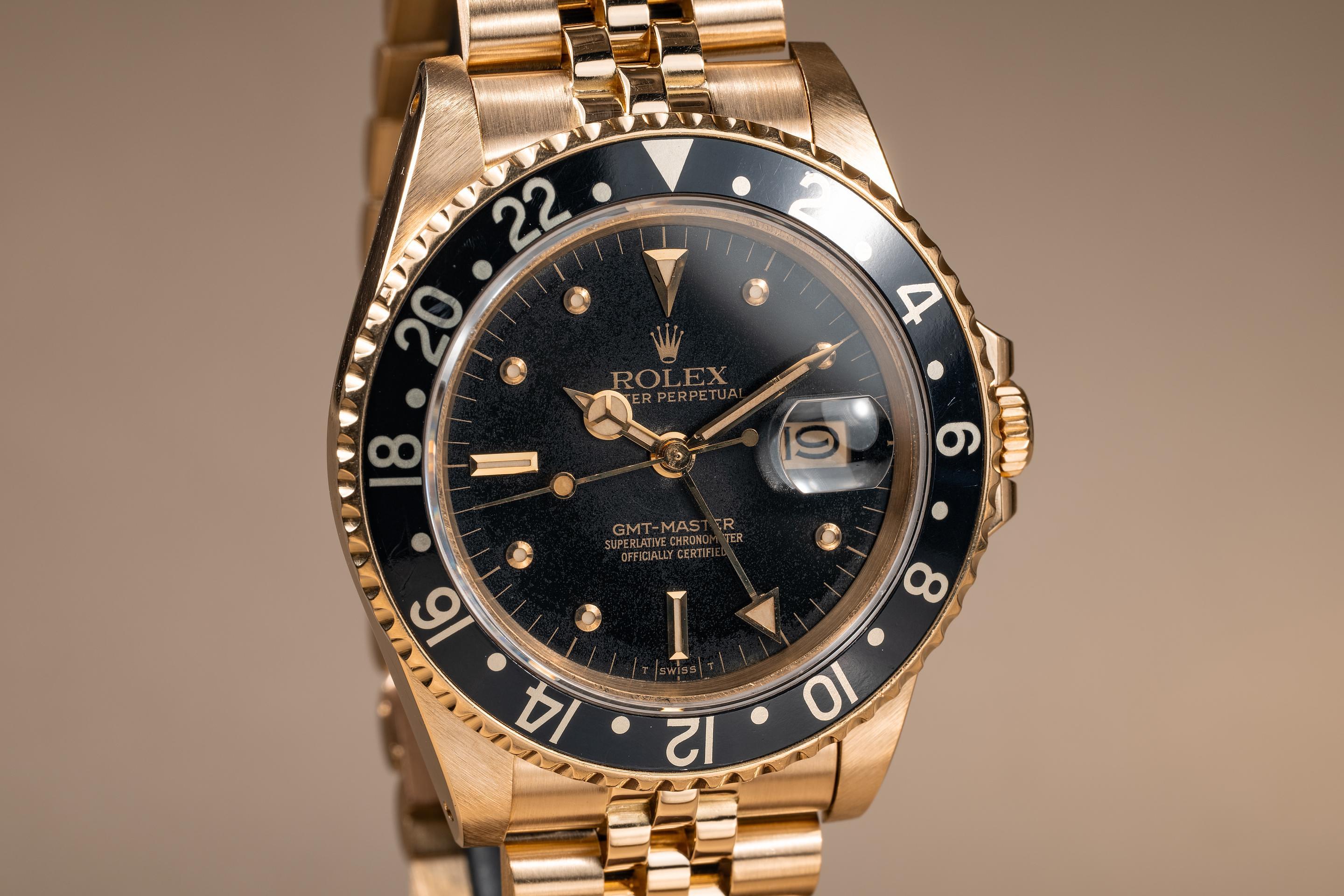
The Rolex GMT-Master: A Travel Watch Born From Necessity
There are watches, and then there are instruments that quietly reshape an entire category. The Rolex GMT-Master belongs firmly in the second group. Introduced in 1955, this reference was not a vanity project or a market experiment. It was a direct response to a very specific, very real problem: pilots and navigators operating across multiple time zones needed a reliable way to track more than one time simultaneously. Pan American World Airways, one of the most influential airlines of the mid-twentieth century, collaborated with Rolex to develop a wristwatch that could handle the demands of transatlantic flight. What emerged was the GMT-Master, a watch so well-conceived that it has remained in continuous production — in evolved form — for nearly seven decades. That is not a coincidence. That is engineering meeting purpose at the exact right moment.
How the GMT-Master Actually Works
Understanding the GMT-Master means understanding its central complication. The watch features a 24-hour hand — typically a distinct, arrow-tipped hand — that makes one full rotation every 24 hours rather than every 12. Paired with a rotating bezel marked with a 24-hour scale, this allows the wearer to simultaneously read a home time zone and a local time zone at a glance. The main hour hand tracks local time. The 24-hour hand, set to a reference time zone, completes the picture. It sounds simple because the execution is elegant. Simplicity of use was the design mandate. Pilots in the 1950s did not have the luxury of fumbling through calculations mid-flight. The GMT-Master gave them an instant, readable answer. That same logic applies today for any frequent traveler navigating time zone confusion.
The Original Reference: GMT-Master Ref. 6542
The earliest GMT-Master references are among the most studied and debated in all of vintage watchmaking. The Ref. 6542, produced from 1954 to 1959, featured the iconic Bakelite bezel insert — a material that would prove fragile with age, making intact examples genuinely rare today. It ran on the caliber A296 movement and wore a dial that set the visual tone for everything that followed. The signature two-tone red and blue bezel colorway earned the nickname "Pepsi" among collectors, a term so universally recognized in the watch community that it requires no further explanation. Even for those encountering vintage Rolex for the first time, the Pepsi bezel is an immediate point of recognition. The 6542 is foundational, not just as a collectible, but as a document of how Rolex approached purpose-driven design from the very beginning.
Reference Evolution: From 1675 to the Modern Era
Following the 6542, Rolex introduced the Ref. 1675, produced from roughly 1959 to 1980. This reference introduced crown guards, added durability, and ran on the caliber 1565 and later the 1575, both automatic movements. The 1675 era is rich with variation: matte dials, glossy dials, long E and short E dials, and various bezel configurations. Collectors spend significant time mapping these subtle distinctions. Then came the Ref. 16750 and the landmark Ref. 16760, which introduced a quickset date function and, crucially, an independently adjustable hour hand — allowing the local hour hand to be set separately from the GMT hand, a meaningful operational upgrade. The modern GMT-Master II, built on this foundation, carries this functionality forward across a range of materials and configurations including Oystersteel, Everose gold, and two-tone combinations. The evolution is continuous, but the core identity never drifted.
Bezel Colors and What They Signal
The GMT-Master bezel is more than an aesthetic choice. Originally, the two-tone colorway served a functional purpose: the darker half of the bezel indicated nighttime hours, while the lighter half indicated daytime, helping pilots distinguish at a glance. Over time, different colorways emerged and each earned its own collector nickname.
Pepsi — red and blue, the original colorway associated with the Ref. 6542 and later vintage references Batman — black and blue, introduced in 2013 on the Ref. 116710BLNR with a ceramic bezel Sprite — green and black, released in 2021 and quickly generating significant collector interest Root Beer — brown and black or brown and gold, a warm-toned variant associated with gold case models Coke — red and black, appearing on references through the 1980s and 1990sEach colorway carries its own market history and collector following. Understanding these distinctions helps buyers navigate the secondary market with clarity and confidence.
The Ceramic Bezel Upgrade and Why It Matters
One of the most significant technical developments in GMT-Master history arrived in 2005 with the introduction of Cerachrom ceramic bezels. Rolex developed this proprietary ceramic material specifically for its bezels, and the performance difference is substantial. Cerachrom is highly resistant to ultraviolet rays, which means the color remains stable over time — a marked departure from the aluminum inserts used on vintage references, which were prone to fading. The ceramic is also extremely hard, making it resistant to scratching under normal conditions. This matters both for daily wear and long-term value retention. For buyers weighing vintage versus modern, the ceramic bezel represents a genuine functional advantage of contemporary production, even as the patina and historical character of vintage aluminum bezels remains deeply appealing for different reasons.
What Makes the GMT-Master a Serious Collector's Watch
Beyond its historical significance, the GMT-Master has earned its place in serious watch collections because it occupies a rare intersection: it is genuinely useful, visually distinct, and historically layered. Many watches are one or two of those things. Very few are all three. The depth of variation across decades of production — dial configurations, case conditions, bezel states, movement calibers — gives collectors an almost inexhaustible area of study. Tropical dials, for instance, command significant premiums when authentic. These are dials that developed an unusual warm, brown patina over decades due to specific chemical reactions during the aging process. A tropical GMT-Master dial is not a defect. It is, in the eyes of informed collectors, a prize. This is the kind of nuance that separates casual interest from genuine expertise.
Buying a Vintage GMT-Master: Key Considerations
Entering the vintage GMT-Master market requires preparation. The watches command serious prices, and the number of altered or misrepresented examples circulating in the secondary market is not insignificant. Anyone considering a purchase should approach with the following framework in mind.
Provenance and documentation — service papers, original boxes, and purchase receipts materially affect value and authenticity confidence Bezel condition — original, unpolished bezels with honest wear are more desirable than refinished examples Dial originality — look for honest aging consistent with the reference period; be cautious of dials that appear artificially enhanced Case sharpness — heavily polished cases lose their original geometry and are generally less desirable to experienced collectors Movement authenticity — the caliber should match the reference period and show no signs of inappropriate parts substitutionWorking with a trusted, knowledgeable dealer is the most reliable way to navigate these considerations without spending years developing independent expertise.
Why Tropical Watch Is the Right Source for Your GMT-Master Search
For anyone serious about acquiring a vintage Rolex GMT-Master — whether entering the category for the first time or adding a specific reference to an established collection — the source matters enormously. Tropical Watch has built a reputation as one of the most respected platforms in the vintage luxury watch space, curating an inventory that reflects genuine expertise and a commitment to authenticity. Every watch presented carries the weight of informed curation, not opportunistic resale. If you are searching for authentic vintage Rolex GMT-Master watches from a trusted source, Tropical Watch offers the kind of depth, transparency, and market knowledge that gives buyers real confidence in the process. The GMT-Master is too significant — and too nuanced — a purchase to approach through any other lens. Tropical Watch understands this, and the inventory reflects it.
Frequently Asked Questions About the Rolex GMT-Master
What is the difference between the GMT-Master and the GMT-Master II?
The original GMT-Master featured a 24-hour hand and rotating bezel to track a second time zone, but the hour hand and GMT hand moved together. The GMT-Master II, introduced with the Ref. 16760 in 1983, added an independently adjustable hour hand, allowing the wearer to set local time separately without disrupting the GMT hand. This makes the GMT-Master II more practical for travelers moving across multiple time zones.
Why are some Rolex GMT-Master bezels called "Pepsi" or "Batman"?
These are collector nicknames based on color associations. The Pepsi bezel refers to the red and blue two-tone colorway reminiscent of the Pepsi Cola brand colors. The Batman nickname describes the black and blue bezel introduced in 2013, evoking the color palette of the comic book character. These terms are universally used in the collector community and have no official designation from Rolex.
What should I look for when authenticating a vintage GMT-Master?
Key authentication points include verifying that the movement caliber matches the production reference period, confirming dial originality without signs of restoration or reprinting, assessing bezel condition relative to authentic aging patterns, and checking case geometry for evidence of over-polishing. Documentation such as service records and original boxes adds confidence but is not always available for vintage pieces.
Are vintage Rolex GMT-Master watches a good investment?
Historically, well-preserved vintage GMT-Master references have appreciated meaningfully over time, particularly those with original dials, unpolished cases, and documented provenance. However, the watch market is subject to fluctuation, and condition, authenticity, and rarity are the primary drivers of long-term value. Buying from knowledgeable, reputable sources significantly reduces acquisition risk.
What is a tropical dial on a vintage Rolex?
A tropical dial refers to a dial that has developed an unusual warm brown or chocolate-toned patina over decades, resulting from specific chemical reactions during the aging process. These dials were not manufactured this way intentionally, but authentic examples are highly sought after by collectors and typically command significant premiums over standard vintage dials in similar condition.
Which Rolex GMT-Master references are most valuable to collectors?
The Ref. 6542 with an intact Bakelite bezel insert is among the rarest and most valuable. The Ref. 1675 in original, unpolished condition with a matte tropical dial also commands strong interest. Later references like the 16750 and the steel Pepsi variants of the modern era have established their own collector followings. Rarity, condition, originality, and historical significance are the consistent drivers of collector value across all references.