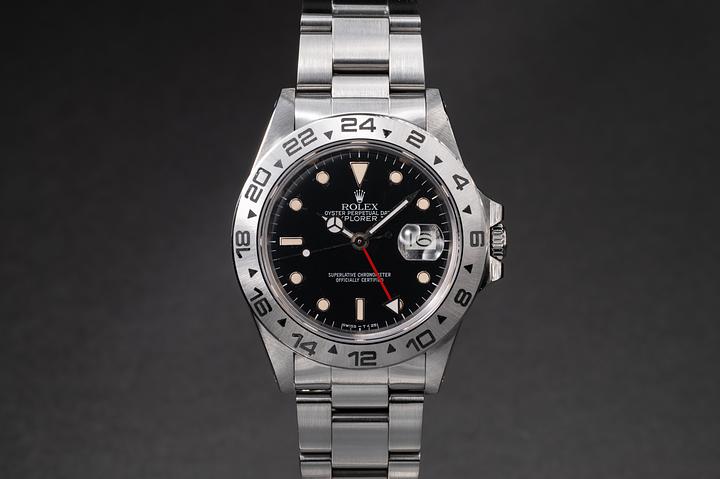
Rolex Explorer 40 Watch Review: Heritage Meets Precision
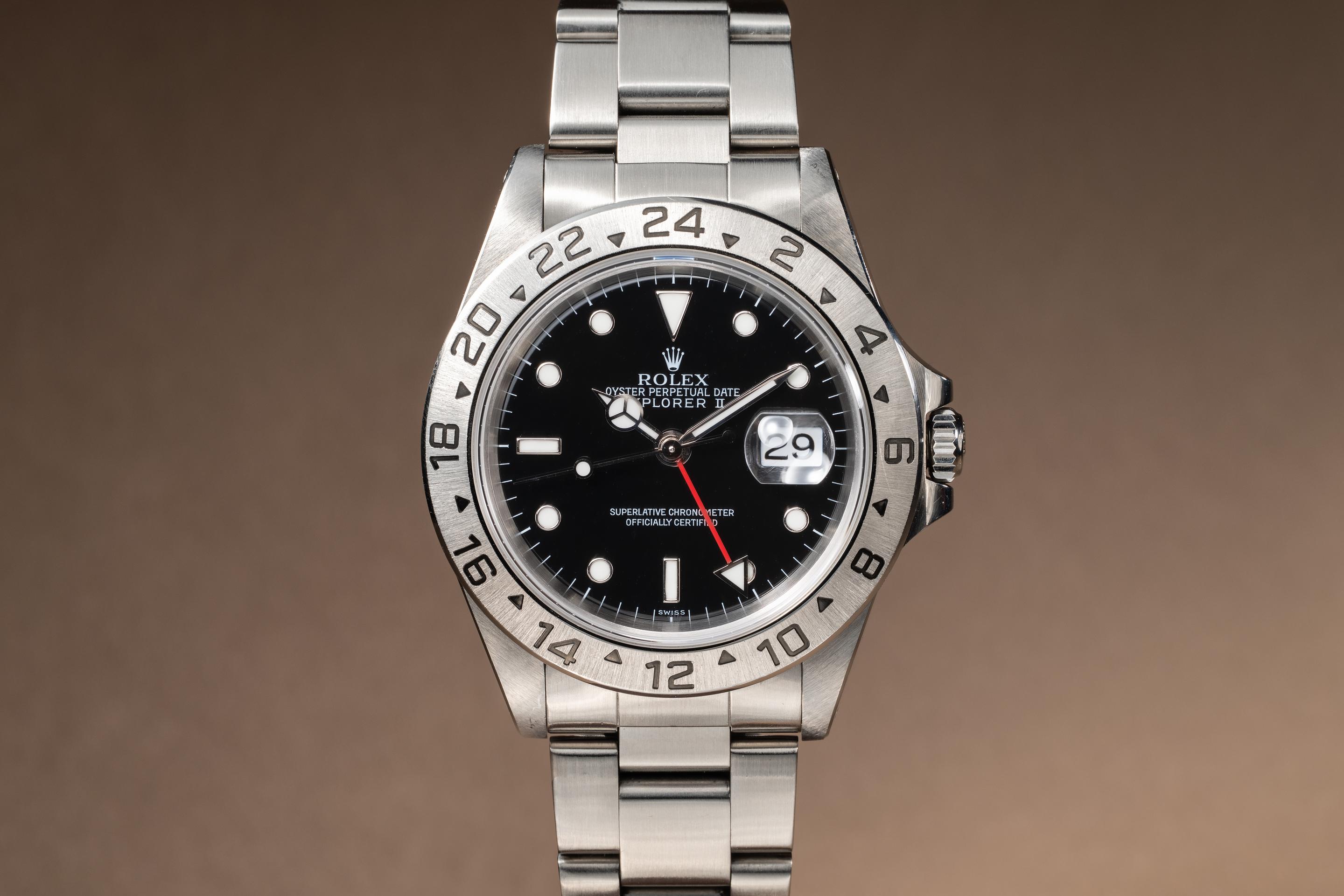
Rolex Explorer 40 Watch Review: Heritage Meets Precision
The Rolex Explorer 40 is one of those watches that earns its reputation without trying too hard. Born from a lineage tied to real expeditions and genuine human achievement, it carries a kind of quiet authority that most watches spend their entire existence chasing. The modern 40mm iteration refines what the original Explorer established in 1953 — legibility, durability, and understated elegance — while bringing it forward in a way that feels entirely relevant to how people actually live today. Whether you are navigating a boardroom agenda or planning a weekend in the backcountry, this watch fits without asking you to compromise on either front.
A Brief History of the Rolex Explorer Collection
To understand the Explorer 40, you have to go back to the original. In 1953, Sir Edmund Hillary and Tenzing Norgay summited Mount Everest wearing Rolex watches. That event became foundational mythology for the Explorer line. Rolex developed the reference 6350, and later the iconic reference 1016, to withstand the kind of punishment that extreme environments deliver — temperature swings, physical shock, moisture, altitude. The Explorer was never a dress watch pretending to be tough. It was engineered from the ground up to perform. Over the decades, through references 14270, 114270, and 214270, the case size grew and the movement evolved, but the design philosophy never wavered. The 2021 introduction of the Explorer 124270, the 36mm version, was followed by a recalibration in the lineup that reaffirmed the 40mm size as the sweet spot for those who want a substantial presence on the wrist without veering into oversized territory.
Case Design and Build Quality
The Rolex Explorer 40 is housed in Rolex's proprietary Oystersteel, a 904L stainless steel alloy that outperforms standard 316L steel in terms of corrosion resistance and surface finish. The Oyster case measures 40mm in diameter with a thickness that sits comfortably under a shirt cuff — a detail that matters more than most people initially realize. The case is paired with a smooth three-link Oyster bracelet, finished with both brushed and polished surfaces that catch light in a measured, refined way. The Oysterlock clasp with Easylink extension system allows for a 5mm adjustment without tools, which is genuinely useful when temperatures change and your wrist fluctuates. The screw-down crown seals the case and contributes to a water resistance rating of 100 meters. That is more than adequate for swimming, surface water activities, and the occasional unexpected rain.
Dial and Legibility: The Explorer's Greatest Strength
The dial of the Rolex Explorer 40 is black — always black — with large luminescent hour markers at 3, 6, and 9, and applied Mercedes hands coated in Chromalight. Rolex introduced Chromalight as an upgrade over the older Luminova compounds, offering a blue-hued glow that lasts significantly longer in low-light conditions. The lack of a date complication on the Explorer is a deliberate choice that improves dial symmetry and reduces visual noise. This watch is about clarity above all else. You can read the time at a glance from across a room, in a dimly lit restaurant, or at the tail end of a long hike when your focus is elsewhere. That is not an accident. The Explorer dial is the result of decades of refinement, and every element on it is exactly where it needs to be.
Movement and Technical Specifications
The Explorer 40 runs on the Rolex Calibre 3230, introduced in 2020. This movement represents one of the most significant internal advances Rolex has made in recent memory. Key specifications worth noting:
Calibre 3230 movement with approximately 70-hour power reserve Chronergy escapement for improved efficiency Paramagnetic blue Parachrom hairspring for resistance to magnetic fields and temperature variation Five patents associated with the movement architecture COSC-certified and Superlative Chronometer designation, meaning it meets Rolex's internal standard of plus or minus 2 seconds per day Self-winding perpetual rotor system
The 70-hour power reserve is practical — it means you can take the watch off Friday evening and put it back on Monday morning without needing to reset it. That kind of real-world convenience matters more than a spec sheet makes it sound.
Who Is the Rolex Explorer 40 For?
The Explorer 40 occupies a precise niche in the Rolex lineup. It is not the sportiest option — the Submariner and GMT-Master handle that end of the spectrum. It is not the most formal — the Datejust and Day-Date fill those roles. The Explorer 40 sits confidently in the middle, appealing to someone who wants one watch that does everything without calling attention to itself. It suits the professional who travels frequently, the outdoors-oriented buyer who still values refinement, and the collector who appreciates restraint as a design virtue. At approximately 40mm, it reads as a mature, proportioned choice — large enough to feel substantial, contained enough to remain tasteful in any setting.
Rolex Explorer 40 vs. Explorer 36: Which Size Is Right?
The most common question among buyers deciding on the Explorer line is straightforward: 36mm or 40mm? Both share the same movement and core design language, so the decision comes down almost entirely to personal preference and wrist size. The 36mm Explorer 124270 wears closer to a dress watch — smaller, quieter, and arguably more versatile for formal environments. The 40mm Explorer, currently represented by the reference 224270, wears with more presence and suits wrists above 7 inches more naturally. If you wear your watch primarily in professional or social settings and prefer a classic proportion, the 36mm makes a compelling case. If you want something that feels anchored and contemporary, the 40mm is the obvious choice.
Retail Pricing and Market Considerations
The Rolex Explorer 40 carries a manufacturer's suggested retail price in the range of $7,150 to $7,800 USD for the Oystersteel configuration, depending on region and point of purchase. As with most Rolex references in sustained demand, the secondary market tells a different story. Pre-owned examples in excellent condition routinely trade above retail, and vintage Explorer references — particularly the 1016 and early 14270 — command meaningful premiums among collectors. For buyers prioritizing value retention, the Explorer has historically performed well. Its design continuity means that older examples remain recognizable and desirable, which is not something every watch category can claim.
Why Tropical Watch Is the Right Source for Your Rolex Explorer
When it comes to acquiring a Rolex Explorer — whether a current reference or a vintage example with genuine provenance — the source matters as much as the watch itself. Tropical Watch has built a reputation as a trusted destination for serious collectors and first-time luxury watch buyers alike. Their expertise in the vintage Rolex segment is particularly relevant for anyone drawn to the Explorer's heritage. If you are searching for a vintage and pre-owned Rolex Explorer for sale, Tropical Watch offers curated selections backed by deep horological knowledge and transparent authentication standards. The team understands that buying a watch at this level is not a transactional decision — it is a considered one. That understanding shapes every part of the experience they provide, from inventory curation to post-sale support.
Frequently Asked Questions About the Rolex Explorer 40
What is the current reference number for the Rolex Explorer 40?
The current Rolex Explorer 40mm is reference 224270, introduced in 2021. It features the Calibre 3230 movement and retains the classic black dial design with luminescent hour markers at 3, 6, and 9 o'clock.
Does the Rolex Explorer 40 hold its value?
Yes, the Rolex Explorer 40 has historically demonstrated strong value retention. Its consistent design language, limited production, and sustained collector interest mean that well-maintained examples — particularly vintage references — often sell at or above their original retail prices on the secondary market.
Is the Rolex Explorer 40 waterproof?
The Rolex Explorer 40 is water resistant to 100 meters, achieved through the Oyster case construction and screw-down crown. This rating makes it suitable for swimming and recreational surface water activities, though it is not designed for scuba diving.
How does the Rolex Explorer 40 differ from the Submariner?
The Explorer 40 and Submariner share Rolex's commitment to durability, but they serve different purposes. The Submariner is a dedicated dive watch with a unidirectional rotating bezel and 300-meter water resistance. The Explorer 40 has no bezel markings, 100-meter water resistance, and a design philosophy oriented toward versatility rather than dive-specific functionality.
What bracelet does the Rolex Explorer 40 come on?
The Rolex Explorer 40 comes standard on the Oyster bracelet in Oystersteel, featuring flat three-piece links and an Oysterlock folding clasp with Rolex's Easylink comfort extension system, which allows for a 5mm quick adjustment without tools.
Is the Rolex Explorer 40 a good first luxury watch?
The Rolex Explorer 40 is widely regarded as an excellent entry point into serious luxury watchmaking. Its restrained design, technical credibility, proven movement, and strong resale value make it a thoughtful and durable first acquisition for someone building a meaningful collection.