Rolex Deepsea Dive Watch Mastery and Swiss Engineering
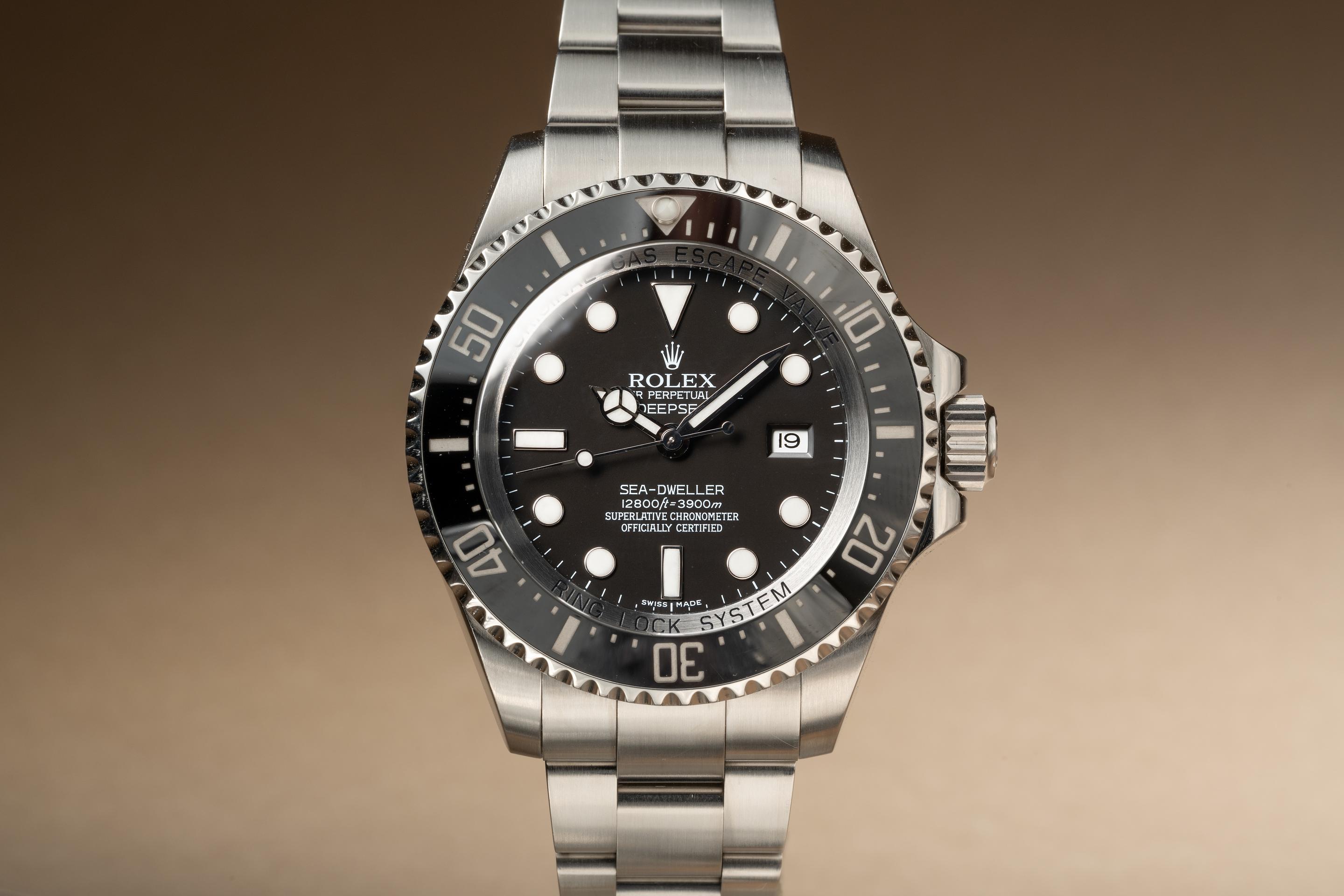
The Rolex Deepsea: Swiss Engineering Built for the Ocean's Extremes
There are dive watches, and then there is the Rolex Deepsea. Most timepieces wear the label of "water resistant" as a precaution against a surprise rainstorm. The Deepsea wears it as a declaration of capability. Engineered to withstand pressures at depths that most people will never encounter in their lifetime, this watch represents one of the most technically advanced creations in the history of Swiss horology. Whether you are a serious technical diver, a collector who appreciates precision engineering, or someone who simply wants to understand what separates an exceptional dive watch from a capable one, this piece is worth your full attention.
A Brief History of the Rolex Deepsea
Rolex has been synonymous with dive watch excellence since the 1950s, when the original Submariner established what it meant to build a watch for underwater use. The Deepsea, however, is a different kind of statement. It traces its roots to a remarkable 1960 experiment in which a Rolex prototype was attached to the exterior of the Trieste bathyscaphe as it descended to the deepest known point on Earth, the Mariana Trench, at approximately 10,916 meters. The watch survived. That moment of validation set the philosophical foundation for what would eventually become the modern Deepsea reference. Rolex officially introduced the Deepsea as a production model in 2008 under reference 116660, and it has since evolved through subsequent references, each refining the formula without abandoning the core mission. In 2022, an updated version descended once again to the deepest point in the ocean, this time aboard the submersible used by explorer Victor Vescovo, further cementing its legacy as a watch built for conditions that exist beyond ordinary comprehension.
What Makes the Rolex Deepsea Different from Other Dive Watches
Understanding the Deepsea means understanding pressure. At depth, water exerts enormous force against everything it surrounds. Most dive watches are rated to 200 or 300 meters, which is already far beyond recreational diving needs. The Rolex Deepsea is rated to 3,900 meters. That number is not an estimate or a marketing figure — it is the result of a specifically engineered construction that addresses pressure resistance at a structural level. Three core innovations make this possible. The Ringlock System forms the foundation of the case architecture, using a nitrogen-alloyed steel ring to counteract the compressive force of deep-sea pressure. A domed sapphire crystal, significantly thicker than what you would find on almost any other watch, resists the enormous inward force at depth. The case back is machined from solid Oystersteel with a convex profile, designed to flex and absorb rather than simply resist. Together, these elements create a watch that does not just survive depth — it is built specifically for it.
The Movement Inside: Caliber 3235
The engineering that drives the Deepsea from the inside is just as deliberate as the case that surrounds it. The current Deepsea references house Rolex Caliber 3235, a self-winding mechanical movement developed and manufactured entirely in-house by Rolex. The Caliber 3235 offers a power reserve of approximately 70 hours, which is meaningful for a watch that may be worn continuously in demanding environments. Its Chronergy escapement, a patented development by Rolex, improves energy efficiency while maintaining exceptional accuracy. The movement is certified as a Superlative Chronometer by Rolex, meaning it has been independently tested and verified to perform within plus or minus two seconds per day — a standard that exceeds the requirements set by COSC, the official Swiss chronometer testing body. For a dive watch, accuracy under varying conditions and temperatures is not a secondary concern. It is fundamental.
Design and Dial Specifications Worth Knowing
The Rolex Deepsea is a large watch. Its case measures 44mm in diameter, and the overall thickness is notably substantial compared to dress watches or even everyday sport watches. This is intentional. The engineering requirements of a 3,900-meter rating demand material mass, and Rolex has not attempted to disguise that. What they have done is make it wearable despite its size. The unidirectional rotating bezel with Cerachrom ceramic insert is scratch-resistant and fade-proof, serving a functional purpose in dive timing rather than simply an aesthetic one. The Deepsea comes in several dial configurations, with the iconic D-Blue dial — a gradient that transitions from deep black at the bottom to a rich blue at the top — being one of the most visually recognized. It was introduced as a tribute to the 2012 Deepsea Challenge dive. The bracelet is the Oyster design with a Glidelock extension system, which allows precise micro-adjustments directly on the clasp for over-wetsuit wearability.
Rolex Deepsea vs. Submariner: Understanding the Difference
This comparison comes up often, and it deserves a direct answer. The Submariner and the Deepsea are not competitors — they serve different purposes within the same family of professional dive watches. The Submariner, rated to 300 meters, is built for recreational and professional diving within the range where most human activity occurs. It is slimmer, more versatile as a daily wear piece, and has a longer collector history. The Deepsea, with its 3,900-meter rating, is engineered for technical and saturation diving at extreme depths. It is heavier, thicker, and more purpose-specific. From a collector standpoint, both are significant. From a practical standpoint, the choice depends on how and where you intend to wear the watch, and what level of depth capability you genuinely require.
What to Consider Before Buying a Rolex Deepsea
Purchasing a Rolex Deepsea is a significant investment, and approaching it with clear criteria will serve you well. A few practical considerations worth reviewing before committing:
Intended use — recreational diving, technical diving, or everyday wear Case size comfort — the 44mm case is substantial and may feel large on smaller wrists Dial preference — D-Blue, black, and other configurations carry different secondary market values Reference history — understanding which reference year you are purchasing matters for resale and provenance Movement service history — particularly important in the pre-owned market Authenticity verification — always purchase from a reputable source with documentationThese factors shape not only the experience of owning a Deepsea but also its long-term value as part of a watch collection.
The Rolex Deepsea as a Collector's Timepiece
Beyond its technical credentials, the Deepsea holds genuine standing as a collector's watch. Its association with historic deep-sea achievements gives it a narrative that few timepieces can match. The D-Blue dial variants, in particular, have developed strong secondary market recognition due to their visual distinctiveness and the story they represent. As Rolex continues to refine and update the Deepsea line, earlier references are beginning to attract collector attention for their position in the model's evolution. For anyone building a serious dive watch collection or seeking a technically important Rolex that differs from the Submariner and GMT-Master II, the Deepsea represents a compelling and often underappreciated option within the broader Rolex catalog.
Why Tropical Watch Is the Right Source for Your Rolex Deepsea Search
When the investment is this significant, the source matters as much as the watch itself. Tropical Watch has built its reputation on the kind of expertise and curatorial standard that serious collectors and first-time luxury buyers both deserve. As a destination for those seeking authenticated, carefully selected timepieces, Tropical Watch offers access to an inventory that reflects deep knowledge of the market. Whether you are searching for a current Deepsea reference or exploring the broader landscape of certified pre-owned Rolex dive watches and vintage Swiss timepieces, the team at Tropical Watch provides the provenance documentation, expert guidance, and trustworthy transaction process that the luxury watch market demands. For a watch built to perform at extremes, it only makes sense to purchase it from a source held to an equally high standard.
Frequently Asked Questions About the Rolex Deepsea
What is the water resistance rating of the Rolex Deepsea?
The Rolex Deepsea is rated to 3,900 meters, which is equivalent to approximately 12,800 feet. This rating is achieved through the proprietary Ringlock System, a domed and thickened sapphire crystal, and a reinforced Oystersteel case back.
What movement does the Rolex Deepsea use?
Current Rolex Deepsea models are powered by the Caliber 3235, an in-house Rolex movement featuring a 70-hour power reserve, a Chronergy escapement, and Superlative Chronometer certification for accuracy within plus or minus two seconds per day.
How large is the Rolex Deepsea case?
The Rolex Deepsea has a 44mm case diameter and is notably thicker than most dive watches due to its extreme depth engineering requirements. It is one of the larger watches in the Rolex professional sports line.
What is the D-Blue dial on the Rolex Deepsea?
The D-Blue dial features a gradient design that transitions from black at the six o'clock position to deep blue at twelve o'clock. It was introduced to commemorate James Cameron's 2012 solo dive to the Mariana Trench and has become one of the most recognized dial variants in the Deepsea lineup.
How does the Rolex Deepsea compare to the Submariner?
The Submariner is rated to 300 meters and is designed for recreational and professional diving with a slimmer, more versatile profile. The Deepsea is rated to 3,900 meters, is physically larger and heavier, and is built for extreme technical depth use. Both are exceptional dive watches serving different performance tiers.
Is the Rolex Deepsea a good investment watch?
The Rolex Deepsea holds strong value due to its technical prestige, limited production relative to the Submariner, and its historical connection to significant deep-sea exploration achievements. Specific references and dial configurations, particularly the D-Blue, tend to perform well on the secondary market over time.